
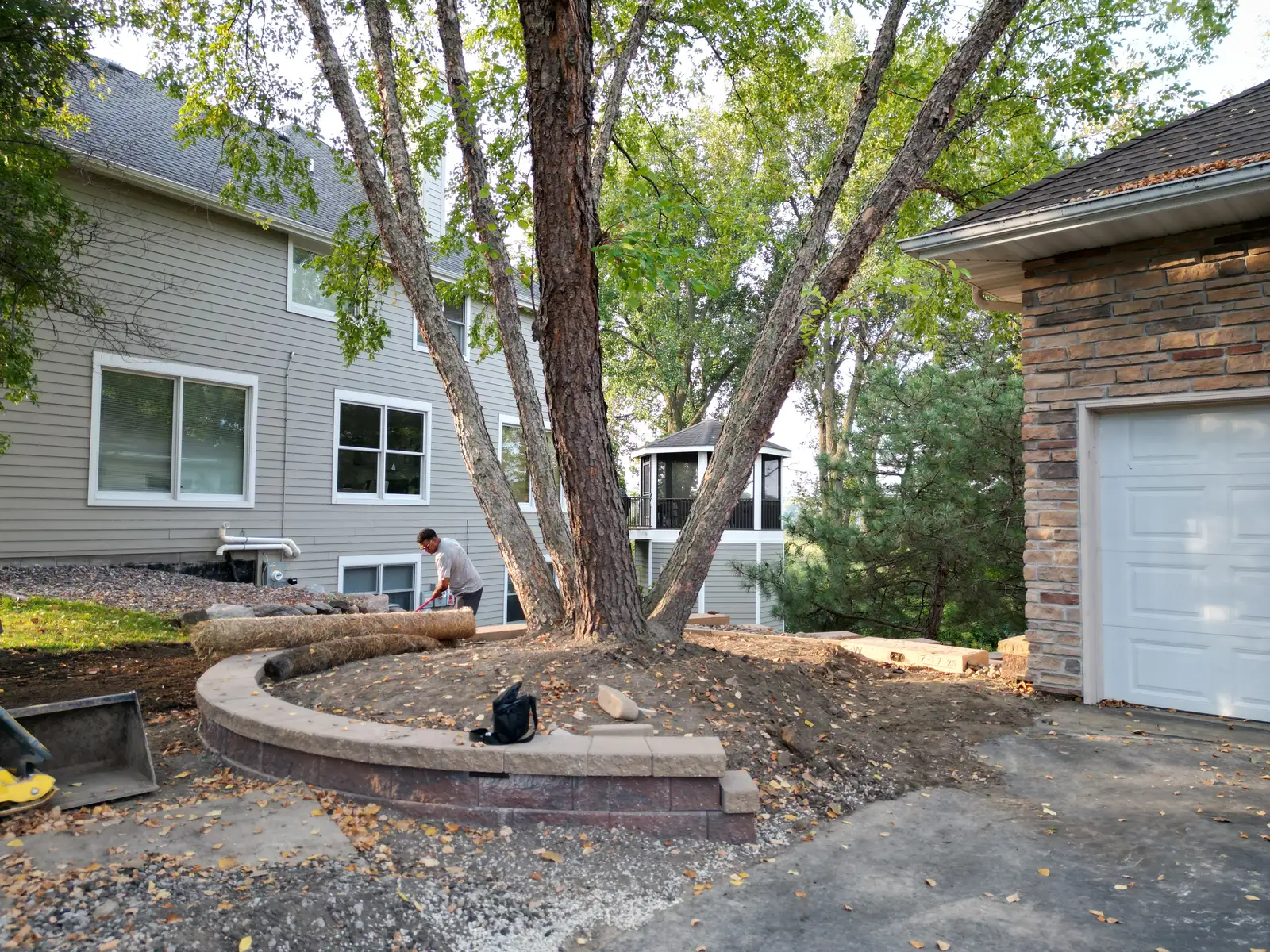
Segmental Block Walls Handle Heights That Other Systems Cannot
Segmental retaining walls use interlocking concrete blocks designed specifically for wall construction. Unlike poured concrete or timber walls, segmental block systems are engineered to flex slightly with seasonal ground movement while maintaining structural integrity -- a critical advantage in Minnesota where freeze-thaw cycles shift the ground 50+ times per year. The National Concrete Masonry Association rates properly installed segmental walls for a 75+ year service life.
For walls over 4 feet tall (measured from the base of the footing to the top of the wall), segmental block systems can incorporate geogrid reinforcement -- layers of high-tensile synthetic mesh embedded in the soil behind the wall at regular intervals. Geogrid-reinforced walls can safely reach heights of 10 to 20+ feet, making them the go-to solution for Lake Minnetonka properties with significant elevation changes between the house and waterfront.
At Lifecycle Outdoor Services, we build segmental block retaining walls with the same attention to foundation preparation that we apply to all our hardscape work. Every wall starts with excavation below frost depth (42 inches in Minnesota), a compacted aggregate base, and proper drainage behind the wall with filter fabric and drainage aggregate connected to a perforated pipe at the base. Our Eden Prairie retaining wall project demonstrates the quality of our block wall construction.
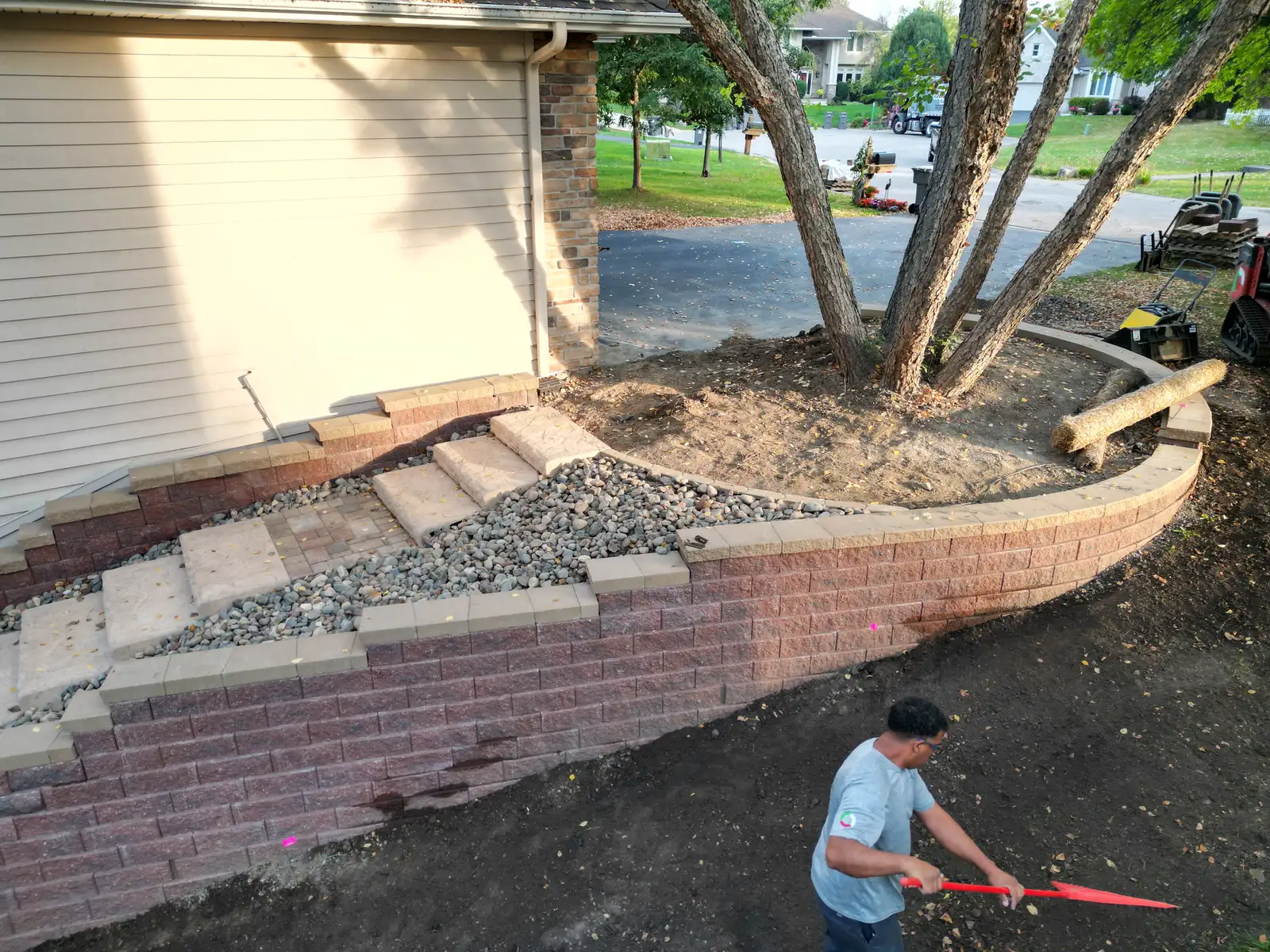
Where Block Walls Excel
Tall Retaining Walls (4-20+ Feet)
Segmental block with geogrid reinforcement is the most cost-effective system for walls over 4 feet tall. Geogrid layers extend 4 to 8 feet behind the wall face, anchoring the wall to the soil mass behind it. Walls requiring engineering (typically over 4 feet exposed height) receive stamped engineer drawings specifying block type, geogrid spacing, and backfill specifications.
Multi-Level Terracing
Terraced walls break a single tall retaining requirement into two or three shorter walls separated by flat planting or lawn areas. This reduces engineering requirements, creates usable space between levels, and provides a more natural appearance than a single monolithic wall. Terracing is our most common approach for lakefront properties with 15 to 30 feet of total elevation change.
Driveway & Parking Retaining
Block walls along driveways and parking areas must handle vehicle loads and snowplow forces in addition to soil pressure. We design these walls with additional base width, deeper embedment, and geogrid reinforcement to handle the extra loading. Capstone on driveway-adjacent walls is set with construction adhesive to prevent displacement from plow contact.
Replacement of Failing Walls
Many properties around Lake Minnetonka have timber, railroad tie, or inadequately built block walls that are leaning, cracking, or collapsing. We remove the failed wall, re-excavate the foundation, correct the drainage issues that contributed to the failure, and build a new engineered wall designed to handle the actual soil and water conditions. See our retaining wall services for more on wall replacement.
Block Retaining Wall FAQ
Segmental block retaining walls in the Minnetonka area typically cost $30 to $60 per square face foot including excavation, base, block, drainage, backfill, and capstone. A 50-foot-long, 3-foot-tall wall (150 square face feet) runs $4,500 to $9,000. Walls over 4 feet requiring geogrid and engineering run $45 to $75 per square face foot. Premium block styles and natural stone veneer facings add to the cost.
Most cities around Lake Minnetonka require engineered wall plans for walls over 4 feet in exposed height. Some cities set the threshold at 3 feet. Engineering involves soil analysis, wall design calculations, geogrid specifications, and stamped drawings by a licensed engineer. We coordinate all engineering as part of the project and include the cost in our proposal. Walls that do not require engineering still benefit from professional design -- we size the foundation, drainage, and backfill based on your specific soil conditions.
Block walls offer precise dimensions, consistent color, and engineered geogrid reinforcement for tall walls. Boulder walls offer a natural, rustic appearance and handle moderate heights without reinforcement. For walls over 6 feet, block with geogrid is typically more cost-effective and structurally reliable. For walls under 4 feet where aesthetics are the priority, boulders or natural stone may be preferred. We build all types and recommend the best option for each specific situation.
Get a Free Quote Today
Schedule your free on-site consultation. We will evaluate your property, discuss your goals, and provide a detailed proposal with transparent pricing.