
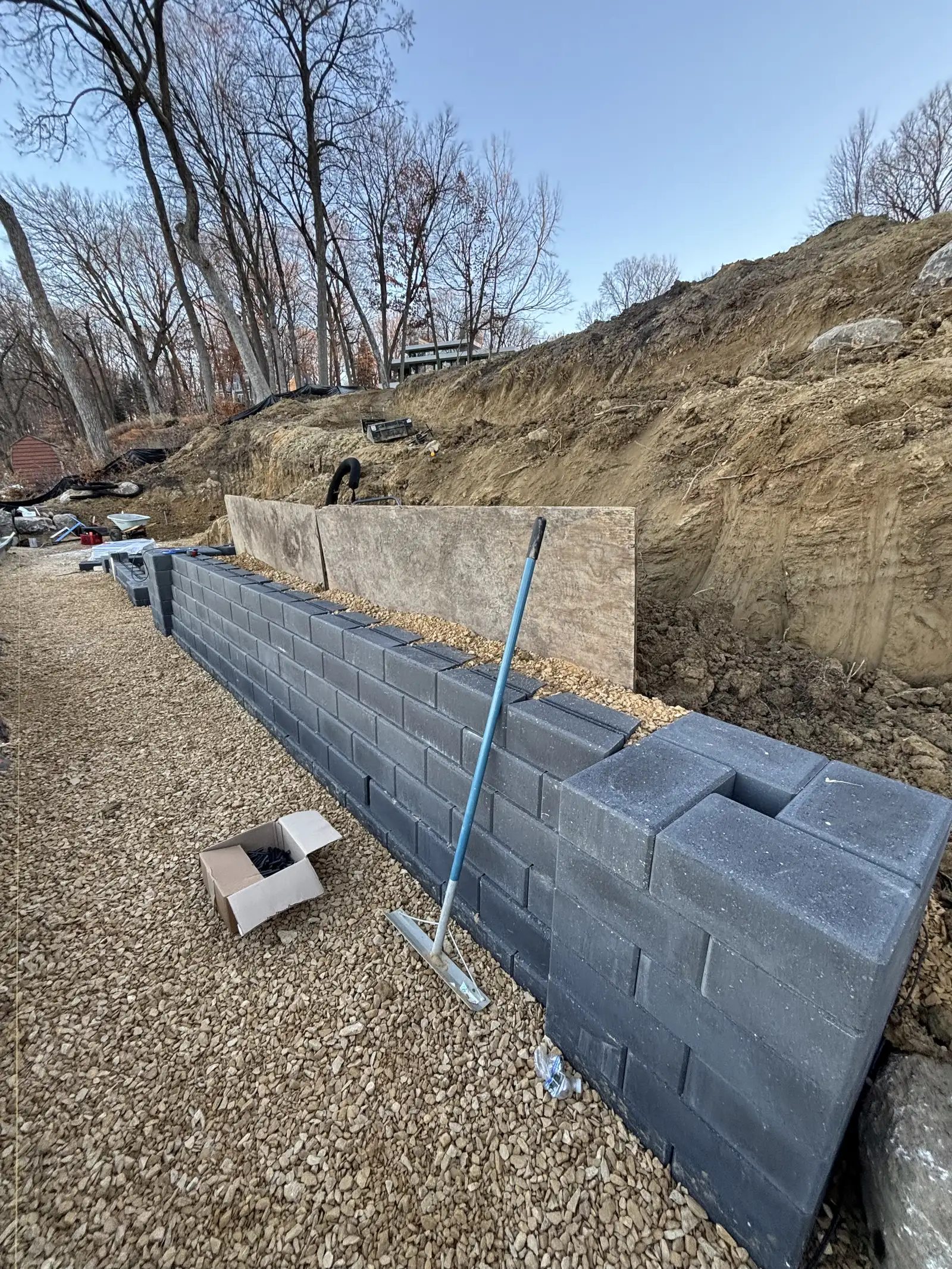
Lifecycle Outdoor Services provides shoreline stabilization for Lake Minnetonka homeowners who need a stronger, cleaner edge between the lawn, lake access, and open water. Stabilization work focuses on the physical shoreline structure: stone sizing, edge alignment, slope support, access protection, and restoration around the finished waterline.
Build A Shoreline Edge That Holds Its Shape
A stable shoreline needs more than loose stone placed along the bank. The edge must be shaped for the slope, water exposure, existing grade, dock or stair access, and the way the family uses the lake side of the property. Lifecycle Outdoor Services reviews those conditions before recommending riprap, boulder placement, base preparation, grading, or planting transitions.
For Lake Minnetonka homes, the best stabilization work feels integrated with the property. Stone should protect the bank without swallowing the yard, and access points should feel deliberate instead of patched together after the main work is done.
What Shapes A Stabilization Scope
Every shoreline has a different combination of exposure, slope, access, and existing materials. Lifecycle Outdoor Services builds the recommendation around the conditions that determine whether the edge will stay clean through daily use and seasonal weather.
- Stone profile: size, depth, and placement that fit the bank and visible finish.
- Bank geometry: slope transitions, toe support, and grade changes behind the edge.
- Lake access: steps, dock routes, and paths that need firm footing at the water.
- Landscape tie-ins: turf, planting, patios, and walls that meet the shoreline zone.
Riprap, Boulder Edges, And Clean Transitions
Stabilization may include a riprap shoreline, boulder edge, reworked lake access, slope grading, or a combination of stone and planting. Lifecycle Outdoor Services selects materials that match the home and can handle water movement, freeze-thaw cycles, and regular use near the lake.
The details matter: the height of the finished edge, the way stone meets the lawn, the route crews can use to bring in materials, and how the surrounding landscape will be restored after installation. Those decisions affect both durability and how polished the shoreline looks from the house, dock, and water.
- Review existing shoreline structure, failed stone, exposed banks, access routes, and grade changes.
- Plan riprap or boulder placement with the right profile for the bank and the finished view.
- Coordinate lake steps, dock paths, planting pockets, turf repair, and nearby hardscape transitions.
- Sequence equipment access, material staging, excavation, stone work, and final restoration to limit disruption.
Stabilization Before Patios, Steps, Or Lakefront Plantings
When the shoreline edge is moving, other lakefront improvements should be planned around it. Patios, stairways, retaining walls, and planting beds all depend on stable grades and reliable transitions near the water.
Lifecycle Outdoor Services helps homeowners decide whether to stabilize first, combine the shoreline work with a larger outdoor plan, or reserve grades and access routes for a later phase. That protects the finished investment and keeps future work from disturbing the same edge again.
A Better Fit For Lake Minnetonka Properties
Shoreline stabilization should look like it belongs to the property. On some lots that means a natural boulder edge with planted transitions. On others it means a cleaner riprap profile, defined steps, and precise grading where lawn meets stone.
Lifecycle Outdoor Services brings the shoreline, upland landscape, and access points into one plan so the finished lakefront is easier to maintain and more comfortable to use.
When does a shoreline need stabilization instead of a small repair?
Stabilization is usually the better path when the bank is exposed, stone has shifted, access points are breaking down, or the shoreline edge no longer holds a consistent shape through seasonal water and use.
Can shoreline stabilization include lake steps or dock access?
Yes. Steps, dock paths, and walkable transitions are often planned with the shoreline edge so access feels stable and intentional after the stone work is complete.
What materials are used for shoreline stabilization?
Depending on the site, stabilization may use riprap, boulders, compacted base preparation, grading, soil stabilization, turf restoration, and planting transitions. The recommendation depends on exposure, slope, access, and the desired finish.
How do I request a shoreline stabilization estimate?
Call (612) 220-6380 or use the contact form. Include the address, photos from the yard and water side if available, and notes about dock access, failing stone, exposed bank, or planned outdoor improvements.