
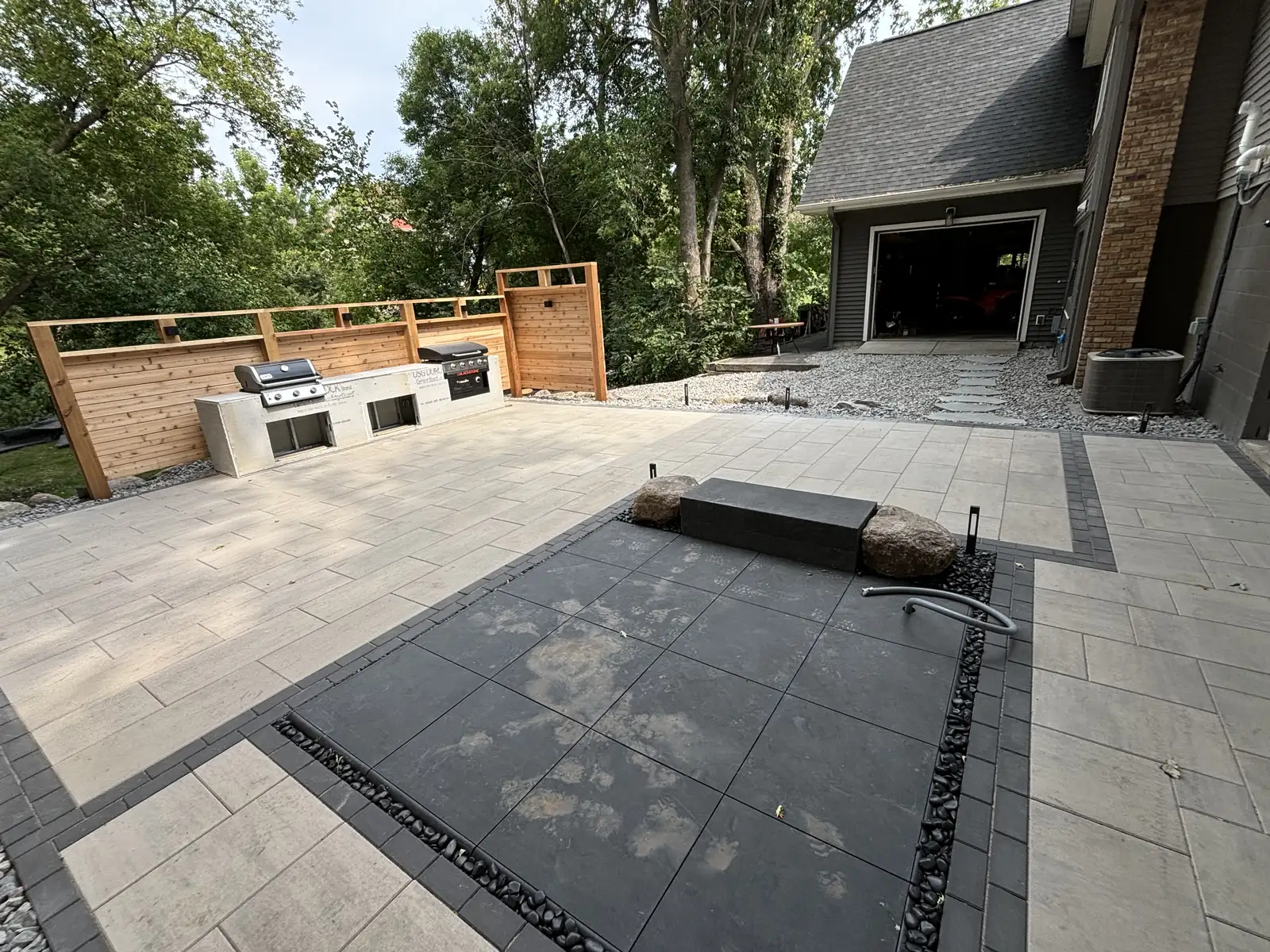
A gas firepit can make a patio or outdoor living area easier to use, but placement, clearances, seating, gas routing, ventilation, base support, and surrounding materials need to be planned before installation. Lifecycle Outdoor Services coordinates gas firepit areas with patios, walls, privacy screens, lighting, and outdoor kitchens.
Firepit placement affects the whole patio
A firepit should not be squeezed into leftover space. Seating depth, walking paths, wind exposure, views, door access, and clearances all matter. The patio base also needs to support the feature and keep water moving away from the gathering area.
Gas firepits are often selected for cleaner operation and easier use than wood-burning features, but gas routing and fixture selection should be reviewed early with the project scope.
- Seating layout, table height, burner size, and safe movement around the feature.
- Gas line routing, shutoff access, ventilation, and coordination with licensed trades when needed.
- Patio base, drainage pitch, wall or seat edge placement, and material compatibility.
- Lighting, privacy, planting, and outdoor kitchen connections around the gathering space.
Comfortable gas firepit spaces
Lifecycle Outdoor Services lays out gas firepit areas around the way people will actually gather: seating depth, walking paths, burner size, table height, wind exposure, and safe movement between the patio, house, and surrounding landscape. Gas routing, shutoff access, ventilation, and trade coordination are reviewed early so the feature can be built into the space cleanly.
The finished firepit area can connect with seat walls, patio edges, lighting, privacy screens, planting, and outdoor kitchen zones. Planning those relationships up front gives Lake Minnetonka homeowners a fire feature that feels intentional, comfortable, and easy to use.
Firepit versus outdoor fireplace
A gas firepit creates a social center with seating on several sides. An outdoor fireplace creates a stronger visual anchor and can provide more wind control, but it needs more structure and space. The right choice depends on how the patio will be used.
Lifecycle Outdoor Services can compare firepits, fireplaces, and full outdoor living layouts before the patio is built.
Seating Clearances, Gas Routing, And Patio Support
A complete estimate accounts for gas routing, burner placement, seating clearances, paver base, and ignition access. Lifecycle Outdoor Services also reviews patio layout, wind exposure, code-safe placement, and evening use so the price reflects the real work needed on the property, not just the finished surface homeowners will see.
Homeowners in Shorewood, Minnetonka, Wayzata, Deephaven, Excelsior, Orono, and nearby communities can call (612) 220-6380 or use the estimate form to discuss the property and project goals. Photos, rough timing, and notes about wet areas, slopes, access, or existing hardscape help the team prepare for the first review.
Can a gas firepit be added to a new patio?
Yes. It is best to plan the firepit before patio installation so base support, gas routing, clearances, and seating layout are handled correctly.
Does Lifecycle Outdoor Services offer gas firepit installation near Lake Minnetonka?
Yes. Lifecycle Outdoor Services serves Shorewood, Minnetonka, Wayzata, Deephaven, Excelsior, Orono, and nearby west metro communities. Each project is reviewed for gas routing, burner placement, seating clearances, paver base, and ignition access.
Can this be combined with other landscape services?
Yes. Related landscape work can be coordinated when decisions about gas routing, burner placement, seating clearances, paver base, and ignition access depend on patio layout, wind exposure, code-safe placement, and evening use. Planning connected items together helps prevent rework and keeps the finished yard cohesive.
How do I request an estimate?
Use the contact form or call (612) 220-6380. Include the property address, photos, timing, and notes about gas routing, burner placement, seating clearances, paver base, and ignition access; details about patio layout, wind exposure, code-safe placement, and evening use help make the first conversation more productive.