
Natural Stone Walls Outperform Every Alternative
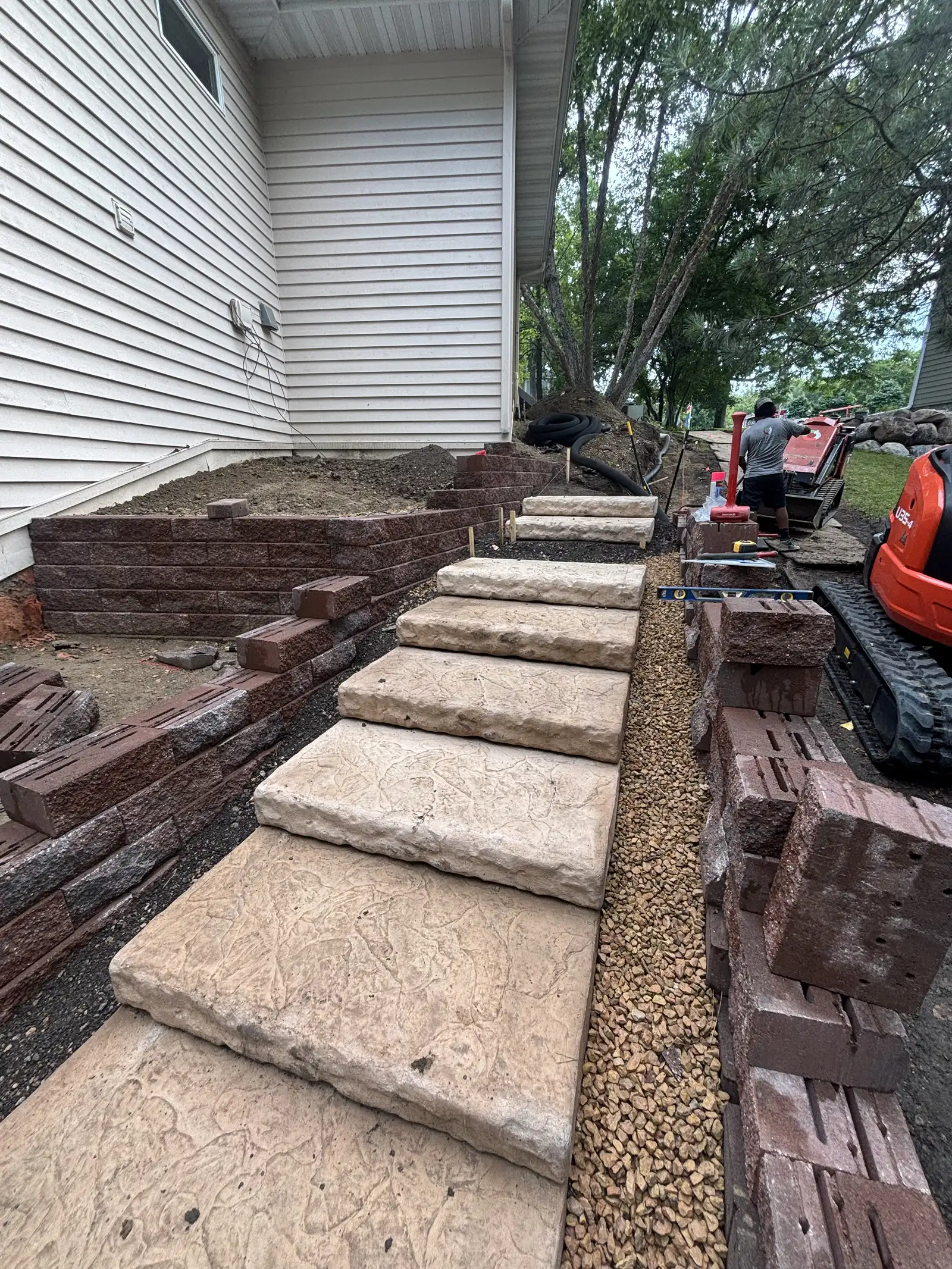
Natural stone walls are the strongest, longest-lasting wall structures available for residential landscapes. A properly built fieldstone or limestone wall will stand for 75 to 100+ years without the cracking, fading, or structural failure that plagues manufactured block walls after 20 to 30 years. According to the National Association of Landscape Professionals, natural stone hardscaping returns 150% to 200% of its cost in property value -- higher than any other landscape investment.
The Lake Minnetonka area's rolling terrain, steep lake banks, and clay-heavy soils make natural stone walls especially practical. Stone walls handle lateral earth pressure, freeze-thaw movement, and water drainage in ways that rigid manufactured systems cannot. Each stone interlocks with its neighbors, allowing the wall to flex slightly with seasonal soil movement rather than cracking under stress.
At Lifecycle Outdoor Services, we have built hundreds of natural stone walls across the western Twin Cities suburbs over 25+ years. Every wall we build starts with a proper foundation -- excavated below frost depth, compacted with angular base material, and backfilled with drainage aggregate. The result is a wall that looks better with age and never needs replacing.
Stone Types for Minnesota Landscapes
Fieldstone & Granite
Fieldstone is Minnesota's native wall material -- rounded and weathered glacial boulders that have been used in walls here for over 150 years. Granite fieldstone is extremely dense and freeze-thaw resistant, making it the most durable option for our climate. We source fieldstone from local quarries and select each piece for size, shape, and color to create walls with natural character that complement the surrounding landscape.
Fieldstone walls range from rustic dry-stack construction to mortared walls with tight joints. Dry-stack fieldstone walls allow water to pass through naturally, eliminating the hydrostatic pressure problems that cause rigid walls to fail. This makes fieldstone the top choice for retaining walls on sloped lakefront properties where water management is critical.
Limestone & Ledgestone
Limestone delivers a cleaner, more refined appearance than fieldstone while maintaining excellent structural performance. The naturally flat bedding planes of limestone make it ideal for coursed walls with tight, uniform joints. Ledgestone -- thin-cut limestone with a natural split face -- creates a contemporary stacked appearance that pairs well with modern home architecture.
We use Minnesota and Wisconsin-sourced limestone that performs well in our freeze-thaw climate. Low-porosity stone selection is critical in Minnesota because high-porosity limestone absorbs water that expands when frozen, causing spalling and surface degradation. Every stone we place is rated for our climate zone.
Mixed Stone & Custom Blends
Some of our most striking walls combine multiple stone types -- for example, a fieldstone retaining wall capped with cut limestone, or a garden wall that transitions from ledgestone to natural boulder at the ends. Mixed stone designs create visual depth and allow the wall to transition naturally between different areas of the landscape.
We also build natural stone veneers over structural concrete block cores for walls that need maximum structural strength with a natural stone appearance. This approach is common for tall retaining walls (over 4 feet) where engineering requirements call for reinforced block but the homeowner wants the look of natural stone. The result is indistinguishable from solid stone construction.
Where Stone Walls Make the Biggest Impact
Retaining Walls & Terracing
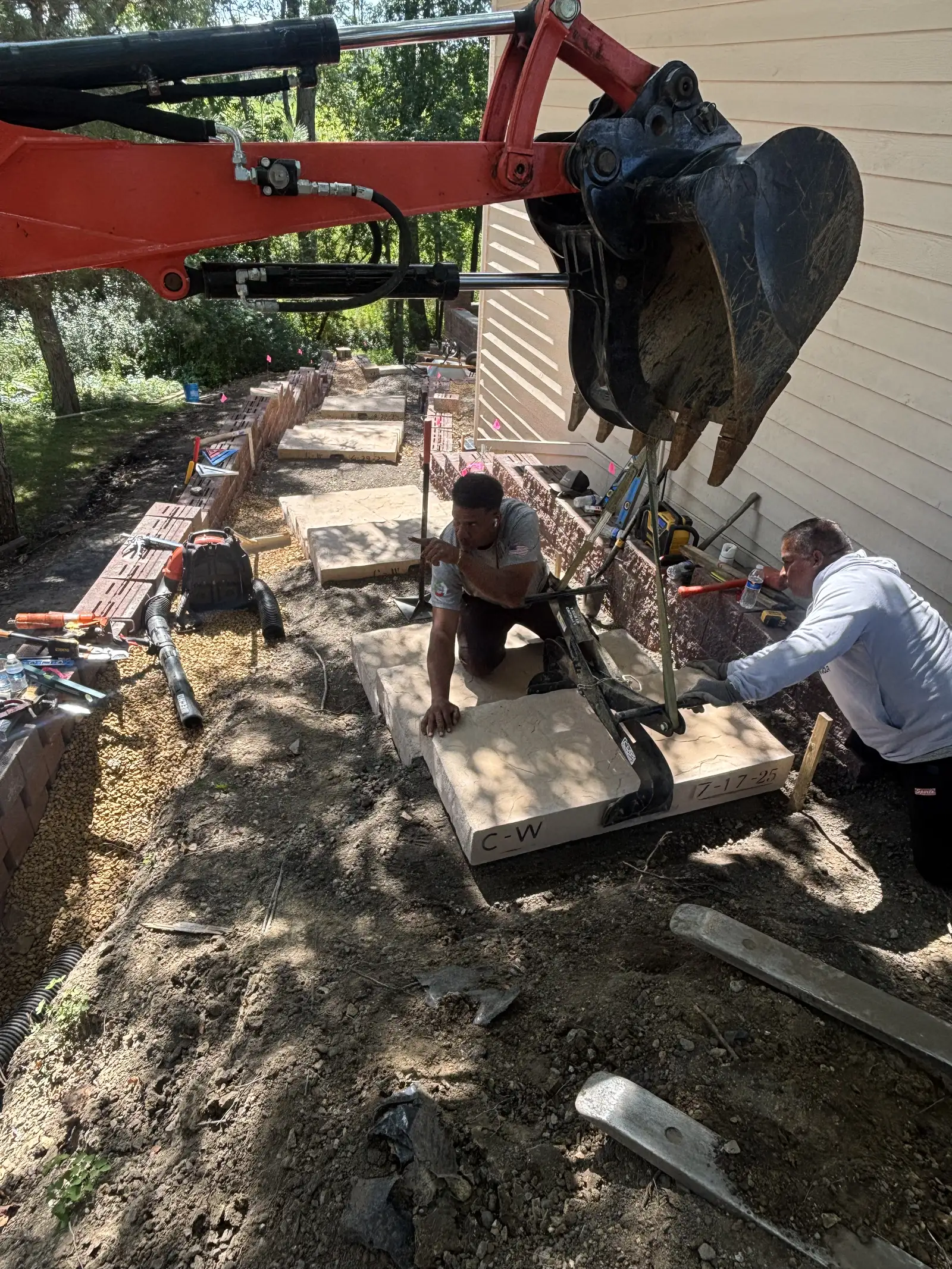
Natural stone retaining walls hold back hillsides while creating usable terraced space. On Lake Minnetonka properties with 10 to 30 feet of elevation change from house to shore, terraced stone walls transform unusable slopes into a series of flat areas for patios, gardens, and walkways. Every retaining wall includes proper drainage with filter fabric, drainage aggregate, and weep holes to prevent hydrostatic pressure buildup.
Garden Walls & Raised Beds
Freestanding stone garden walls define planting areas, create visual boundaries, and add vertical dimension to flat landscapes. Raised stone planting beds improve soil drainage in Minnesota's clay soils, extend the growing season by warming faster in spring, and reduce bending and kneeling for maintenance. Heights typically range from 18 to 36 inches.
Seat Walls & Outdoor Living
Stone seat walls provide built-in seating around patio areas, fire features, and gathering spaces. At 18 to 20 inches high with a smooth capstone, seat walls serve double duty as retaining structure and functional seating that never rots, rusts, or needs cushions. Seat walls are a core element of our outdoor living designs.
Pillar & Column Construction
Stone pillars frame driveway entrances, anchor pergola structures, and serve as decorative focal points. We build pillars with a reinforced concrete core and natural stone veneer for structural integrity, often incorporating landscape lighting fixtures and address plaques. Matching pillars to existing stone walls creates a cohesive estate-quality appearance.
Stone Wall FAQ
Natural stone walls in the Minnetonka area typically cost $45 to $85 per square face foot for fieldstone and $55 to $100 per square face foot for cut limestone, including materials, foundation preparation, drainage, and installation. A 30-foot-long, 3-foot-tall retaining wall would be approximately 90 square face feet, putting total cost in the $4,000 to $9,000 range. Pricing varies based on stone type, wall height, site access, and foundation requirements. We provide detailed quotes after an on-site evaluation.
Not always. Walls under 3 feet typically sit on a compacted gravel base that extends below frost depth (42 inches in Minnesota). Taller walls or walls on unstable soil may require a poured concrete footing. We evaluate soil conditions and wall height during the consultation and specify the appropriate foundation. Over-engineering the foundation wastes money, while under-engineering risks wall failure -- we size it correctly for each situation.
Stone walls use smaller, hand-placed stones (typically 20 to 200 pounds each) stacked in courses with or without mortar. Boulder walls use large individual boulders (500 to 5,000+ pounds) placed with heavy equipment. Stone walls offer more design flexibility and a refined appearance, while boulder walls provide a natural, rustic look and handle extreme slopes with fewer structural requirements. We build both and can recommend which is best for your specific project.
A properly built natural stone wall with correct drainage and foundation will last 75 to 100+ years in Minnesota's climate. Dry-stack walls may need minor re-stacking of individual stones every 20 to 30 years as the wall settles, but the structure itself remains sound indefinitely. This far exceeds the 20 to 30 year lifespan of manufactured block walls, which can crack, fade, and lose structural integrity over time.
Build a Wall That Outlasts Everything Else
Schedule your free on-site consultation. We will evaluate your property, discuss stone options, and provide a detailed proposal with transparent pricing.