
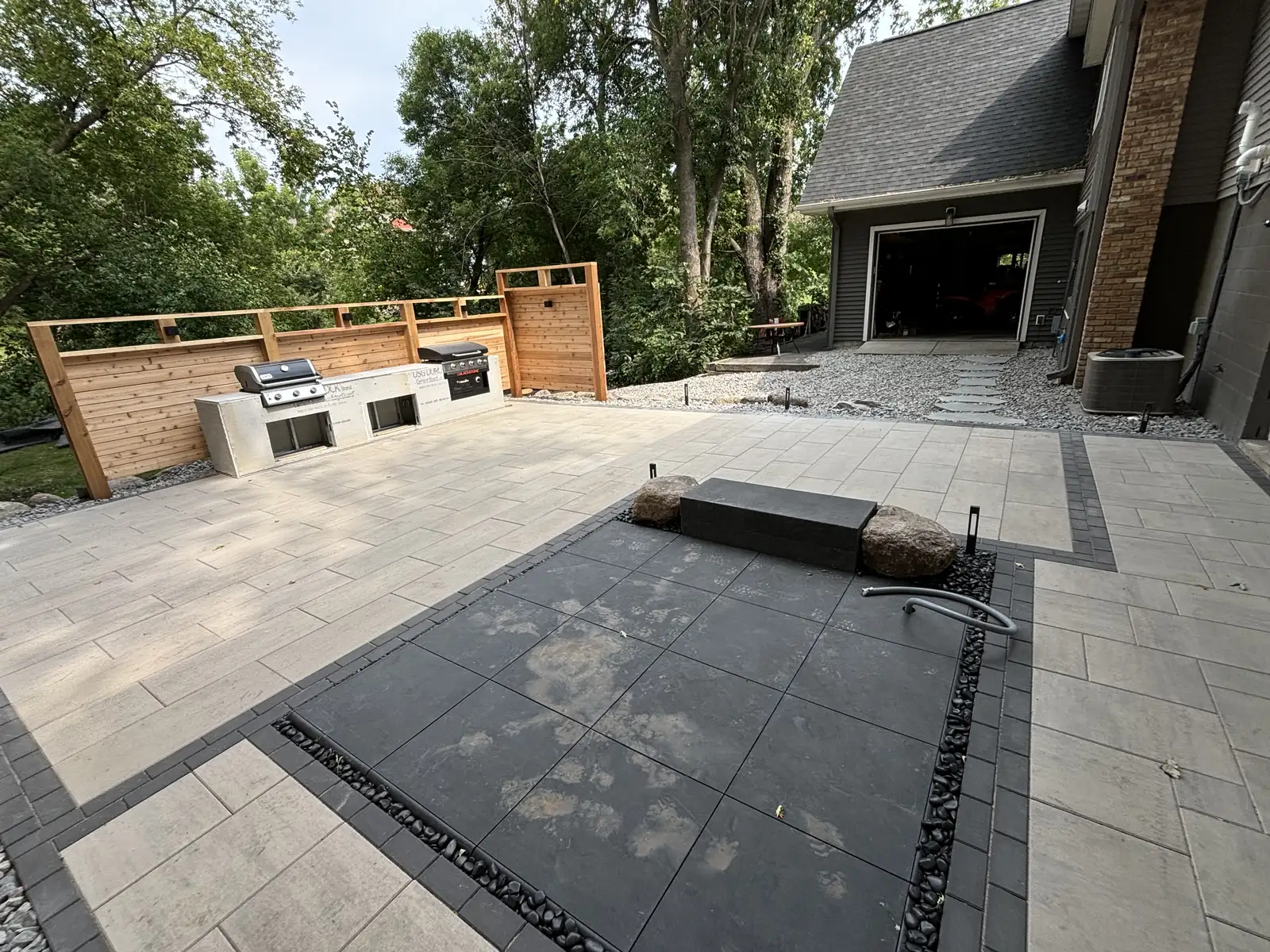
Outdoor kitchens need more planning than a grill island dropped onto a patio. Lifecycle Outdoor Services designs outdoor kitchen areas around cooking workflow, counter space, utilities, seating, storage, traffic, base support, drainage, lighting, and nearby fire or lounge areas.
Cooking spaces have to work during real gatherings
The best outdoor kitchen gives the cook room to work without blocking the patio. Grill placement, prep counter, landing areas, trash, storage, refrigerator options, and seating all affect how the space feels when people are outside.
Outdoor kitchens also need durable hardscape below and around them. The patio base, drainage pitch, utility routes, and material transitions should be settled before cabinets, stone, or appliance surrounds are installed.
- Grill, counter, appliance, storage, and seating layout around how the space will be used.
- Utility routing, shutoffs, clearances, ventilation, and coordination with trades when needed.
- Patio base, drainage, wall connections, privacy screens, lighting, and traffic paths.
- Material selection that fits the home and handles Minnesota weather.
Outdoor kitchens planned for real use
Lifecycle Outdoor Services designs outdoor kitchens around cooking flow, grill placement, landing space, counter depth, appliance access, storage, seating, lighting, and traffic between the house and patio. Utility routes, shutoffs, ventilation, clearances, and trade coordination are addressed before the hardscape is locked in.
The kitchen structure also needs a durable patio base, proper drainage, compatible wall connections, weather-ready materials, and comfortable links to privacy screens, fire features, and dining areas. The result is an outdoor cooking space that works during busy summer gatherings and stands up to Minnesota weather.
Outdoor kitchen versus broader outdoor living
An outdoor kitchen is one part of an outdoor living space. It may need to connect to a dining patio, fire feature, lounge zone, hot tub, privacy screen, lighting plan, and planting beds. Planning those connections prevents a cramped or isolated cooking area.
Lifecycle Outdoor Services can coordinate the kitchen with the surrounding patio and landscape so the space feels complete.
Cooking Layout, Utilities, And Weather-Ready Materials
A complete estimate accounts for counter layout, appliances, utilities, storage, drainage, and patio structure. Lifecycle Outdoor Services also reviews grill placement, traffic flow, shade, lighting, and winter durability so the price reflects the real work needed on the property, not just the finished surface homeowners will see.
Homeowners in Shorewood, Minnetonka, Wayzata, Deephaven, Excelsior, Orono, and nearby communities can call (612) 220-6380 or use the estimate form to discuss the property and project goals. Photos, rough timing, and notes about wet areas, slopes, access, or existing hardscape help the team prepare for the first review.
What should be planned before building an outdoor kitchen?
Plan the cooking layout, utility routes, patio base, drainage, clearances, seating, lighting, and how people will move around the space.
Does Lifecycle Outdoor Services offer outdoor kitchen design and construction near Lake Minnetonka?
Yes. Lifecycle Outdoor Services serves Shorewood, Minnetonka, Wayzata, Deephaven, Excelsior, Orono, and nearby west metro communities. Each project is reviewed for counter layout, appliances, utilities, storage, drainage, and patio structure.
Can this be combined with other landscape services?
Yes. Related landscape work can be coordinated when decisions about counter layout, appliances, utilities, storage, drainage, and patio structure depend on grill placement, traffic flow, shade, lighting, and winter durability. Planning connected items together helps prevent rework and keeps the finished yard cohesive.
How do I request an estimate?
Use the contact form or call (612) 220-6380. Include the property address, photos, timing, and notes about counter layout, appliances, utilities, storage, drainage, and patio structure; details about grill placement, traffic flow, shade, lighting, and winter durability help make the first conversation more productive.