
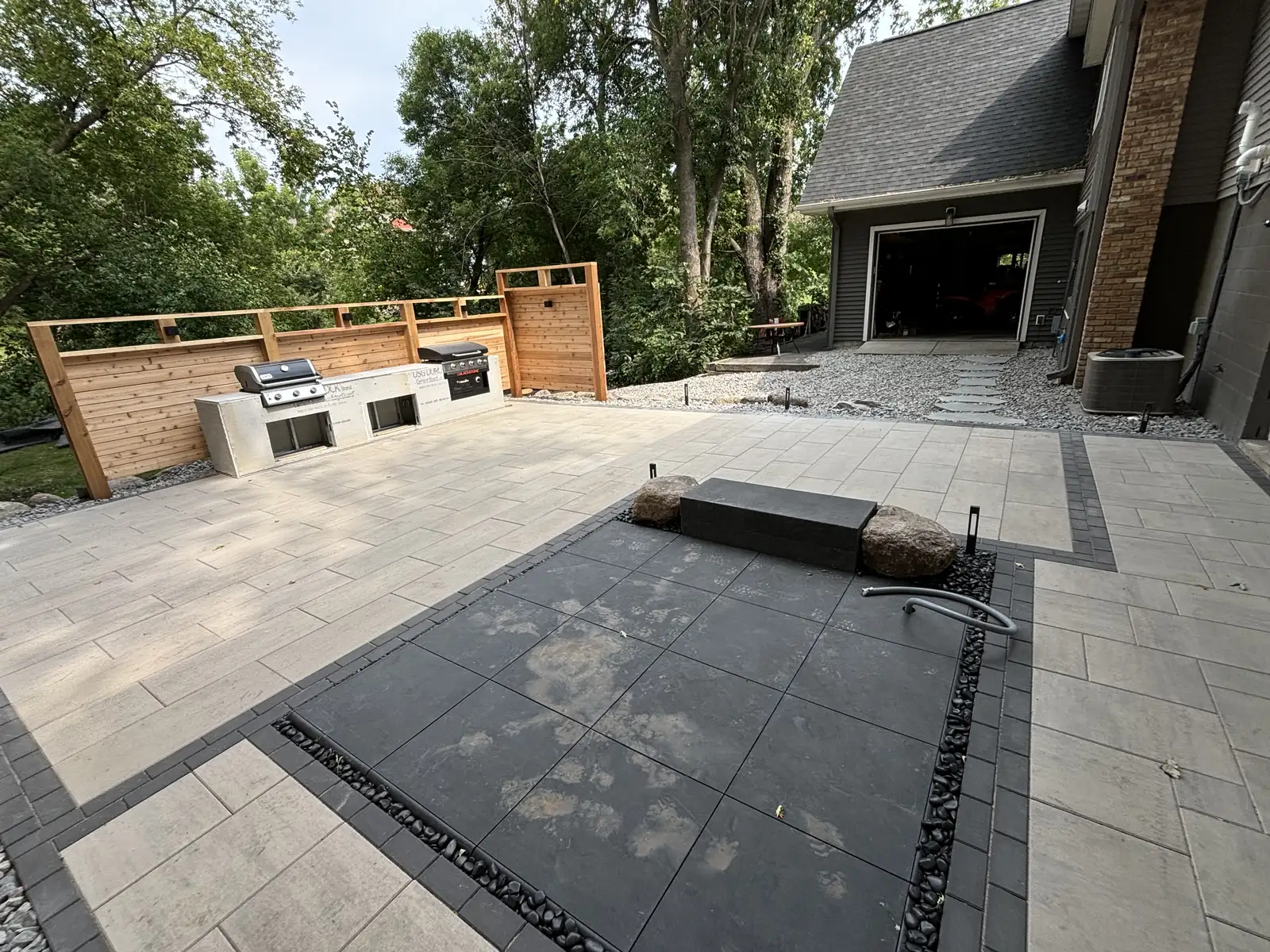
Outdoor living spaces bring patios, kitchens, fire features, privacy, lighting, walls, planting together into a yard that works for everyday use. Lifecycle Outdoor Services designs and builds these spaces around how homeowners actually gather, cook, relax, and move through the property.
A complete outdoor room needs connected decisions
A patio may need a kitchen, a fire feature, a seat wall, lighting, privacy screening, steps, drainage, or planting to feel finished. Those pieces should not be added randomly. They need coordinated elevations, clear circulation, material compatibility, and a plan for water.
Lake Minnetonka properties often have slopes, views, trees, and older hardscape that shape the best layout. A thoughtful outdoor living plan uses those conditions rather than fighting them.
- How the space will be used for dining, cooking, lounging, fire features, or hot tubs.
- Patio size, step locations, wall heights, privacy, lighting, and furniture clearances.
- Drainage pitch, base preparation, access, utilities, and restoration after construction.
- Planting structure, turf edges, seasonal maintenance, and future phases.
Outdoor living planning priorities
During the walkthrough, Lifecycle Outdoor Services pays close attention to how the space will be used for dining, cooking, lounging, fire features, or hot tubs. The estimate also needs to account for patio size, step locations, wall heights, privacy, lighting, and furniture clearances, because those details shape the preparation work and the finished result.
A clear project scope explains drainage pitch, base preparation, access, utilities, and restoration after construction. It also accounts for planting structure, turf edges, seasonal maintenance, and future phases so the visible work connects naturally to the surrounding yard.
How this differs from one feature at a time
A single patio can be useful, but a full outdoor living space needs the supporting details that make people want to stay outside. Lighting, privacy, comfortable routes, fire features, and planting all change the feel and function of the space.
Lifecycle Outdoor Services can build the full scope or plan it in phases so each improvement supports the next one.
Designing The Patio Around How You Gather
A complete estimate accounts for patios, fire features, kitchens, privacy, lighting, drainage, and furniture zones. Lifecycle Outdoor Services also reviews how family use, entertaining, grade, and future phases fit together so the price reflects the real work needed on the property, not just the finished surface homeowners will see.
Homeowners in Shorewood, Minnetonka, Wayzata, Deephaven, Excelsior, Orono, and nearby communities can call (612) 220-6380 or use the estimate form to discuss the property and project goals. Photos, rough timing, and notes about wet areas, slopes, access, or existing hardscape help the team prepare for the first review.
Can an outdoor living project be phased?
Yes. The first phase can prepare grades, drainage, sleeves, patio edges, and wall locations so later kitchen, lighting, fire, or planting work fits cleanly.
Does Lifecycle Outdoor Services offer outdoor living construction near Lake Minnetonka?
Yes. Lifecycle Outdoor Services serves Shorewood, Minnetonka, Wayzata, Deephaven, Excelsior, Orono, and nearby west metro communities. Each project is reviewed for patios, fire features, kitchens, privacy, lighting, drainage, and furniture zones.
Can this be combined with other landscape services?
Yes. Related landscape work can be coordinated when decisions about patios, fire features, kitchens, privacy, lighting, drainage, and furniture zones depend on how family use, entertaining, grade, and future phases fit together. Planning connected items together helps prevent rework and keeps the finished yard cohesive.
How do I request an estimate?
Use the contact form or call (612) 220-6380. Include the property address, photos, timing, and notes about patios, fire features, kitchens, privacy, lighting, drainage, and furniture zones; details about how family use, entertaining, grade, and future phases fit together help make the first conversation more productive.