
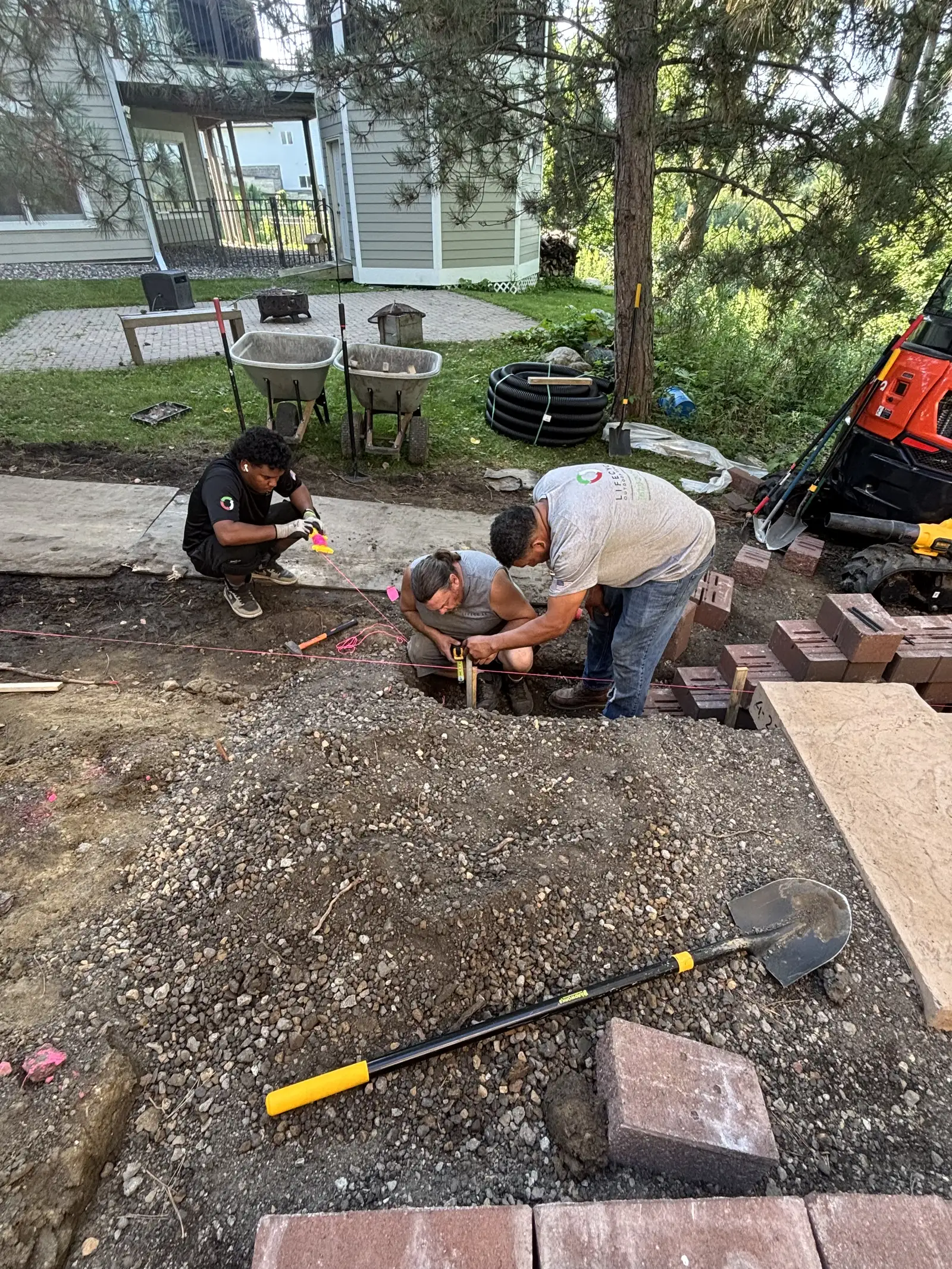
Hiring a retaining wall contractor means choosing the team responsible for both the wall you see and the drainage, excavation, base, and grading that make it last. Lifecycle Outdoor Services plans retaining walls around slope, water, access, material selection, and how the wall connects to the rest of the yard.
Contractor decisions that show up years later
A strong wall estimate should explain more than square feet. It should describe what will be removed, how deep the base will be prepared, what backfill will be used, how water will exit, and how disturbed lawn or planting areas will be restored. Those details are where long-term performance is won or lost.
Lake Minnetonka properties often add complexity with mature landscapes, tight access, patios near the work area, and grades that direct water toward structures or shorelines.
- Existing wall movement, leaning, cracking, settling, or drainage staining.
- Slope conditions, surcharge, nearby patios, trees, fences, driveways, or structures.
- Drainage discharge options and how surface water will be handled after construction.
- Material choices, finish expectations, cleanup, and restoration.
What a retaining wall walkthrough should cover
During the walkthrough, Lifecycle Outdoor Services pays close attention to existing wall movement, leaning, cracking, settling, or drainage staining. The estimate also needs to account for slope conditions, surcharge, nearby patios, trees, fences, driveways, or structures, because those details shape the preparation work and the finished result.
A clear project scope explains drainage discharge options and how surface water will be handled after construction. It also accounts for material choices, finish expectations, cleanup, and restoration so the visible work connects naturally to the surrounding yard.
Coordinating walls with the rest of the project
A wall may be part of a larger patio, step, planting, drainage, or outdoor living plan. Coordinating that scope prevents awkward heights, mismatched materials, and water routing problems.
Lifecycle Outdoor Services can handle the wall and related landscape work so homeowners are not left coordinating separate contractors whose scopes meet in the same small area.
Structural Wall Planning Before The Face Block
A complete estimate accounts for wall height, base preparation, backfill, drainage discharge, and surcharge. Lifecycle Outdoor Services also reviews leaning walls, nearby patios, trees, driveways, and grade restoration so the price reflects the real work needed on the property, not just the finished surface homeowners will see.
Homeowners in Shorewood, Minnetonka, Wayzata, Deephaven, Excelsior, Orono, and nearby communities can call (612) 220-6380 or use the estimate form to discuss the property and project goals. Photos, rough timing, and notes about wet areas, slopes, access, or existing hardscape help the team prepare for the first review.
Should my retaining wall contractor also review drainage?
Yes. Drainage is one of the most important parts of retaining wall work, and it should be reviewed before material and wall height decisions are finalized.
Does Lifecycle Outdoor Services offer retaining wall construction near Lake Minnetonka?
Yes. Lifecycle Outdoor Services serves Shorewood, Minnetonka, Wayzata, Deephaven, Excelsior, Orono, and nearby west metro communities. Each project is reviewed for wall height, base preparation, backfill, drainage discharge, and surcharge.
Can this be combined with other landscape services?
Yes. Related landscape work can be coordinated when decisions about wall height, base preparation, backfill, drainage discharge, and surcharge depend on leaning walls, nearby patios, trees, driveways, and grade restoration. Planning connected items together helps prevent rework and keeps the finished yard cohesive.
How do I request an estimate?
Use the contact form or call (612) 220-6380. Include the property address, photos, timing, and notes about wall height, base preparation, backfill, drainage discharge, and surcharge; details about leaning walls, nearby patios, trees, driveways, and grade restoration help make the first conversation more productive.