
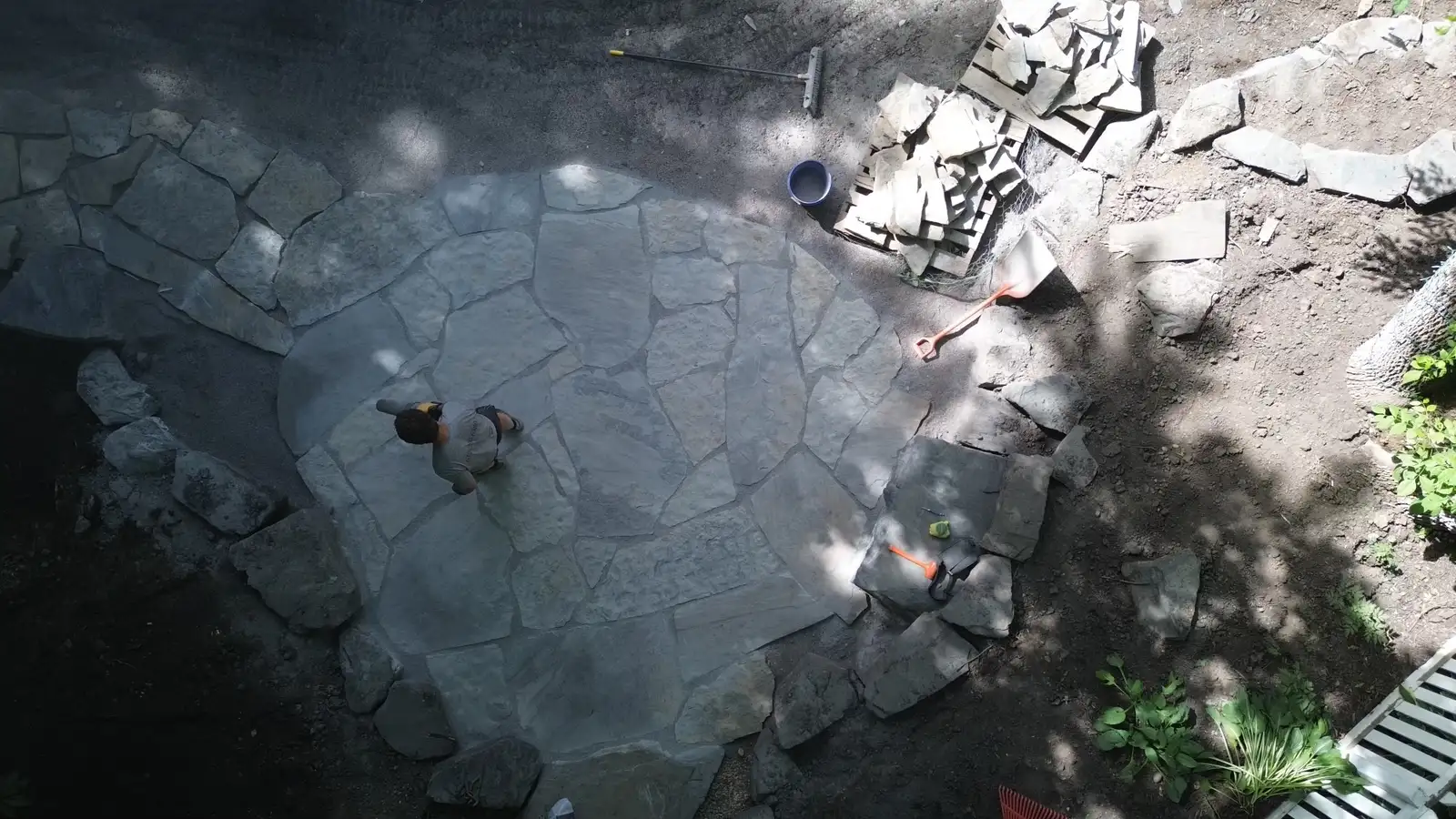
Boulder walls bring a natural Lake Minnetonka look while helping manage grade, planting beds, and transitions around patios, shorelines, and sloped yards. Lifecycle Outdoor Services installs boulder walls with attention to stone selection, base, drainage, equipment access, and how the wall fits the rest of the landscape.
Natural stone massing that fits the property
Boulder walls are not laid like block walls. The installer has to choose stone sizes, bury enough mass, set stable contact points, and shape the wall so it looks intentional from the house, patio, lawn, and street. The best walls feel like they belong on the site rather than forcing a straight engineered look into a natural setting.
They are useful for garden terraces, lakeside transitions, driveway edges, patio backdrops, and informal retaining needs where organic shape is preferred.
- Access for equipment and delivery without damaging lawn, trees, or nearby hardscape.
- Wall height, slope load, drainage path, and where soil pressure will go.
- Stone size, color, shape, and how the face should blend with plantings.
- Future maintenance around mulch, weeds, turf edges, and snow storage.
Site-ready boulder wall installation
Lifecycle Outdoor Services plans boulder walls around the real conditions of the yard: equipment access, delivery routes, slope pressure, drainage paths, and the way the finished stone face will meet lawn, planting beds, patios, or driveways. That field planning helps the wall look natural while still giving the grade the support it needs.
Homeowners also get guidance on stone size, color, face character, turf edges, mulch transitions, and snow storage so the wall fits the property after installation day. The goal is a boulder wall that feels settled into the landscape instead of added as a separate feature.
Boulder walls are different from block retaining walls
A boulder wall can look softer and more natural, but it is not the answer for every retaining problem. Tall structural walls, tight property lines, or areas that need a precise vertical face may call for segmental block or a different engineered solution.
Lifecycle Outdoor Services helps choose the wall type based on height, load, appearance, drainage, budget, access, and how the surrounding landscape will be finished.
Access, Stone Size, And Slope Drive The Wall Plan
A complete estimate accounts for stone size, equipment access, buried mass, drainage, and natural transitions. Lifecycle Outdoor Services also reviews slope pressure, boulder face character, planting pockets, and turf edges so the price reflects the real work needed on the property, not just the finished surface homeowners will see.
Homeowners in Shorewood, Minnetonka, Wayzata, Deephaven, Excelsior, Orono, and nearby communities can call (612) 220-6380 or use the estimate form to discuss the property and project goals. Photos, rough timing, and notes about wet areas, slopes, access, or existing hardscape help the team prepare for the first review.
When is a boulder wall a good choice?
Boulder walls are a good fit for natural terraces, planting beds, informal grade transitions, and Lake Minnetonka landscapes where organic stone fits the home and yard.
Does Lifecycle Outdoor Services offer boulder wall installation near Lake Minnetonka?
Yes. Lifecycle Outdoor Services serves Shorewood, Minnetonka, Wayzata, Deephaven, Excelsior, Orono, and nearby west metro communities. Each project is reviewed for stone size, equipment access, buried mass, drainage, and natural transitions.
Can this be combined with other landscape services?
Yes. Related landscape work can be coordinated when decisions about stone size, equipment access, buried mass, drainage, and natural transitions depend on slope pressure, boulder face character, planting pockets, and turf edges. Planning connected items together helps prevent rework and keeps the finished yard cohesive.
How do I request an estimate?
Use the contact form or call (612) 220-6380. Include the property address, photos, timing, and notes about stone size, equipment access, buried mass, drainage, and natural transitions; details about slope pressure, boulder face character, planting pockets, and turf edges help make the first conversation more productive.