
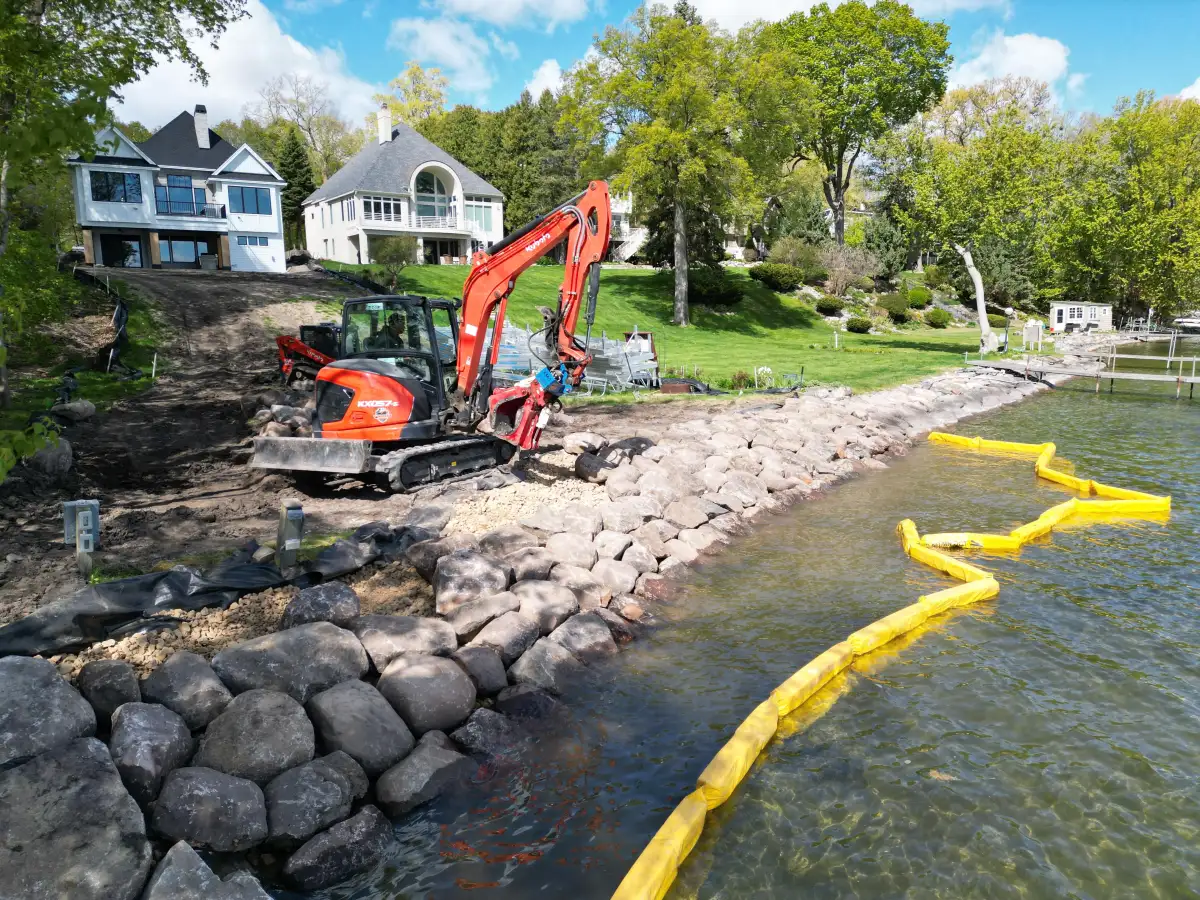
Lifecycle Outdoor Services handles shoreline and erosion control for Lake Minnetonka properties where water is cutting channels through turf, exposing soil on slopes, washing mulch into the lake, or weakening the outdoor areas that connect the house to the shoreline.
Control The Runoff Before It Cuts A New Path
Erosion usually starts uphill from the obvious damage. Downspouts may empty onto compacted turf. A patio may pitch toward a slope. A driveway edge, neighboring grade, or bare planting bed may concentrate water into one narrow path. Lifecycle Outdoor Services follows those routes before recommending a repair.
That drainage-first review is different from a shoreline reconstruction scope. The priority is to slow water, spread it safely, reshape grades where needed, and restore vulnerable soil so the same washout does not return after the next heavy rain or spring melt.
Signs The Yard Is Feeding The Problem
Lakefront erosion often shows up at the water side of the lot, but the cause may be roof runoff, hardscape pitch, foot traffic, or a steep lawn that has lost protective turf. A good repair starts by reading those patterns.
- Thin channels through turf: narrow cuts that show where water accelerates during heavy rain.
- Washed mulch or soil: beds below downspouts, patios, or slopes that no longer hold cover.
- Soft landing areas: muddy spots near steps, docks, or paths where traffic and water meet.
- Exposed roots and edges: soil loss around trees, walls, patios, or lawn breaks near the lake.
Repair Choices For Slopes, Swales, And Lake Access
The right erosion-control scope may include regrading, swales, erosion blanket, turf repair, reinforced planting zones, stone check areas, or a cleaner transition into a future shoreline stabilization project. Lifecycle Outdoor Services selects the mix based on where water starts, how fast it moves, and what areas need to stay walkable.
Some Lake Minnetonka properties need a focused washout repair. Others need erosion control coordinated with patios, lake steps, retaining walls, or drainage improvements so water can move from the house toward the lake without damaging the lawn, planting beds, or shoreline edge.
- Map water movement from rooflines, patios, driveways, lawns, slopes, and adjacent grades.
- Separate drainage fixes from structural shoreline work so the scope is priced around the real cause.
- Use grading, stone, turf, erosion blanket, and planting details that can handle Minnesota freeze-thaw cycles.
- Coordinate erosion repairs with yard planning, retaining walls, patios, and lake access improvements when they affect the same water path.
Drainage, Soil Cover, And Restoration Work Together
A durable erosion repair needs more than filling the visible scar. Lifecycle Outdoor Services reviews soil exposure, grade breaks, drainage outlets, crew access, and the restoration needed once the water path is corrected. The finished scope should explain what needs to be slowed, what needs to drain, what should be replanted, and what areas need stone or turf reinforcement.
That matters for homeowners who want the lakeside yard to look natural, not patched. A well-planned repair can protect the slope, clean up worn access routes, reduce sediment movement, and make future patio, wall, step, or shoreline work easier to plan.
When The Shoreline Edge Needs A Separate Plan
If stone has shifted at the waterline, the bank has lost shape, or dock and stair access needs a stronger finished edge, erosion control may need to be paired with shoreline stabilization. Lifecycle Outdoor Services will separate those recommendations so homeowners can understand what is drainage repair, what is bank protection, and what can be phased.
Making those decisions early helps prevent a new patio, wall, or stairway from sending water back into the same weak area. It also gives the finished lakefront a cleaner transition from lawn to access route to shoreline.
How do I know if runoff is causing shoreline erosion?
Look for channels below downspouts, patio edges, driveway edges, steep lawn areas, or places where water repeatedly cuts through mulch, turf, or bare soil. A site review can confirm whether grading or drainage corrections should be part of the repair.
Can erosion control be a focused repair?
Yes. Some properties need targeted grading, turf, planting, stone, or drainage work rather than a full shoreline rebuild. More exposed lake edges may need stabilization if the bank or stone profile is failing.
Will the repair work around existing patios, walls, and lake steps?
Yes. Existing patios, lake steps, retaining walls, docks, and planting beds are reviewed so erosion control ties into the current landscape and does not create awkward drainage or access transitions.
How do I request an erosion control estimate?
Call (612) 220-6380 or use the contact form. Share the address, photos of the eroded area, where water appears to come from, and whether nearby patios, walls, steps, or shoreline improvements are also being considered.