
Before booking a landscape contractor, Shorewood homeowners need more than a list of services and a total price. The useful questions uncover whether the contractor understands the job, how the proposed work connects to the property, and what each party will be responsible for after construction.
That matters on projects where a patio, retaining wall, steps, planting, lighting, grading, or shoreline access changes more than one part of the yard. Lifecycle Outdoor Services coordinates these connected decisions through its landscape contractor services and serves homeowners throughout Shorewood, Minnesota.
1. Is this a design project, a construction project, or both?
Start by describing the outcome, not only the feature. “We want a patio” is a starting point. “We need a comfortable dining area that connects the back door to the lower yard without worsening the wet corner” gives a contractor a clearer problem to evaluate.
Ask whether the scope can be defined during a site visit or whether measurements, layout options, elevations, material decisions, or a coordinated landscape design should come first. A design phase can be useful when several features share grades, circulation, utilities, or construction access. A focused replacement may need a more direct construction plan.
A good first answer defines the next decision. It should tell you what can be priced now, what still needs to be verified, and whether design or site information is needed before a dependable construction scope can be written.
2. What should the contractor evaluate on a Shorewood property?
Ask the contractor to walk the route water takes across the property: from roofs and high points, across lawn or hardscape, past walls and planting beds, and toward a workable outlet. The City of Shorewood’s surface and stormwater guidance identifies catch basins, ponds, outlet structures, drainage swales, and related features as parts of the local system. A private landscape plan should not be discussed as if the surrounding drainage network does not exist.
The same walk should cover slopes, mature trees, utilities, irrigation, existing hardscape, shoreline proximity, neighboring edges, and the equipment route from the street. If water is already collecting, ask whether the contractor needs to investigate grading, downspout routing, wall drainage, soil conditions, or a dedicated yard drainage solution before recommending a fix.
Do not expect every answer to be final during the first meeting. Do expect the contractor to separate visible facts from conditions that still require measurements, utility locations, review, or excavation.
3. Can you tell what is included without filling in the blanks?
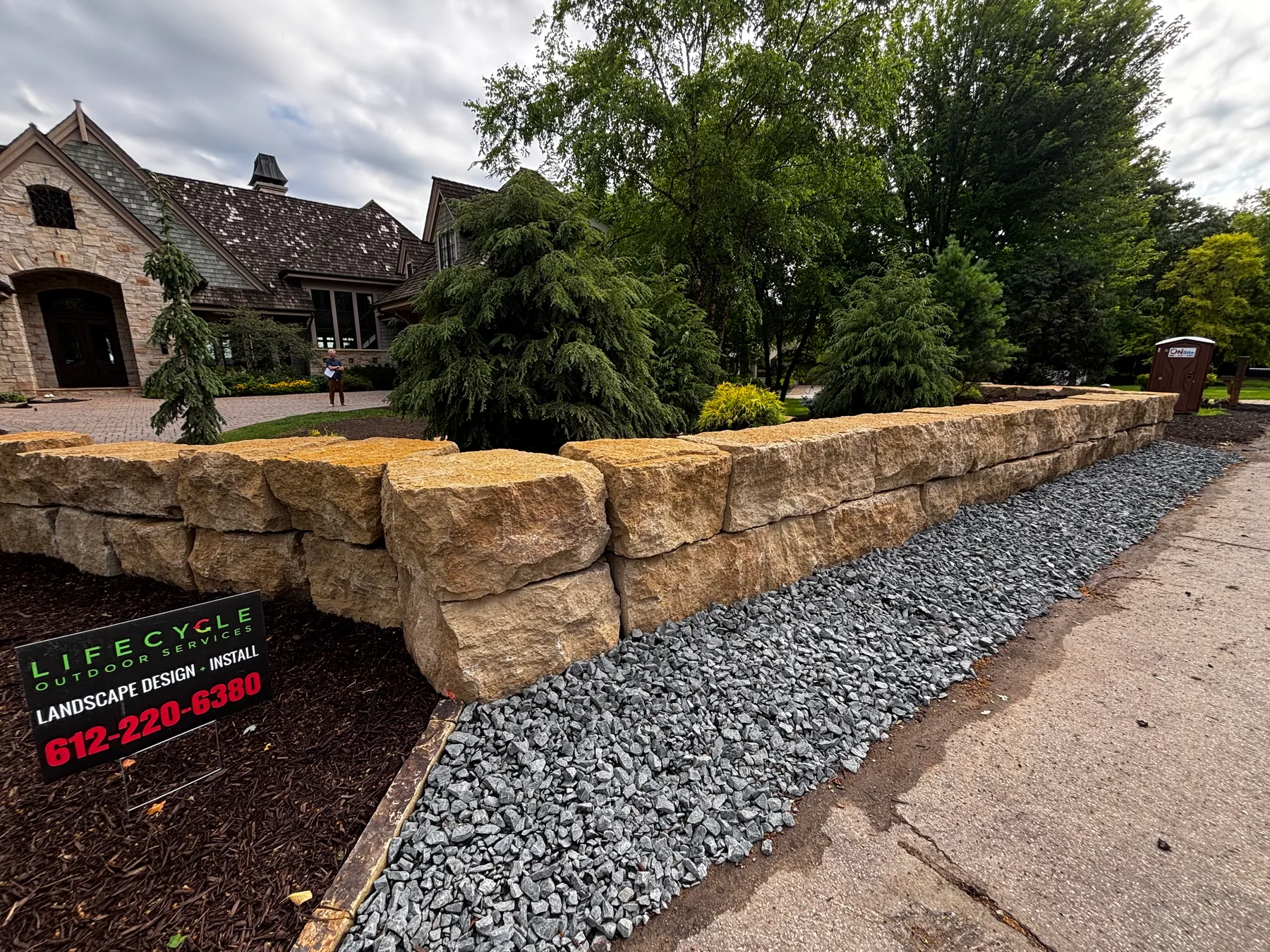
A proposal should make the construction scope understandable. For a paver patio, that could include removal, excavation, base preparation, bedding, pavers, edge restraint, joints, pitch, transitions, disposal, and restoration. For a retaining wall, it could include removal, base, drainage aggregate, backfill, outlets, wall materials, caps, tie-ins, and finish grading.
Ask which quantities and selections are final, which are allowances, and which conditions could change the scope. Confirm how delivery, equipment, utility work, permits or approvals, landscape repair, cleanup, and changes are handled. Two proposals with different totals may not describe the same amount of preparation or restoration.
If you are reviewing more than one bid, use the same checklist for each. The related guide to comparing Shorewood landscape proposals explains how to separate confirmed work, items that need verification, and exclusions.
One of the most common landscaping mistakes is choosing a visible finish before resolving what supports it. Stone color and paver pattern matter, but grade, water movement, base conditions, mature plant size, and access can control whether the idea is buildable.
4. How should you compare an hourly rate or maintenance price?
Homeowners often ask whether $100 per hour is too much for landscape work. The rate alone cannot answer that. Ask whether it covers one worker or a crew, what equipment is included, how travel, materials, disposal, and subcontracted work are billed, and what production result is expected. For defined construction, a clear scope and total may be more useful than comparing labor rates in isolation.
Maintenance pricing needs the same context. Property size, visit frequency, mowing or garden care, seasonal cleanup, pruning, bed edging, mulch, plant replacement, fertilizer, hauling, and winter responsibilities can all change the number. Ask for the included tasks and exclusions in writing, then compare the annual responsibility—not just the lowest per-visit figure.
5. What happens after installation?
Ask who is responsible for watering new plantings or sod, replacing joint material, checking drains and outlets, clearing leaves from drainage paths, maintaining mulch, controlling weeds, and operating lighting or other installed features. Care responsibilities should match the materials and season instead of relying on one generic maintenance promise.
Closeout should also define what “finished” means: final grading, cleanup, surface condition, restoration, operation of installed systems, care information, and a walkthrough of the written scope. If product information or a workmanship commitment applies, ask for the exact terms and exclusions in writing rather than assuming all materials and tasks are covered the same way.
Answers that deserve a follow-up question
Vague answers are not always a reason to reject a contractor; sometimes a site condition genuinely needs more investigation. The important distinction is whether the uncertainty is named. “We will determine that after elevations are measured” is different from ignoring the issue.
Ask for more detail if the proposal has no clear drainage outlet, treats access as an afterthought, uses allowances without assumptions, leaves restoration unaddressed, or relies on verbal approval for scope changes. A useful proposal makes uncertainty visible before it becomes a surprise.
Frequently asked questions
What is the rule of three in landscaping?
The rule of three is a design guideline that groups plants, materials, or visual elements in odd numbers to create rhythm and balance. It is not a construction rule, and a landscape plan should still respond to the property’s scale, circulation, drainage, mature size, and maintenance needs.
How much should I pay for landscaping maintenance?
There is no useful one-price answer without defining property size, visit frequency, seasonal tasks, materials, hauling, and what the contractor includes. Compare itemized scopes and annual responsibilities, not just a per-visit number.
Is $100 an hour too much for landscape work?
An hourly rate by itself does not show whether a proposal is a good value. Ask whether the rate is for one person or a crew, what equipment and overhead it includes, how materials and disposal are billed, and whether the work is better priced as a defined scope.
What are common landscaping mistakes to avoid?
Common planning mistakes include choosing finishes before resolving grades and drainage, ignoring mature plant size and maintenance, comparing proposal totals without comparing inclusions, and leaving access or restoration unaddressed.
Does Lifecycle Outdoor Services provide landscape contractor services in Shorewood, MN?
Yes. Lifecycle Outdoor Services is based in Shorewood and provides landscape contractor services in Shorewood and communities throughout the Lake Minnetonka area.
Ready to discuss a Shorewood landscape project? Contact Lifecycle Outdoor Services or call (612) 220-6380 to start a conversation about the property, the work you are considering, and the conditions that may shape the plan.