
Riprap Is the Most Effective Shoreline Erosion Solution
Lakeshore riprap is a layer of large stones (typically 6 to 36 inches in diameter) placed along the water's edge to absorb wave energy and prevent erosion of the shoreline bank. The Minnesota Department of Natural Resources identifies riprap as the preferred hard-armoring method for shoreline stabilization because it is durable, maintenance-free, and allows natural vegetation to establish between stones. For Lake Minnetonka properties, where boat wakes, wind-driven waves, and ice push cause constant shoreline erosion, properly installed riprap is the most reliable long-term protection.
Without riprap or other stabilization, lakefront properties lose an average of 6 to 12 inches of shoreline per year on exposed banks -- according to the Minnehaha Creek Watershed District (MCWD). Over a decade, that is 5 to 10 feet of lost property, undermined trees, exposed utilities, and collapsed banks that cost far more to repair than preventive riprap installation. Lake Minnetonka's wind fetch (open water distance) creates significant wave action on north and east-facing shorelines, making these properties especially vulnerable.
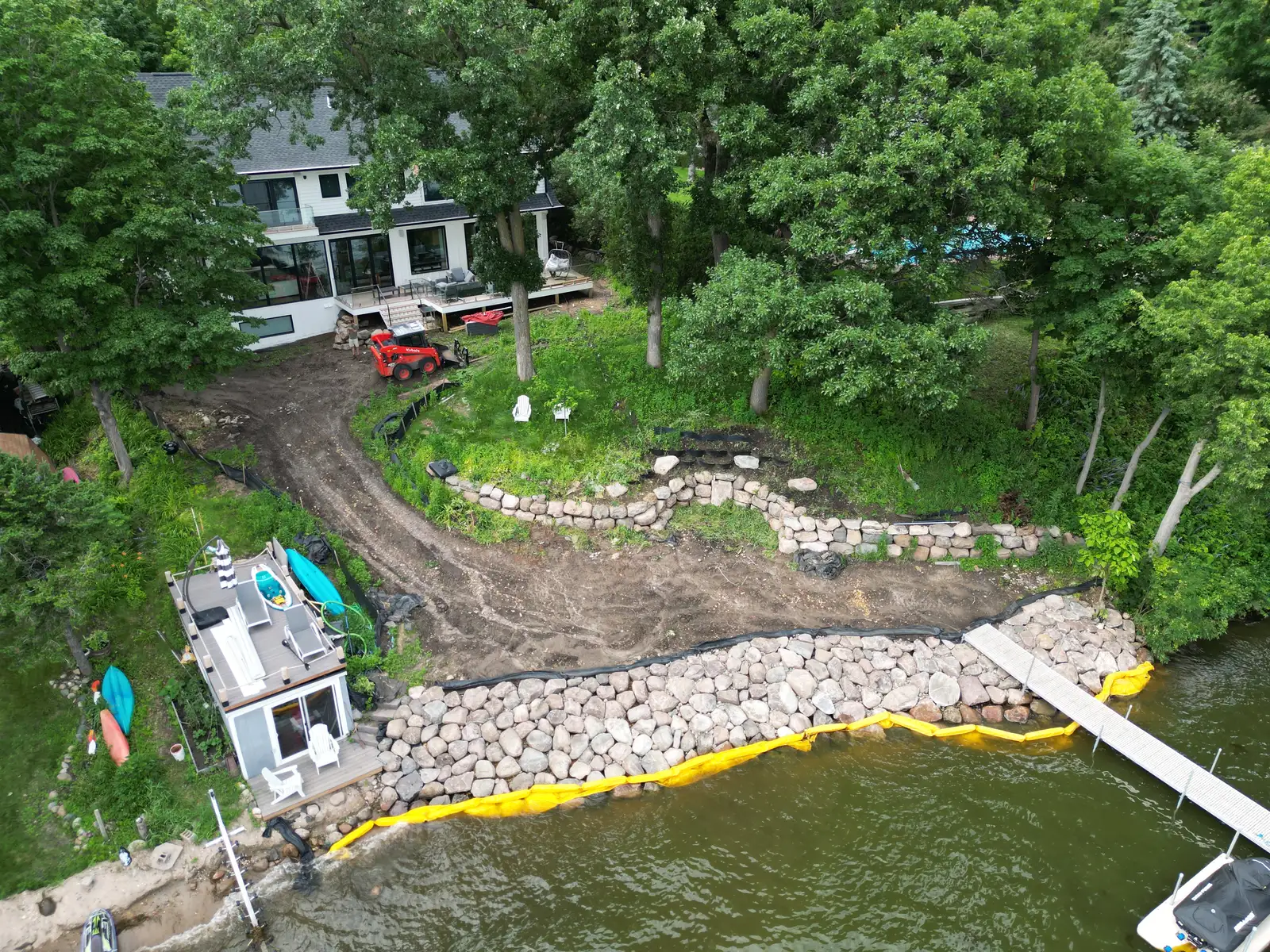
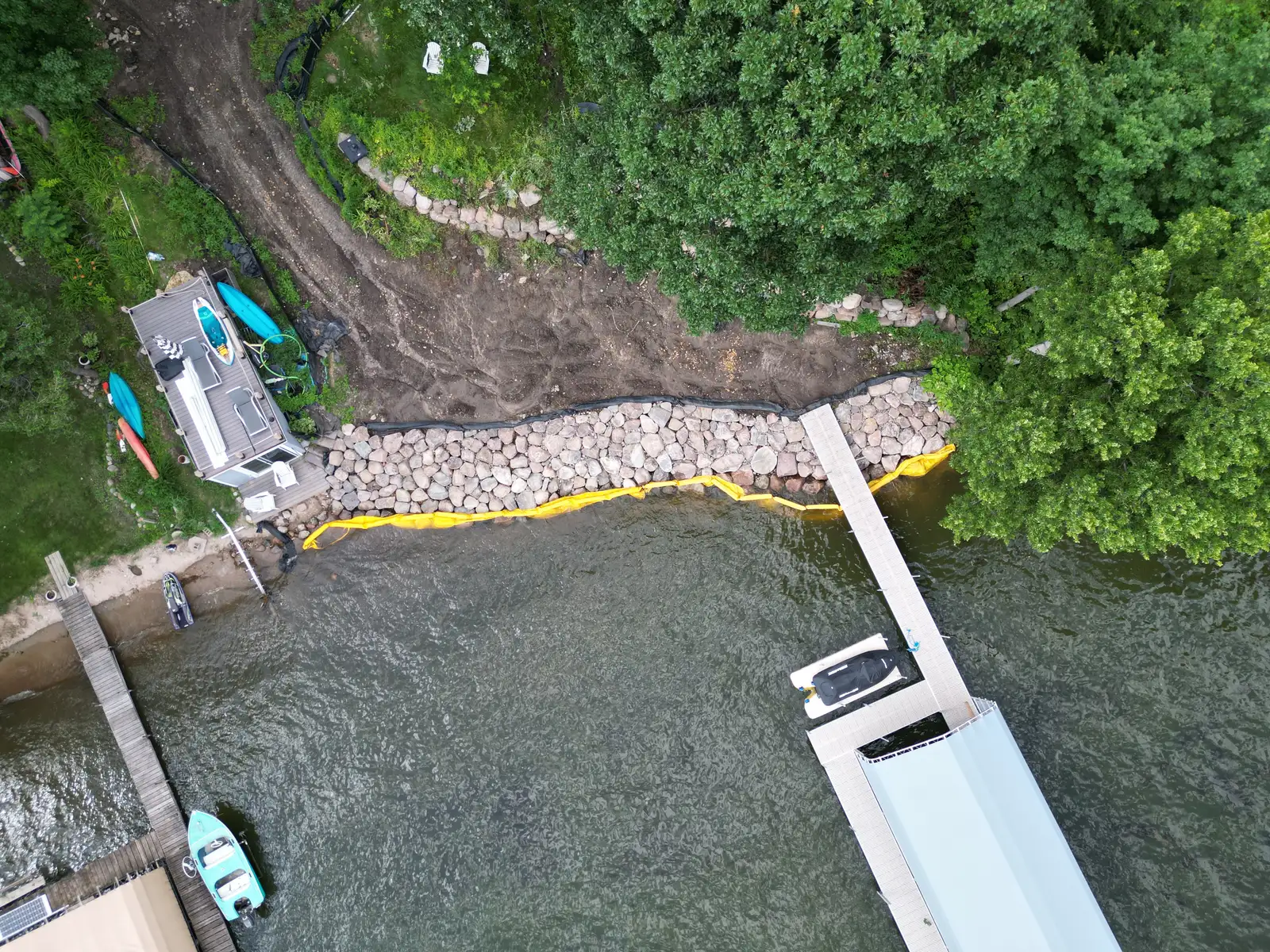
At Lifecycle Outdoor Services, we install lakeshore riprap with proper engineering, filter fabric, and stone sizing based on wave energy calculations for your specific shoreline orientation and exposure. Our Orono riprap rebuild project showcases our shoreline stabilization capabilities. Every riprap project we complete includes coordination with the MCWD, city permitting, and DNR requirements -- ensuring full compliance before any work begins at the water's edge.
How We Install Lakeshore Riprap
Shoreline Assessment & Permitting
We evaluate your shoreline's erosion patterns, bank height, soil composition, wave exposure, and ice conditions. Based on this assessment, we design the riprap section (stone size, layer thickness, toe depth, and crest height) and prepare permit applications for the city, MCWD, and DNR. Permits typically take 2 to 6 weeks for approval.
Bank Preparation & Filter Fabric
We reshape the bank to a stable slope (typically 2:1 or 3:1 horizontal to vertical), remove loose soil and debris, and install heavy-duty geotextile filter fabric over the entire surface. The filter fabric prevents soil from washing through the stone while allowing water to drain freely -- a critical detail that prevents undermining.
Stone Placement
Using an excavator working from the bank (or from a barge for deep-water installations), we place riprap from the toe of the slope upward. Larger stones (18 to 36 inches) go at the toe where wave energy is greatest, with progressively smaller stones (6 to 18 inches) toward the crest. Each stone is placed individually and interlocked with its neighbors for maximum stability. The riprap layer is typically 18 to 24 inches thick.
Revegetation & Completion
Above the riprap crest, we restore the bank with topsoil and plant native vegetation -- deep-rooted grasses, sedges, and shrubs that bind the soil and filter runoff. MCWD regulations require a minimum 10-foot vegetative buffer above riprap on Lake Minnetonka. We select plants from the MCWD-approved species list that provide erosion control and habitat value while meeting regulatory requirements.
Lakeshore Riprap FAQ
Lakeshore riprap on Lake Minnetonka typically costs $75 to $150 per linear foot of shoreline, depending on bank height, stone size requirements, access conditions, and permit complexity. A 100-foot shoreline project runs $7,500 to $15,000. Projects requiring barge access, deep-water toe placement, or significant bank re-shaping run higher. We provide detailed quotes after a shoreline assessment.
Yes. Riprap installation on Lake Minnetonka requires permits from the city, the Minnehaha Creek Watershed District (MCWD), and typically a DNR work-in-public-waters permit. The permitting process takes 2 to 6 weeks. We prepare all applications, provide required site plans and specifications, and coordinate with all agencies. Unpermitted shoreline work carries significant fines and potential removal requirements.
The optimal window for riprap installation on Lake Minnetonka is late summer through fall (August-November) when lake levels are typically lower, making access easier and reducing the area that must be armored below water level. Winter installation is possible on frozen lakes using heavy equipment on the ice. Spring installation (May-June) works but lake levels are often at their highest. We schedule based on permit timing and lake conditions.
Get a Free Quote Today
Schedule your free on-site consultation. We will evaluate your property, discuss your goals, and provide a detailed proposal with transparent pricing.