
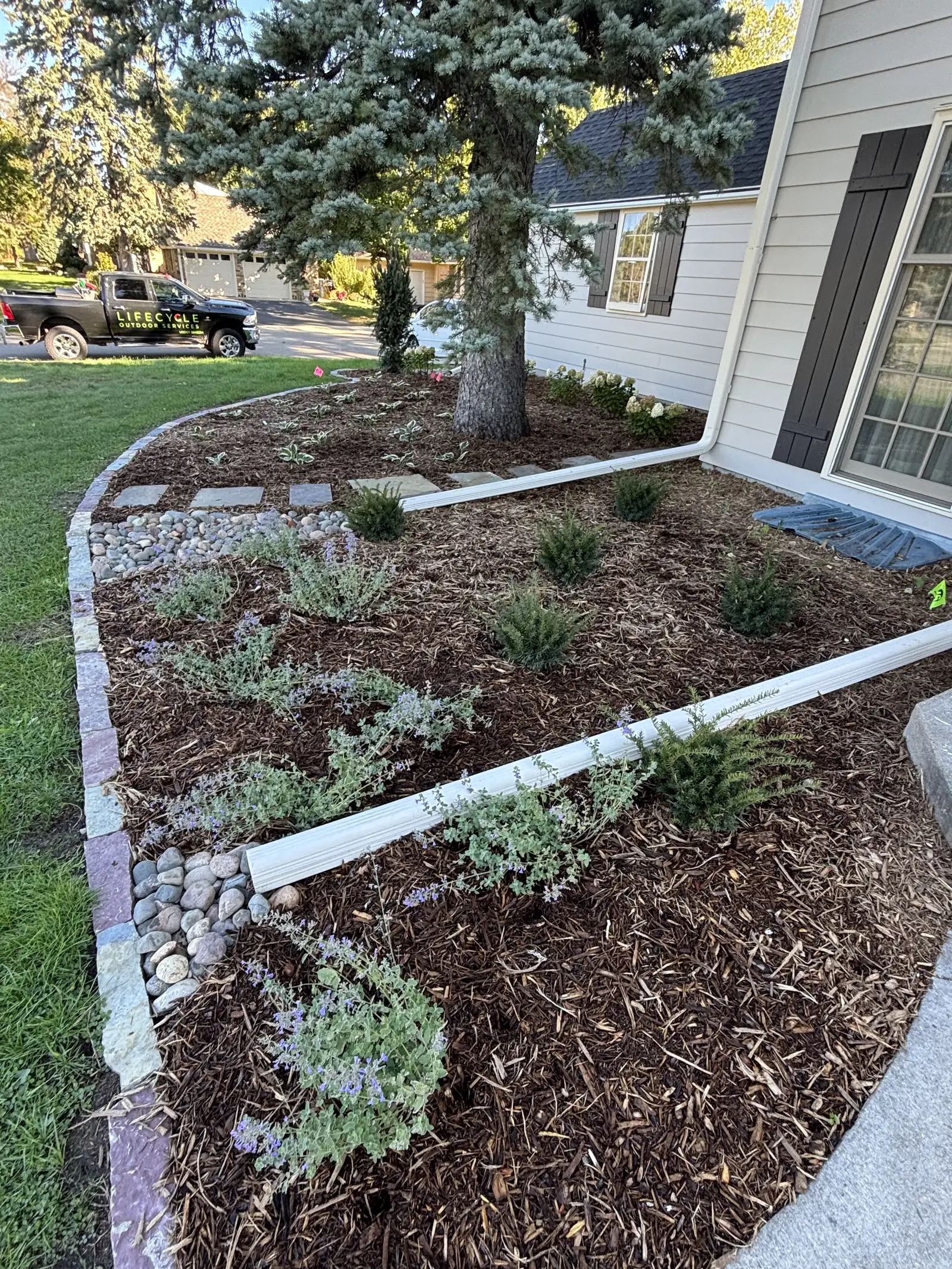
The best question for a landscape contractor is rarely “How much does this feature cost?” on its own. A more useful conversation connects the feature to the property: how water moves, where grades change, how crews and equipment reach the work, what must be removed, and what the finished space will need over time.
That matters in Shorewood, where a project can involve sloped ground, mature trees, existing walls, tight routes between the street and backyard, or a connection to the wider Lake Minnetonka landscape. Lifecycle Outdoor Services provides landscape contractor services from Shorewood. Homeowners comparing options can also review the company’s full range of landscape services in Shorewood, MN before scheduling a property visit.
1. What do you need to learn about my property first?
Before recommending a patio, retaining wall, planting plan, drainage correction, or outdoor living space, ask what the contractor needs to observe and measure. Useful topics include door and step elevations, high and low points, runoff paths, soil or settling concerns, existing hardscape, trees and roots, utility areas, property edges, and the route for materials and equipment.
A contractor does not need every answer in the opening conversation, but the questions should show that the recommendation will respond to the site. Bring up standing water, icy walks, soft lawn areas, failed wall sections, washed-out soil, difficult lake access, and places where snow or roof runoff collects. Those symptoms can change the order and scope of the work.
2. Does this project need design before construction pricing?
Some focused repairs can be described and priced from a site assessment. A larger project may need decisions about layout, elevations, circulation, materials, planting, lighting, and how several features meet. Ask which decisions must be settled before the estimate can be dependable.
If you are coordinating a patio, steps, walls, an outdoor kitchen, plantings, or future phases, landscape design and 3D planning can help clarify relationships before materials are ordered or grades are changed. Ask what the design deliverable will show, how revisions are handled, and whether the construction proposal will be based on the approved plan.
3. Where will water go after the project is built?
New hard surfaces and changed grades redirect water. Ask the contractor to trace runoff from rooflines, driveways, neighboring high points, lawn areas, and the proposed work to an appropriate outlet. If a drain or pipe is proposed, ask where water enters, where it exits, how the outlet is protected, and what maintenance keeps the system open.
The City of Shorewood identifies catch basins, ponds, outlet structures, drainage swales, and other features as parts of its surface and stormwater system. A residential project is not the city system, but the same basic lesson applies: drainage works as a path. The proposal should explain how the site’s grades and collection points connect, especially when yard renovations, a wall, or a paved surface is involved.
Ask for the water path in plain language. Where does runoff come from, how does it cross or bypass the new work, and where does it end? A clear answer is more useful than a product name by itself.
4. What is structural work, and what is a finish choice?
Homeowners naturally focus on what they will see: paver color, stone shape, planting texture, or the pattern of a walkway. Ask the contractor to separate those finish decisions from the work that supports them. Excavation, base depth, compaction, drainage aggregate, reinforcement where needed, grading, and edge support can be less visible but central to the finished project.
This question also helps when adjusting a budget. You can discuss alternate finishes or phase boundaries without accidentally removing work that solves the original drainage, grade, access, or structural problem. For patios, steps, and walls, ask how the proposal distinguishes the selected surface from the preparation beneath it and the restoration around it.
5. How should I compare this estimate with another one?
Start with scope, not the bottom line. Check whether each proposal covers the same demolition, excavation, preparation, material quantities, installation, hauling, cleanup, and restoration. Then identify allowances, options, exclusions, and assumptions. One proposal may include work that another leaves open for later billing.
An hourly rate has the same context problem. If you are asking whether $100 per hour is too much, first ask whether it covers one person or a crew, what equipment is included, which costs are separate, what tasks are hourly, and how many hours are expected. A rate cannot be evaluated fairly without the work attached to it.
Ask the contractor to name the biggest cost drivers for your project. Access, hauling distance, excavation, base preparation, drainage, structural work, selected materials, and restoration can affect different properties in different ways. That explanation gives you a better basis for deciding where to spend and where an alternative could make sense.
6. Which approvals and site boundaries need to be confirmed?
Permit and review needs depend on the property and proposed work. Grading, drainage changes, walls, structures, shoreline work, and improvements near setbacks or property lines can raise different questions. Shorewood’s planning and protective inspections FAQs include guidance on setbacks, surveys, and permit submission.
Before booking, write down who will confirm current requirements, prepare applications, pay fees, request utility markings, and provide survey or boundary information if needed. Do not assume every project follows the same path. The responsible party and any work dependent on approval should be clear in the proposal.
7. What maintenance belongs to me after completion?
Ask for practical care instructions tied to the materials and plantings being proposed. New plants can need establishment watering and later pruning. Turf has its own watering and mowing needs. Drainage inlets and outlets need to stay clear. Paver joints, mulch, natural stone, lighting, and other components each have different inspection and upkeep needs.
If you are also comparing recurring lawn or landscape maintenance, define that as a separate service. A monthly price—whether $200 or another amount—only becomes meaningful when the mowing area, visit frequency, trimming, cleanup, seasonal tasks, material charges, and exclusions are written down. Construction aftercare and recurring property maintenance should not be treated as the same scope.
8. How will scheduling, changes, and closeout work?
Ask what must happen between signing and construction: final selections, design approval, deposit terms, any required permits, utility coordination, material availability, and a preconstruction walkthrough. The start date may depend on weather, approvals, and lead times, so ask how the anticipated window and changes to it will be communicated.
During construction, confirm who will be your point of contact and how work outside the signed scope is priced and approved. At the end, ask what the walkthrough covers, what documentation or care guidance you will receive, and how incomplete items are recorded. If warranty terms are offered, review the written coverage, duration, exclusions, and reporting process instead of relying on a general assurance.
A quick comparison sheet for contractor meetings
Use the same headings for every contractor conversation so the answers are easier to compare:
- Property: grades, drainage, access, trees, utilities, boundaries, and existing conditions.
- Plan: the problem being solved, design decisions, phases, and finished result.
- Scope: removal, preparation, quantities, installation, cleanup, and restoration.
- Price: fixed work, hourly work, allowances, alternates, exclusions, and change approval.
- Approvals: permits, setbacks, surveys, shoreline review, and utility coordination when applicable.
- Care: establishment tasks, inspections, seasonal needs, and recurring maintenance.
- Communication: schedule updates, jobsite contact, walkthrough, and written warranty terms if offered.
The goal is not to collect the longest proposal. It is to understand whether each contractor is pricing the same outcome and has accounted for the conditions that could change it.
Frequently asked questions
What should I ask a landscape contractor during the first site visit?
Ask what property conditions affect the recommendation, how drainage and access will be handled, whether design is needed, what the proposal includes and excludes, which approvals may apply, and what care the finished work will require.
Is $100 an hour too much for landscape work?
An hourly rate is not enough information to judge value. Ask how many people it covers, what equipment is included, which materials and disposal charges are separate, what work is billed hourly, and how the expected hours are estimated.
Is $200 a month a good price for lawn care?
A monthly price only makes sense beside a defined property and service schedule. Compare mowing area, visit frequency, trimming, cleanup, seasonal tasks, material charges, and exclusions. Construction proposals and lawn-care agreements should be evaluated separately.
What are common landscaping mistakes new homeowners make?
Common mistakes include choosing features before studying drainage and grades, planting without considering mature size and site conditions, overlooking equipment access, comparing estimates with different scopes, and failing to plan for maintenance.
Does a Shorewood landscape project always require a permit?
No. The answer depends on the property and proposed work. Grading, drainage changes, walls, structures, shoreline work, or work near setbacks may require review. Confirm current requirements with the City of Shorewood and record who will handle any needed applications and fees.
Ready to discuss a Shorewood property? Contact Lifecycle Outdoor Services or call (612) 220-6380. Share the property address, the work you are considering, and any concerns about drainage, slopes, access, walls, patios, plantings, or shoreline access.