
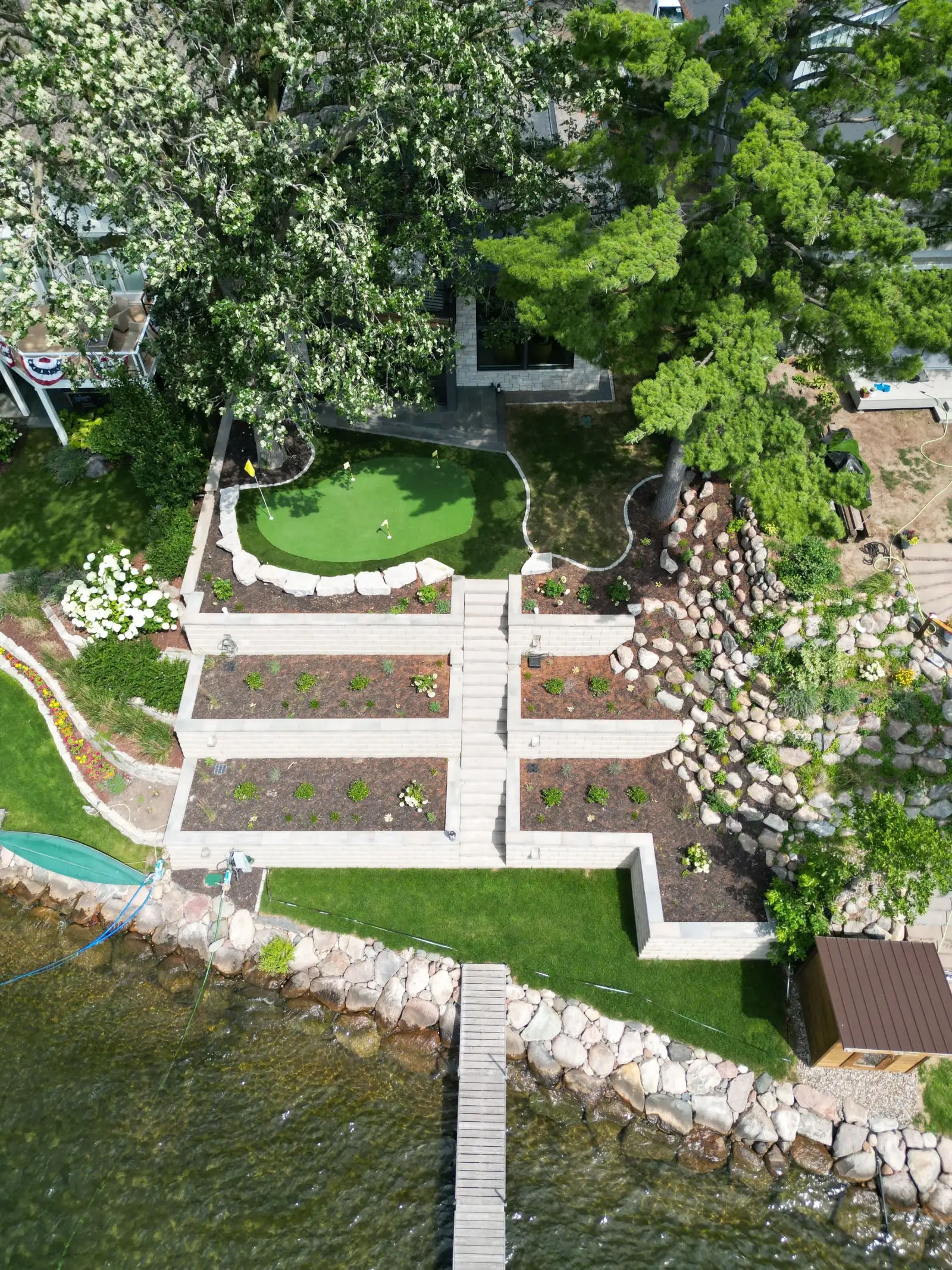
Booking a landscape contractor should follow a clear conversation about the property—not just a quick discussion of finishes. In Shorewood, a patio, wall, planting plan, drainage correction, or shoreline-access project may connect with slopes, runoff, mature trees, equipment routes, existing structures, and local review requirements.
Lifecycle Outdoor Services provides landscape contractor services from its Shorewood base and serves properties throughout the Lake Minnetonka area. The questions below reflect the issues homeowners are actively researching: how to read the price, what usually costs the most, how maintenance should be scoped, what mistakes to avoid, and what belongs in writing before work is booked. Homeowners can also review the company’s broader landscape services in Shorewood.
1. Can you explain the project as one complete scope?
Start by asking the contractor to describe the problem, the proposed result, and every major step between them. A complete scope may need to address removal, excavation, base preparation, drainage, materials, installation, hauling, cleanup, and restoration. The exact sequence will vary, but it should be possible to understand where the work begins and ends.
Ask which features are included, which are optional, and which are specifically excluded. If the plan connects a patio to steps, a wall, planting, lighting, or a future outdoor space, clarify whether those connections are part of the current project or simply ideas for later. When layout, elevation, and several features must work together, ask whether landscape design should come before final pricing.
2. What property conditions are shaping the recommendation?
A contractor should look beyond the feature you want to add. Ask what they see in the grades, water movement, soil conditions, door and step elevations, existing hardscape, trees, utility areas, property edges, and access route. Those conditions influence how a project can be built and whether a concept needs to change before it is priced.
Water deserves a direct question: where does it come from, how will it move through or around the new work, and where will it safely go? Shorewood identifies catch basins, ponds, outlet structures, drainage swales, and related features as parts of its surface and stormwater management system. At the property level, the goal is to understand the full runoff path instead of treating a drain, wall, or low area in isolation.
A useful site answer is specific. “We will handle the drainage” should become a plain explanation of grades, collection points, pipe or surface flow when applicable, outlet location, restoration, and the maintenance the system will need.
3. Is an hourly landscape rate enough to compare proposals?
No hourly number tells the whole story. A homeowner asking whether $100 per hour is too much still needs to know whether that rate covers one worker or a crew, what equipment is included, whether materials, delivery, disposal, and hauling are separate, and how many hours the contractor expects. A higher rate with the right crew and equipment can describe a different scope than a lower rate with several add-on charges.
Ask whether the proposal is fixed-price, time-and-materials, or a combination. For allowances, ask what quantity and material level the allowance assumes. For hourly work, ask how time is recorded and who can approve additional work. Compare the expected total and written scope, not one rate removed from its context.
4. What is likely to be the most expensive part of this project?
There is no universal answer. On one property, access and hauling may add substantial labor. On another, excavation, base preparation, drainage, a structural wall, or the quantity of selected material may drive more of the cost. Restoration can also matter when equipment must cross an established lawn or when surrounding plantings and hardscape need protection.
Ask the contractor to identify the two or three largest cost drivers in your specific plan. Then ask which choices affect those drivers without compromising the reason for the work. This makes value decisions more useful than simply removing visible features while leaving the expensive site problem unresolved.
5. How will maintenance and aftercare be defined?
Installation and recurring maintenance are different scopes. If you are comparing ongoing care, ask what areas are included, what tasks are performed, how often visits occur or what triggers service, whether materials and disposal are separate, and which seasonal tasks are excluded. Lifecycle’s property maintenance services are a useful reference point for the difference between defined upkeep and a one-time construction project.
For newly installed work, ask what care the homeowner will own after completion. Plantings may need establishment watering and later pruning. Paver joints, drainage inlets, mulch, turf, and other materials have different maintenance needs. “Low maintenance” is not “no maintenance,” so ask for the tasks and timing in plain language.
6. Who checks permits, setbacks, utilities, and property lines?
Not every project needs the same approvals. Grading, drainage changes, walls, structures, shoreline work, and work near property boundaries can raise different questions. Shorewood’s planning and permit FAQs cover topics including setbacks, surveys, and permit submission.
Before booking, identify who will confirm current requirements, prepare any applications, pay fees, request utility locations, and supply a survey or boundary information if needed. The answer should match the actual project rather than assume that every landscape improvement follows one permit path.
7. What common landscaping mistakes should a homeowner avoid?
The most preventable mistakes usually happen before construction:
- Choosing a product before understanding drainage, grade, access, and the problem the project must solve.
- Comparing proposal totals when the scopes, material quantities, preparation, and restoration are different.
- Selecting plants for installation-day appearance without considering mature size, light, moisture, and ongoing care.
- Adding walls or hard surfaces without tracing where runoff will move afterward.
- Leaving allowances, exclusions, change approvals, and cleanup expectations for a jobsite conversation.
- Building one phase without protecting grades, access, sleeves, or connections needed for a later phase.
New homeowners do not need to diagnose every condition themselves. They do need a proposal that shows the contractor has identified the important conditions and turned them into a workable scope.
8. What happens after I sign?
Ask what must happen before construction begins: final selections, design approval, deposit terms, permits when required, utility coordination, material availability, and a preconstruction walkthrough. Clarify how the anticipated start window will be communicated and what weather, approvals, or material lead times could affect it.
Also confirm the day-to-day contact, how questions are handled, how changes to price or schedule are documented, and what the completion walkthrough covers. If warranty terms are offered, they should be written and specific about coverage, duration, exclusions, and how a concern is reported.
What should be in writing before you book?
Before signing, look for a proposal that lets both sides answer the same basic questions:
- What work, materials, quantities, preparation, cleanup, and restoration are included?
- Which decisions are final, and which remain allowances or options?
- How will drainage, grades, equipment access, protection, and staging be handled?
- What is excluded, and how will added work be priced and approved?
- Who is responsible for permits, utilities, surveys, selections, and site access?
- What happens between signing, scheduling, construction, walkthrough, and aftercare?
If those answers are clear, you can compare contractors on the project they are actually proposing rather than on a headline total.
Frequently asked questions
What should I ask a landscape contractor before booking?
Ask what is included and excluded, what site conditions shape the work, how drainage and access will be handled, which selections remain open, how changes are approved, who handles permits when required, and what happens between signing and construction.
Is $100 an hour too much for landscape work?
An hourly number cannot be judged by itself. Ask whether it covers one worker or a crew, what equipment is included, whether materials and hauling are separate, how many hours are expected, and what work the rate applies to. Compare the expected total and written scope rather than one rate.
What is usually the most expensive part of landscaping?
There is no single most expensive part for every property. Access, excavation, hauling, base preparation, drainage, structural walls, material quantities, and restoration can each drive cost. Ask the contractor to identify the largest cost drivers for your specific plan.
How should landscape maintenance be priced?
Maintenance pricing should start with a defined scope and frequency. Confirm the areas covered, tasks included, visit schedule or trigger, material and disposal charges, seasonal work, exclusions, and how extra work is authorized.
What landscaping mistakes should new homeowners avoid?
Common planning mistakes include choosing features before understanding drainage, ignoring mature plant size, changing grades without tracing runoff, comparing estimates with different scopes, overlooking equipment access, and leaving maintenance expectations unclear.
Does every Shorewood landscape project need a permit?
No. Requirements depend on the property and proposed work. Grading, drainage changes, walls, structures, shoreline work, or work near setbacks may raise review questions. Confirm current requirements with the City of Shorewood and state in writing who handles any required applications and fees.
Planning landscape work in Shorewood? Contact Lifecycle Outdoor Services or call (612) 220-6380 to share the property address, the improvements you are considering, and any drainage, grade, access, wall, patio, or shoreline concerns.