
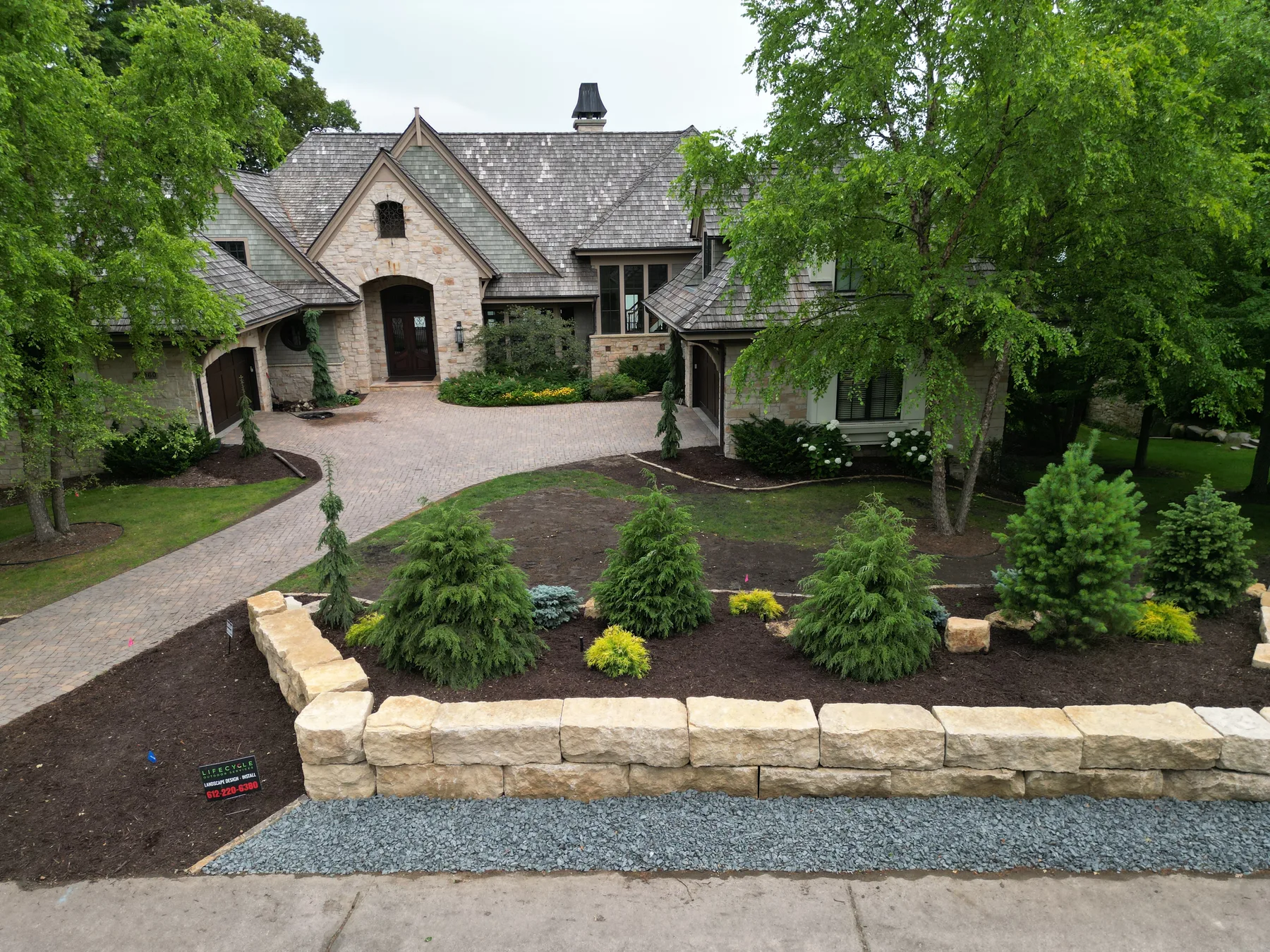
Booking a landscape contractor should happen after the important decisions are clear—not simply after a price appears. The final conversation is your chance to confirm that the contractor understands the property, the proposal describes the same outcome you expect, and unresolved details have an owner and a deadline.
That distinction matters for Shorewood properties where a landscape project may connect grades, runoff, mature trees, existing walls, narrow access, or shoreline conditions. Lifecycle Outdoor Services provides landscape contractor services from Shorewood, including coordinated design and construction. You can also review the company’s Shorewood landscape services before requesting a site conversation.
1. Is this contractor set up for the whole project?
Start by defining the work, then ask whether the contractor regularly handles that kind of scope. A planting refresh, drainage correction, retaining wall replacement, paver patio, shoreline project, and multi-feature outdoor living plan require different combinations of design, excavation, grading, materials, equipment, and trade coordination.
Ask which parts the contractor will self-perform, which may be completed by specialty trades, who supervises the jobsite, and who answers your questions during construction. If the project is still taking shape, ask whether it should begin with landscape design and 3D planning or can move directly to a construction proposal. The answer should fit the number of connected decisions—not a one-size-fits-all sales process.
2. What problem will the finished project solve?
A list of products is not yet a clear outcome. Ask the contractor to explain what will work differently when the project is complete. Will a patio sit at a useful elevation? Will steps provide a comfortable route through a slope? Will the wall retain the intended grade? Will water move away from the house and new hardscape? Will the equipment route and restoration be accounted for?
This question exposes mismatched assumptions early. If you expect a dry walkway but the proposal only mentions pavers, drainage may still be unresolved. If you expect a private gathering area but screening, planting maturity, and sightlines are not part of the plan, the quoted work may not deliver the experience you pictured.
3. Which site conditions are confirmed, and which are still assumptions?
Ask the contractor to separate known conditions from items that may change after excavation or field verification. Useful topics include existing grades, soft or saturated areas, buried utilities, tree roots, access width, material staging, hidden wall conditions, soil that may need removal, property boundaries, and restoration outside the main work area.
Then connect each open condition to a next step. Does it require a survey, utility locate, test excavation, design revision, allowance, or written unit price? Uncertainty is normal on some projects; vague responsibility is avoidable. The proposal should show how an unexpected condition becomes a documented decision rather than an unexplained invoice.
Ask one decisive follow-up: “If the condition is different from what we expect, what happens next?” The answer should identify who pauses the work, how options are explained, and how price or schedule changes receive approval.
4. Where will water go after grades and surfaces change?
Drainage deserves its own conversation because new walls, patios, walks, stairs, and planting beds can change how runoff crosses the property. Ask the contractor to trace water from roof discharge, driveways, lawn high points, neighboring grades, and the proposed improvements to an appropriate outlet. When a drain is recommended, ask where water enters, where it exits, and what must remain accessible for upkeep.
The City of Shorewood describes catch basins, ponds, outlet structures, drainage swales, and related features as parts of its surface and stormwater management system. A residential plan is different, but it still needs a complete path. If the property already has pooling, washout, icy runoff, or wet foundation areas, discuss yard drainage options before the hardscape layout is final.
5. Does the written proposal describe the same scope you heard?
Read the proposal from demolition through cleanup. It should make the work area understandable and identify removals, excavation, preparation, materials or allowances, installation, hauling, disposal, final grading, cleanup, and restoration that are included. Look for exclusions as carefully as inclusions.
The University of Wisconsin–Madison Extension’s homeowner guide to hiring a landscape professional recommends comparing estimates carefully and using a detailed written contract. That means comparing the same scope, not simply the totals at the bottom. If one proposal includes access restoration, drainage work, or material quantities that another omits, the prices do not represent the same project.
6. Who confirms Shorewood approvals and property limits?
Do not treat permits, setbacks, surveys, utility marking, and shoreline review as a single yes-or-no question. Requirements depend on the property and proposed work. Grading, drainage changes, walls, structures, and work near a shoreline or property boundary can follow different paths.
The City of Shorewood notes that land use is guided by city policies, plans, and ordinances in its development process overview. Before signing, write down who will verify current requirements, prepare any applications, provide boundary information, pay fees, and wait for approval before dependent work begins. A contractor can explain an anticipated process, but the current requirements should be confirmed for the actual property and scope.
7. How do deposit, payment, allowances, and changes work?
Ask for a payment schedule tied to clear milestones or dates and understand what is due before materials are ordered or work begins. Identify allowances—amounts reserved for selections or quantities that are not final—and ask what happens if the chosen item is above or below the allowance.
Change terms are equally important. Confirm who can authorize added work, whether approval must be written, how labor and materials are priced, and whether a change may affect the schedule. An hourly rate also needs context. If a task is billed at $100 per hour, ask whether that covers one person or a crew, what equipment is included, which costs are separate, and how many hours are expected. The number becomes useful only when attached to a defined task.
8. What could move the schedule?
Ask for the anticipated construction window and the events that must happen first: design approval, material selection, ordering, permits if required, utility coordination, or a preconstruction walkthrough. Then ask how weather, saturated soil, material availability, approvals, or newly discovered site conditions could shift that window.
A responsible schedule discussion distinguishes an estimate from a guarantee and explains how updates will be communicated. Also confirm expected workdays, access needs, material storage, temporary disruptions, and whether another household project must finish first.
9. What happens at walkthrough and after completion?
Before booking, ask what the final walkthrough covers, how incomplete or corrective items are recorded, and what care information will be provided. Plant establishment, turf watering and mowing, drainage inlet cleaning, paver joint care, lighting adjustments, and natural stone inspection are different responsibilities; only ask about the items included in your plan.
If warranty coverage is offered, review the written duration, inclusions, exclusions, maintenance requirements, and reporting process. Do not rely on a broad promise that is absent from the agreement. Construction aftercare should also be separated from recurring mowing or landscape maintenance. A monthly maintenance price—whether $200 or another figure—only makes sense beside a defined area, visit frequency, seasonal tasks, materials, and exclusions.
The five-minute check before you sign
Pause before booking and make sure you can answer each of these in one sentence:
- Outcome: What problem will the finished project solve?
- Scope: What work, materials, preparation, cleanup, and restoration are included?
- Unknowns: Which site conditions remain assumptions, and how will changes be approved?
- Responsibility: Who handles supervision, approvals, utility coordination, selections, and updates?
- Terms: When are payments due, what are the allowances, and what moves the schedule?
If any answer is still fuzzy, ask for clarification in writing. The goal is not the longest contract. It is a shared understanding of the property, the work, and the decisions still ahead.
Frequently asked questions
What should be in a landscape contractor’s written proposal?
A useful proposal identifies the work area, removals, preparation, materials or allowances, installation, cleanup, restoration, exclusions, payment schedule, change process, anticipated timing, and who is responsible for permits or other approvals that apply.
Should I ask a landscape contractor for proof of insurance?
Yes. Ask for current proof of insurance and verify that the business name matches the proposal. Also ask which trade licenses, registrations, or permits apply to the specific work because requirements differ by project.
How can I compare two landscape contractor estimates?
Compare the same outcome line by line: demolition, excavation, base or soil preparation, drainage, material quantities, installation, hauling, cleanup, restoration, allowances, exclusions, and change-order terms. A lower total may represent a different scope.
What are common landscaping mistakes new homeowners make?
Common mistakes include choosing features before studying grades and runoff, comparing proposals with different scopes, overlooking equipment access and restoration, planting without considering mature size and site conditions, and leaving maintenance expectations unclear.
Is $100 an hour too much for landscape work?
An hourly figure alone does not show value. Ask whether the rate covers one worker or a crew, which equipment is included, what materials and hauling cost separately, and how many hours are expected for a clearly defined task.
Does every Shorewood landscape project need a permit?
No. Requirements depend on the property and the proposed work. Grading, drainage changes, retaining walls, structures, shoreline work, or work near setbacks can raise different review questions. Confirm current requirements with the City of Shorewood before construction.
Planning landscape work in Shorewood? Contact Lifecycle Outdoor Services or call (612) 220‑6380 to discuss your property, priorities, and the right next step.