
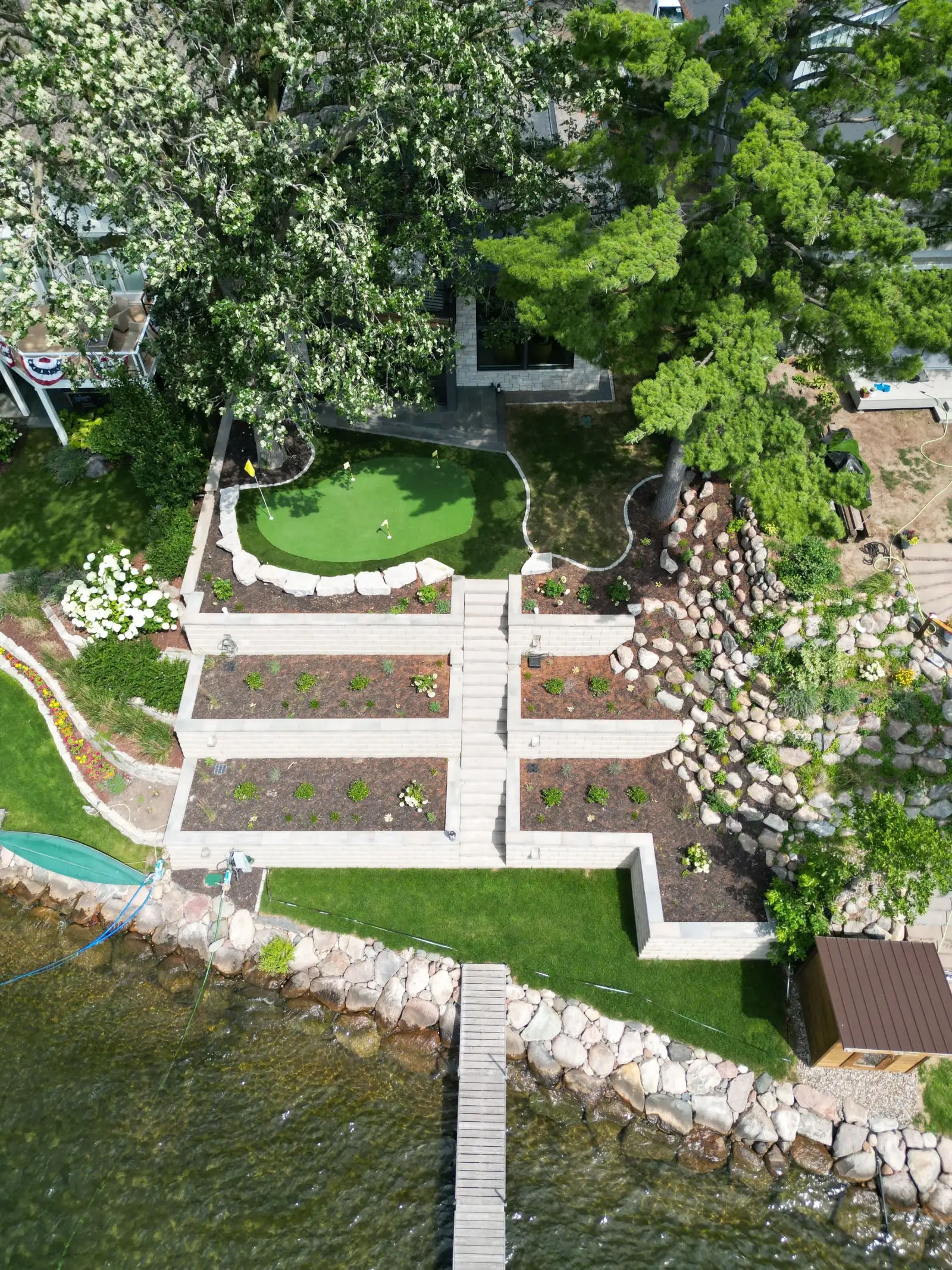
Before booking a landscape contractor, Shorewood homeowners should get clear answers about four things: the exact scope, how the plan responds to the property, how the work will be built, and how decisions will be handled once construction starts. Those answers make it easier to compare proposals that may use different language or include different amounts of hidden work.
A list of generic interview questions is not enough to compare work on a real property. This checklist focuses on the decisions that shape the finished result: drainage, grade, access, materials, connected features, restoration, and a written path for changes. For an overview of the work Lifecycle coordinates, visit the landscape contractor service page. For local availability and service context, see landscaping services in Shorewood.
A useful proposal should let you picture the build. You should be able to identify what will be removed, what will be installed below the finished surface, how water will move, which areas will be protected, and what the yard will look like at closeout.
1. What is included in the written scope?
Start by asking the contractor to define the work in plain language. The scope should identify the areas being changed, major quantities or dimensions, materials or allowances, demolition, disposal, excavation, installation, and restoration. It should also state what is excluded. This prevents a vague phrase such as “install patio” from hiding important differences between proposals.
If the project includes several features, ask whether one plan coordinates all of them. A patio, wall, steps, planting bed, lighting, sod, and drainage correction can affect one another. A defined scope makes the sequence visible and reduces the chance that one trade blocks a later phase.
2. Has the contractor planned around the whole property?
A contractor should look beyond the footprint of the new feature. Ask how the plan responds to the house, downspouts, existing grades, low areas, mature trees, irrigation, utilities, neighboring edges, shoreline exposure when relevant, and the way people move through the yard. This is where a site visit adds more value than a price assembled from photos alone.
For larger or connected projects, ask whether landscape design should come before final construction pricing. Design can resolve layout, elevation changes, material transitions, stairs, lighting, privacy, planting, and future phases before crews and materials arrive. A focused repair may not need the same level of design.
3. How will drainage and grading change?
New hardscape and walls change how water moves. Ask where runoff enters the work area, where it will go after construction, how finished surfaces will pitch, and whether downspouts, swales, wall drainage, drain tile, or low areas are part of the scope. The answer should connect the new feature to the rest of the yard rather than treating drainage as a separate problem.
When water is already collecting, ask whether the contractor is addressing the cause or only the visible wet spot. Depending on the site, the right approach may involve grading, surface routing, a yard renovations, or yard renovations. Not every property needs the same system, which is why the proposed outlet and flow path matter.
4. What access, staging, and protection does the project require?
Ask how equipment and materials will reach the work area, where deliveries will be staged, and which surfaces need protection. Tight side yards, gates, slopes, driveways, trees, irrigation, septic components, existing patios, and lake-facing terrain can affect equipment choice and the order of work.
The proposal should also explain who is responsible for identifying private utilities or irrigation components, what lawn disturbance is expected, and which restoration is included. Access is not a minor logistics note; it can affect schedule, labor, protection, and the finished condition of areas outside the main project.
5. Which construction details are specified?
Ask what will be installed below or behind the visible finish. For a paver patio, that may include excavation, aggregate base, compaction, bedding, pitch, edge restraint, and joint material. For a retaining wall, it may include footing preparation, drainage stone, outlets, backfill, reinforcement where the design calls for it, and how the wall meets nearby grades.
You do not need to dictate the construction method. You do need enough detail to compare whether two contractors are pricing the same outcome. If one proposal names the hidden work and another does not, ask for clarification before treating the totals as equivalent.
6. How will changes and communication be handled?
Even a carefully planned landscape project can uncover field conditions or prompt a homeowner decision. Ask who your point of contact will be, how schedule updates are shared, and how a change in material, quantity, layout, or scope is documented before additional work begins.
A clear change process should describe the reason, cost, and any schedule effect before approval. Also ask which selections must be final before ordering and which decisions can wait until layout is marked in the field. That distinction helps homeowners avoid rushed choices without delaying the work.
7. What does project closeout include?
Ask what must happen before the project is considered complete. A closeout conversation may cover final grading, drainage observations, surface cleaning, lawn or planting restoration, removal of excess material, operation of lighting or other installed features, care instructions, and a walkthrough of the completed scope.
It is also reasonable to ask how concerns should be reported after the walkthrough and what written product or workmanship information applies. The goal is a shared definition of completion, not an assumption that the last day of construction answers every question.
How to compare the answers before you book
Place proposals side by side and compare the same categories: scope, quantities, base or structural work, drainage, material allowances, access, protection, restoration, exclusions, communication, payment milestones, and change terms. Mark anything that appears in one proposal but not another. Then ask each contractor to clarify the gaps in writing.
Price still matters, but it is most useful after the scopes are comparable. A smaller total may reflect a more efficient plan, a narrower scope, an allowance instead of a final selection, or omitted work. The questions above help you understand which explanation applies.
Frequently asked questions
What should a Shorewood homeowner ask a landscape contractor before booking?
Ask what is included in the written scope, how drainage and grading will be handled, what site access and protection are needed, which construction details are specified, how changes are approved, and what cleanup and restoration are included.
Should landscape design happen before a construction estimate?
Design is useful before final construction pricing when a project connects several features, changes grades, or requires decisions about layout, circulation, walls, steps, drainage, lighting, planting, utilities, or future phases. A focused repair may be clear enough to estimate after a site visit.
How can homeowners compare two landscape contractor proposals?
Compare the same scope line by line, including demolition, excavation, base materials, drainage, quantities, allowances, protection, restoration, exclusions, payment milestones, and change-order terms. The lowest total is not a direct comparison if important work is missing or not clearly included.
Why should drainage be discussed before booking landscape work in Shorewood?
New walls, patios, steps, and grading can change how water moves across a property. Discussing runoff paths, outlets, wall drainage, surface pitch, downspouts, and low areas before construction helps the new work function with the rest of the yard.
Does Lifecycle Outdoor Services provide landscape contractor services in Shorewood, MN?
Yes. Lifecycle Outdoor Services is based in Shorewood and provides landscape contractor services in Shorewood and nearby Lake Minnetonka communities.
Planning a Shorewood landscape project? Review Lifecycle Outdoor Services’ landscape contractor services, then request a project consultation or call (612) 220-6380. Share the property address, the areas you want to improve, and any concerns about water, slopes, access, existing walls, or future phases.