
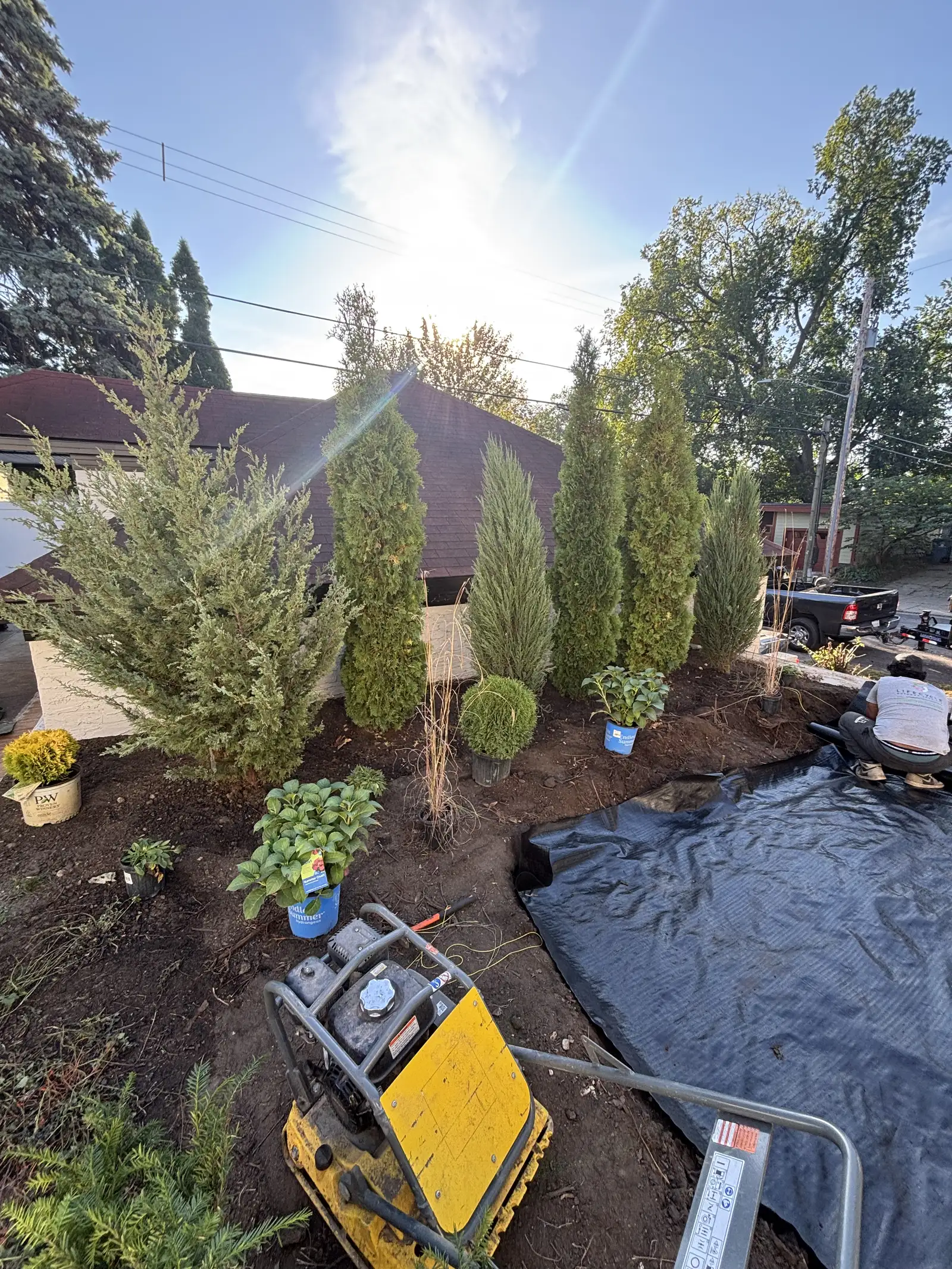
A well-designed drought-resistant landscape in the Lake Minnetonka area can reduce your outdoor water usage by 50 to 75 percent while maintaining the curb appeal and property value that homeowners in Shorewood, Minnetonka, Wayzata, and the surrounding communities expect. With Minnesota summers trending hotter and drier over the past decade, and municipal watering restrictions becoming more common during peak demand months, designing for water efficiency is no longer just an environmental choice. It is a practical one that saves money, reduces maintenance, and keeps your property looking strong through July and August when conventional landscapes start to struggle.
In the Lake Minnetonka area's Zone 4 climate, drought-resistant landscaping depends on native and adapted plants, thoughtful soil preparation, efficient irrigation, well-placed hardscape, and landscape design that looks intentional through changing conditions.
Why Drought-Resistant Design Matters in Minnesota
Minnesota is not traditionally thought of as a drought-prone state, but the Lake Minnetonka area has experienced multiple periods of below-average rainfall during the growing season over the past five years. When that happens, homeowners face a choice: water heavily and watch their utility bills climb, or watch their conventional bluegrass lawns and thirsty ornamentals turn brown by mid-July.
The average residential landscape in the western suburbs of Minneapolis uses 30,000 to 50,000 gallons of supplemental water per growing season. A drought-resistant design can cut that to 10,000 to 15,000 gallons while delivering a landscape that actually looks better during dry spells because the plants are adapted to handle them.
Beyond water savings, drought-resistant landscapes require less ongoing maintenance. Native plants and adapted species need less fertilizer, fewer pesticide applications, and less frequent replacement than conventional ornamentals. Over a five-year period, the maintenance savings alone often exceed the cost difference between a conventional and drought-resistant planting plan.
Start with the Soil: The Foundation of Water Efficiency
In the Lake Minnetonka area, soil conditions vary significantly from property to property. Lakefront lots in Orono and Excelsior often have sandy, well-draining soil that dries out quickly. Properties in Minnetonka, Eden Prairie, and Plymouth tend toward clay-heavy soils that hold water near the surface but resist deep root penetration. Both conditions create challenges for water-efficient landscaping, and both are solvable with proper soil preparation.
Soil Amendment for Water Retention
For sandy soils, incorporating 3 to 4 inches of quality compost into the top 8 to 12 inches of soil before planting dramatically improves water retention. Compost acts like a sponge, holding moisture in the root zone where plants can access it rather than letting it drain straight through. This single step can reduce supplemental watering needs by 30 to 40 percent on sandy sites.
For clay soils, the goal is the opposite: improving drainage and aeration so roots can grow deep. The same compost amendment works here too, but for different reasons. It breaks up clay structure, creates air pockets, and allows roots to penetrate deeper where moisture remains available even during dry surface conditions. Deep-rooted plants survive drought far better than shallow-rooted ones because subsurface moisture persists long after the top few inches of soil have dried out.
Mulching: The Simplest Water-Saving Strategy
A 3-inch layer of organic mulch (shredded hardwood bark or wood chips) in all planting beds reduces soil moisture evaporation by 25 to 50 percent. Mulch also moderates soil temperature, keeping roots cooler during Minnesota's intense July heat. Every planting bed in a drought-resistant landscape should be mulched, and the mulch should be refreshed annually in spring to maintain its depth and effectiveness.
Keep mulch pulled back 2 to 3 inches from plant stems and tree trunks to prevent moisture-related disease. This is a common installation mistake that causes more problems than the mulch solves.
Native and Adapted Plants for the Lake Minnetonka Area
The most effective drought-resistant landscapes use plants that evolved in or are well-adapted to Minnesota's climate cycle: cold winters, hot summers, and inconsistent rainfall. These plants have deep root systems, waxy or small leaves that reduce water loss, and natural dormancy mechanisms that let them survive extended dry periods without permanent damage.
Native Perennials
Purple coneflower (Echinacea purpurea). One of the most reliable native perennials for Minnesota landscapes. Blooms from June through August, attracts pollinators, and thrives in full sun with minimal supplemental water once established. Grows 2 to 4 feet tall and works in mass plantings, borders, and mixed perennial beds.
Black-eyed Susan (Rudbeckia hirta). Bright yellow blooms from July through September. Extremely drought-tolerant once established and self-seeds readily, filling in bare spots naturally over time. Performs well in the sandy soils common along Lake Minnetonka shorelines.
Little bluestem (Schizachyrium scoparium). A native ornamental grass that turns copper-red in fall, providing four-season interest. Reaches 2 to 3 feet and develops a deep root system that makes it virtually maintenance-free after the first season. Excellent for slopes, borders, and naturalizing areas where you want to reduce mowing.
Prairie dropseed (Sporobolus heterolepis). A fine-textured ornamental grass with emerald green foliage that turns golden orange in fall. Extremely drought-tolerant and slow-spreading, making it ideal for formal planting areas where you want a controlled, refined look. One of our most-recommended grasses for residential plantings in the Lake Minnetonka area.
Adapted Shrubs
Ninebark (Physocarpus opulifolius). Available in cultivars with deep burgundy, copper, or green foliage. Grows 5 to 8 feet and requires virtually no supplemental water after establishment. Provides spring flowers, summer foliage color, and winter bark interest. One of the toughest native shrubs for Minnesota conditions.
Arrowwood viburnum (Viburnum dentatum). White spring flowers, blue berries in fall, and burgundy fall foliage. Tolerates a range of soil conditions and becomes fully drought-resistant after its second growing season. Works as a hedge, specimen, or foundation planting.
Juniper varieties. Both upright and spreading junipers are among the most drought-tolerant evergreens available for our zone. They provide year-round structure and color with zero supplemental irrigation once established. Use spreading varieties for slope stabilization and ground cover; use upright varieties for screening and vertical accents.
Trees for Long-Term Shade and Water Reduction
Strategically placed shade trees reduce the water needs of everything beneath their canopy by lowering soil temperature and reducing evaporation. Bur oak, hackberry, and Kentucky coffeetree are all native or well-adapted species that develop deep root systems and tolerate Minnesota's full range of weather extremes. A single shade tree can reduce the water needs of a 400-square-foot planting area by 20 to 30 percent.
Hardscape Integration: Reducing Plantable Area Strategically
One of the most effective drought-resistant design strategies is replacing water-intensive lawn areas with functional hardscape. A paver patio, walkway, or natural stone terrace uses zero water and creates usable outdoor living space. Every square foot of lawn converted to hardscape eliminates the 25 to 30 gallons of water per year that square foot of turf would have consumed.
This does not mean paving your entire yard. The goal is strategic reduction: replace the lawn areas that are hardest to water, most prone to drought stress, or least used for recreation. Narrow strips between driveways and property lines, steep slopes that are difficult to mow and water evenly, and unused side yards are all prime candidates for hardscape conversion or native planting beds that need minimal irrigation.
On properties with existing retaining walls, the terraced areas behind or above walls are ideal locations for drought-tolerant plantings. The wall provides a defined edge, the terraced soil drains well, and the elevated position makes drip irrigation easy to install and maintain.
Smart Irrigation for What Remains
Even a well-designed drought-resistant landscape needs supplemental water during establishment (the first one to two growing seasons) and during extended dry periods. The key is delivering water efficiently so none is wasted.
Drip Irrigation for Planting Beds
Drip irrigation delivers water directly to the root zone of each plant through low-volume emitters. It eliminates the overspray, evaporation, and wind drift that waste 30 to 50 percent of the water from conventional spray heads. For planting beds with native perennials and shrubs, drip irrigation is the most efficient delivery method available. A well-designed drip system uses 50 to 70 percent less water than spray irrigation for the same planting area.
Smart Controllers
Wi-Fi-enabled irrigation controllers with weather-based adjustment automatically reduce watering after rain and increase it during heat waves. These controllers connect to local weather data (including stations in Minnetonka and Eden Prairie) and adjust run times daily based on actual evapotranspiration rates. The investment is $200 to $500 for the controller, with typical water savings of 20 to 30 percent compared to a standard timer-based system.
Lawn Alternatives for High-Visibility Areas
If you want to maintain some lawn for recreation or aesthetics, consider replacing standard Kentucky bluegrass (which requires 1 to 1.5 inches of water per week in summer) with fine fescue blends. Fine fescue varieties developed for Minnesota require roughly half the water of bluegrass, tolerate partial shade, and need mowing only every 10 to 14 days during active growth. They produce a soft, fine-textured lawn that looks different from bluegrass but performs far better during dry summers.
For areas where foot traffic is minimal, clover-fescue blends are gaining popularity across the Lake Minnetonka area. White clover fixes nitrogen from the air, reducing fertilizer needs to zero, and stays green during drought conditions that would turn pure grass lawns brown. The trade-off is that it does not provide the uniform appearance of a traditional lawn, but for many homeowners the water and maintenance savings are worth the aesthetic shift.
Design Principles That Make It Look Intentional
The biggest concern homeowners in Shorewood, Deephaven, and Wayzata express about drought-resistant landscaping is that it will look like they gave up on their yard. That concern is valid if the design is not thoughtful, but completely unfounded when the same design principles that make any landscape attractive are applied to drought-tolerant plantings.
Create Structure with Hardscape and Evergreens
Evergreen shrubs and trees provide the year-round structure that makes a landscape feel finished and cared-for. Use junipers, arborvitae, or spruce to create a green framework, then fill in with native perennials and grasses for seasonal color. The evergreen structure reads as "designed" even during the months when perennials are dormant.
Plant in Drifts, Not Dots
Grouping the same plant species in clusters of 5, 7, or more creates visual impact and a sense of intentional design. Single specimens scattered randomly look weedy. Drifts of purple coneflower, sweeps of little bluestem, and masses of native sedge look like a professionally designed landscape because they are.
Define Edges Clearly
Crisp edges between planting beds and lawn, between hardscape and plantings, and between different planting zones signal that the landscape is maintained and designed. Use natural stone edging, steel edging, or cleanly cut turf borders to separate zones. This single detail makes more visual difference than almost any plant selection choice.
Use 3D Design to Visualize Before You Build
A drought-resistant landscape is a long-term investment, and getting the plant placement, hardscape proportions, and overall composition right matters. Our 3D landscape rendering process lets you see exactly how native plantings, hardscape elements, and existing features will work together before anything is installed. This is especially valuable for drought-resistant designs where the plant palette may be unfamiliar to homeowners accustomed to traditional ornamentals.
The Establishment Period: Plan for Extra Care in Year One
Even the most drought-tolerant plants need consistent moisture during their first growing season as roots establish in their new location. Plan to water newly installed native plants and shrubs deeply once per week for the first summer, tapering off in the second year as root systems develop. By the third growing season, most native plantings need supplemental water only during extended dry spells of three weeks or more.
This establishment period is the most important phase of a drought-resistant landscape. Cutting corners on watering during year one creates gaps in the planting that weeds will exploit, forcing replacement plantings and additional expense. Water well for one season, and the landscape pays you back with minimal water needs for decades.
Get Started with a Drought-Resistant Design
Late May is an excellent time to begin planning a drought-resistant landscape because you can observe which areas of your property dry out fastest, where existing plantings struggle, and how water moves across your lot during summer storms. These observations directly inform the design process and help us create a plan that addresses your property's specific conditions.
Whether you are starting from scratch on a new build, renovating an existing landscape that is consuming too much water, or adding drought-tolerant plantings to complement your current outdoor living space, we design and install landscapes that are built for Minnesota's real conditions.
Ready to reduce your water usage and upgrade your landscape? Request a quote or call (612) 220-6380 to schedule a consultation. We serve Shorewood, Minnetonka, Wayzata, Excelsior, Deephaven, Orono, Eden Prairie, Plymouth, and the entire Lake Minnetonka area.