
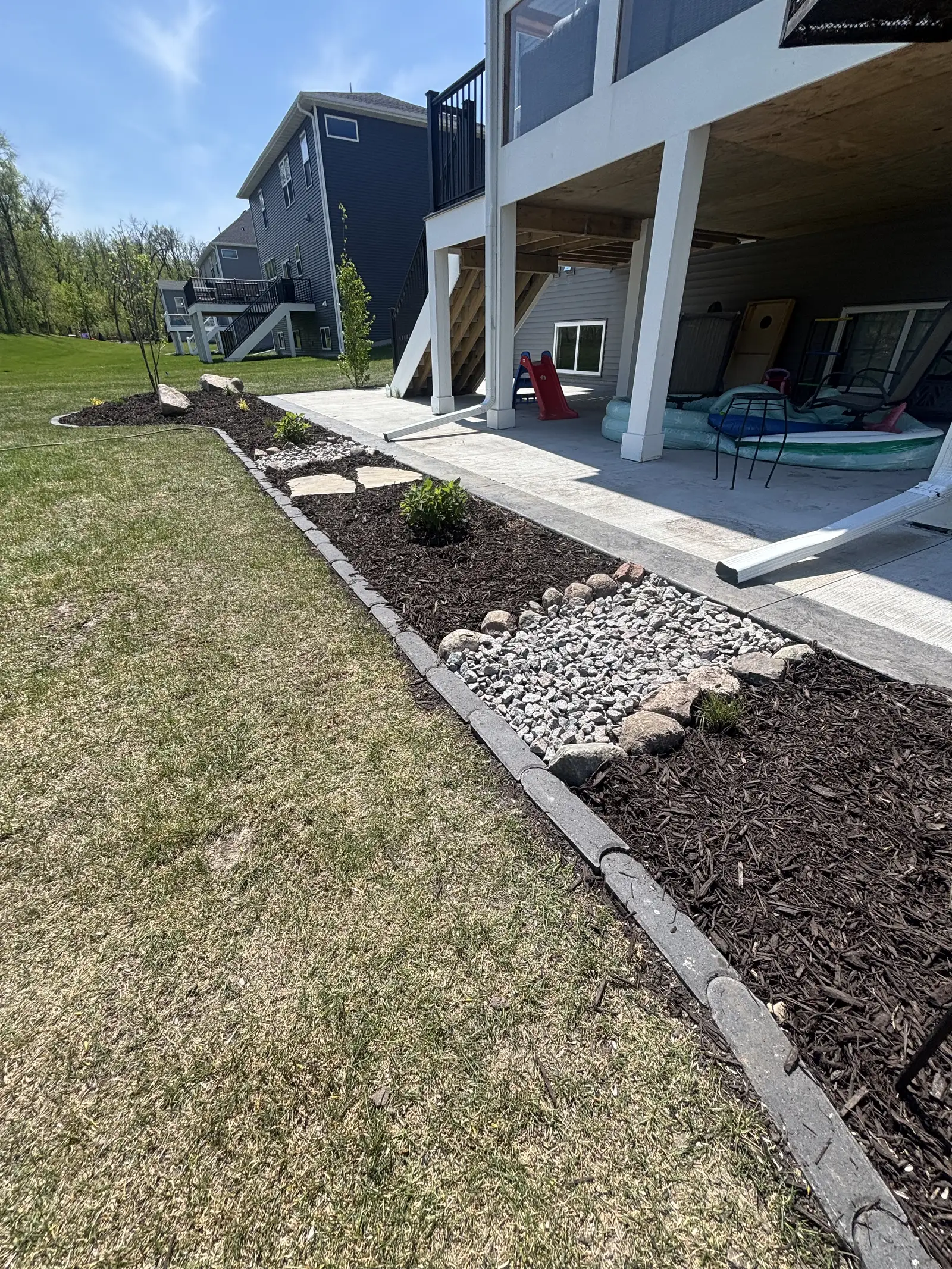
Yard Drainage Problems Get Worse Every Year
Standing water in your yard is more than an inconvenience -- it is an active threat to your home and landscape. The University of Minnesota Extension reports that saturated soil kills turf grass roots within 48 to 72 hours, creates ideal breeding conditions for mosquitoes in as little as one week, and accelerates soil compaction that makes the problem progressively worse each season. In Minnesota, where spring snowmelt can dump thousands of gallons of water onto a single lot in 2 to 3 weeks, yard drainage problems that seem minor in summer become serious in March and April.
The Lake Minnetonka area is particularly prone to yard drainage issues. Clay-heavy soils absorb water slowly, rolling terrain channels runoff unpredictably, and mature tree root systems create underground dams that redirect water toward foundations and low spots. Properties that drain perfectly for years can develop problems after a neighbor's construction project, a new addition, or simply decades of soil settling and compaction.
At Lifecycle Outdoor Services, we diagnose yard drainage problems at their source. We evaluate surface grading, soil permeability, roof runoff volume, neighboring property drainage patterns, and underground water movement. Then we design and install a system that handles Minnesota's worst conditions -- not just average rainfall. Every solution integrates with your existing landscape so the drainage system works invisibly while protecting your property.
How We Fix Yard Drainage Problems
Surface Grading & Swales
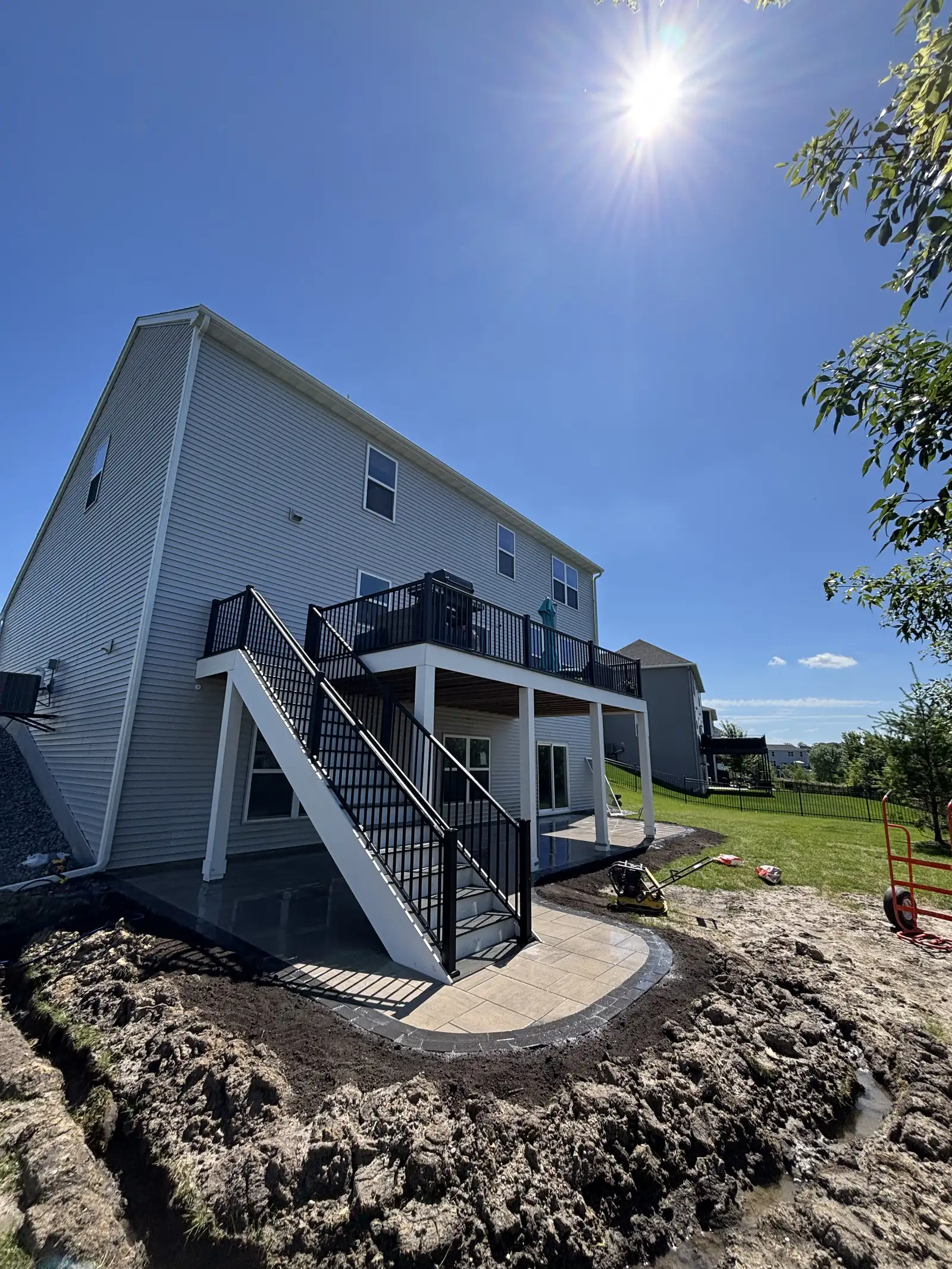
Surface grading is the first line of defense against yard drainage problems. If your yard slopes toward your house or pools in low areas, regrading redirects water along the surface before it saturates the soil. We establish proper slopes -- typically 1 inch of drop per foot for the first 6 feet from the foundation, then transitioning to gentler grades -- and create shallow swales (grass-lined channels) that guide water to designated discharge points.
Swales are particularly effective on large properties where water needs to travel 50 to 100+ feet from the problem area to a safe discharge point. Properly designed swales look like natural contours in the landscape while moving significant water volume during heavy rain events. We often combine swales with full yard grading for comprehensive surface water management.
Catch Basins & Underground Discharge
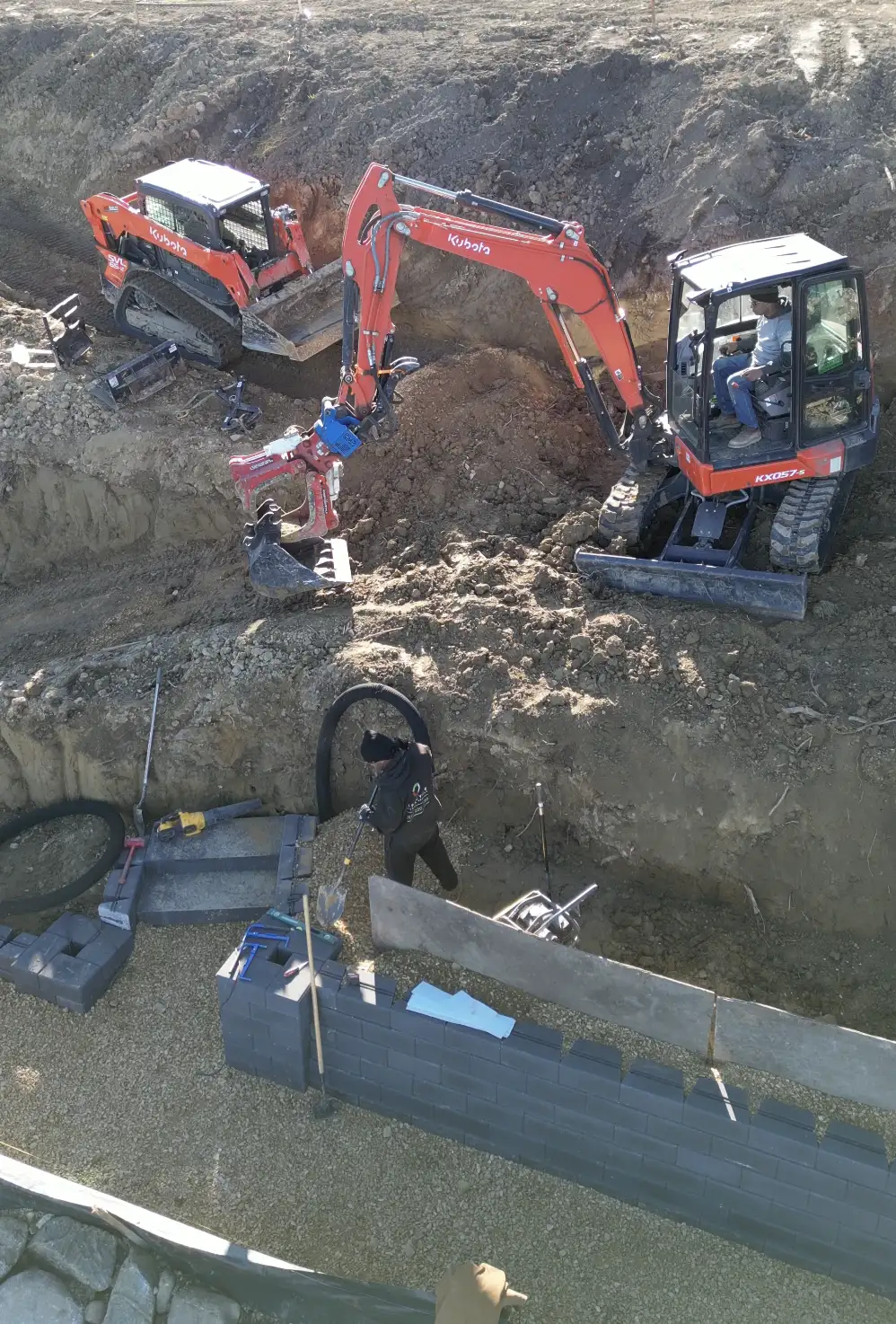
Catch basins are in-ground collection boxes with grates that capture surface water at low points, driveway edges, and areas where swales converge. Connected to underground solid-wall pipes, they carry water from collection points to a discharge location -- typically a storm sewer connection, dry well, or daylight outlet at the property edge.
We size catch basins and discharge pipes based on calculated peak flow for your property, not generic one-size-fits-all assumptions. A typical residential system uses 9-inch or 12-inch catch basins connected by 4-inch solid corrugated pipe with a minimum 1% slope. For properties with high water volume, we upsize to 6-inch pipe and larger basins. Every connection is watertight to prevent soil infiltration and pipe clogging.
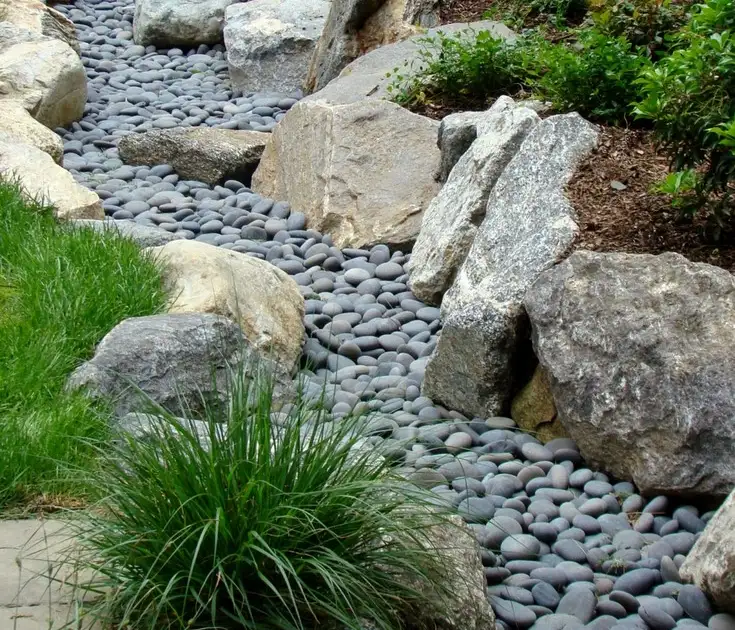
Dry Creek Beds & Rain Gardens
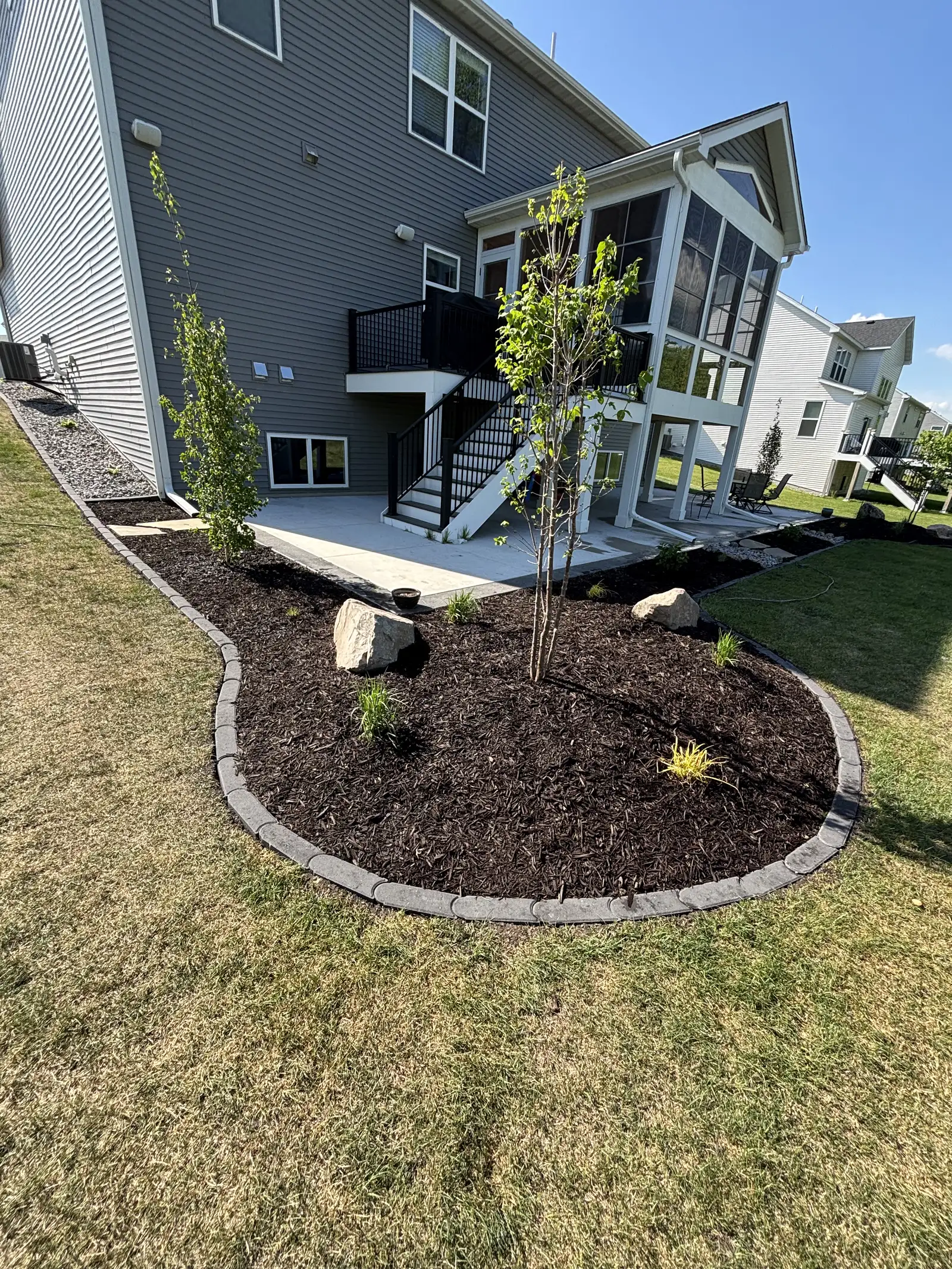
Dry creek beds are engineered drainage channels disguised as natural stream features. Lined with filter fabric, drainage gravel, and decorative river rock, they carry surface water through the landscape while adding visual interest. Dry creek beds are the most attractive solution for properties where underground piping is not practical -- for example, when roots, rock, or utility lines prevent trenching.
Rain gardens are planted depressions that capture and slowly absorb runoff using deep-rooted native plants and amended soil. The Minnehaha Creek Watershed District actively encourages rain gardens on Lake Minnetonka-area properties as part of stormwater management best practices. We design rain gardens that handle the calculated runoff volume for your property while adding seasonal color and pollinator habitat to your landscape plantings.
Signs Your Yard Has a Drainage Problem
Standing Water After Rain
Water that pools on your lawn and does not drain within 24 hours indicates inadequate surface grading or clay soil that resists absorption. Persistent puddles in the same spots mean the problem is structural and will not resolve on its own.
Soggy or Spongy Lawn
A lawn that stays mushy 2 to 3 days after rain -- even where there is no visible standing water -- signals saturated subsurface soil. This kills grass roots and indicates a need for french drains or subsurface drainage to lower the water table in that area.
Erosion Channels or Bare Spots
Visible erosion channels, washed-out mulch beds, and bare dirt patches where grass has been killed by recurring water flow all indicate uncontrolled runoff. These worsen each season as the erosion channels deepen and direct more water along the same path.
Water in Basement or Crawl Space
Water entering your basement after rain or during spring snowmelt means surface water is reaching your foundation. This is an urgent problem -- foundation drainage combined with surface grading correction should be addressed immediately to prevent structural damage.
Yard Drainage FAQ
Yard drainage projects in the Minnetonka area typically range from $2,000 to $10,000 depending on the scope. Simple regrading around a foundation runs $2,000 to $4,000. A comprehensive system with catch basins, underground piping, and swales for a full backyard runs $5,000 to $10,000. Decorative dry creek beds cost $3,000 to $7,000 depending on length and materials. We provide detailed itemized quotes after an on-site evaluation of your specific drainage conditions.
Grading work and trench excavation will disturb turf in the work area, but we restore every affected area with topsoil and either seed or sod installation after the drainage system is complete. Most clients choose sod for instant restoration. Within 2 to 4 weeks, the work areas blend seamlessly with the surrounding lawn. The improved drainage will actually make your lawn healthier long-term by eliminating the waterlogged conditions that kill grass.
Adding topsoil to low spots is a temporary fix that often makes the problem worse. Without addressing where the water should go, filling low spots simply redirects water to a different area -- often toward your foundation or your neighbor's property. Effective drainage requires a system-level approach: evaluating the full water flow pattern and creating a path from source to discharge. We solve the root cause rather than moving the symptom to a new location.
The best time to install yard drainage is late spring through early fall (May through October) when the ground is thawed and dry enough to excavate efficiently. However, spring is the ideal time to evaluate drainage problems because snowmelt reveals exactly where water flows and pools. We recommend scheduling a spring evaluation so we can see the problem at its worst, then scheduling installation for when conditions are optimal.
Get a Dry Yard That Stays Dry
Schedule your free yard drainage evaluation. We will assess your property, trace the water flow, and design a solution that eliminates standing water permanently.