
Proper Grading Prevents Every Major Landscape Problem
Grading is the single most important step in any outdoor construction project. Correct yard grading directs water away from foundations, eliminates standing water, prevents erosion, and creates level surfaces for patios, walkways, and planting beds. The International Association of Certified Home Inspectors reports that improper grading is the leading cause of basement water intrusion and foundation damage in residential homes -- a problem that costs American homeowners an estimated $3 billion annually in repairs.
In the Lake Minnetonka area, grading challenges are amplified by rolling terrain, clay-heavy soils, lakefront elevation changes, and the sheer volume of water from spring snowmelt. Properties built on hillsides often develop grading problems over time as soil settles, root systems redirect water flow, and neighboring construction changes drainage patterns. New construction sites frequently need finish grading after builders leave the lot in rough condition.
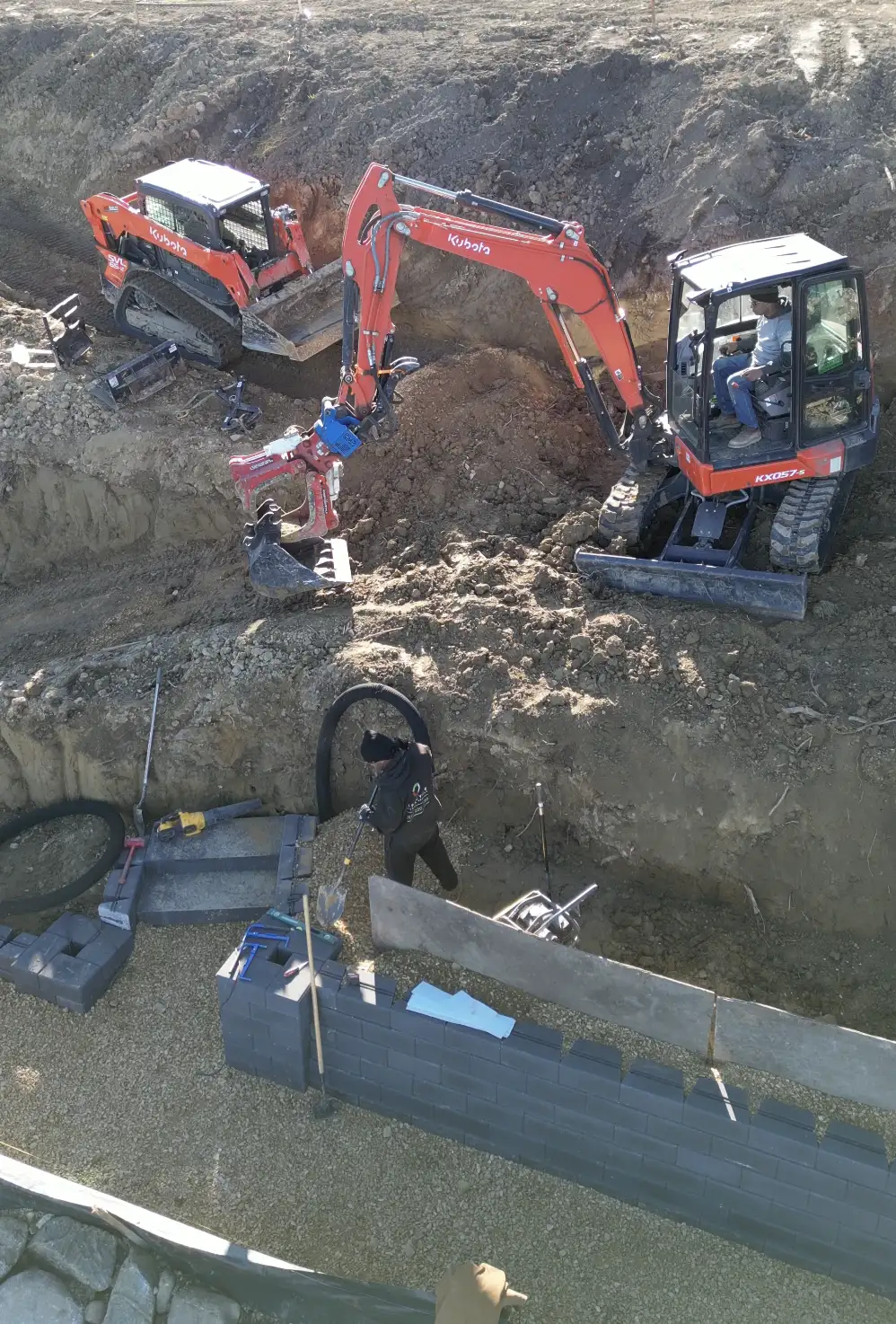
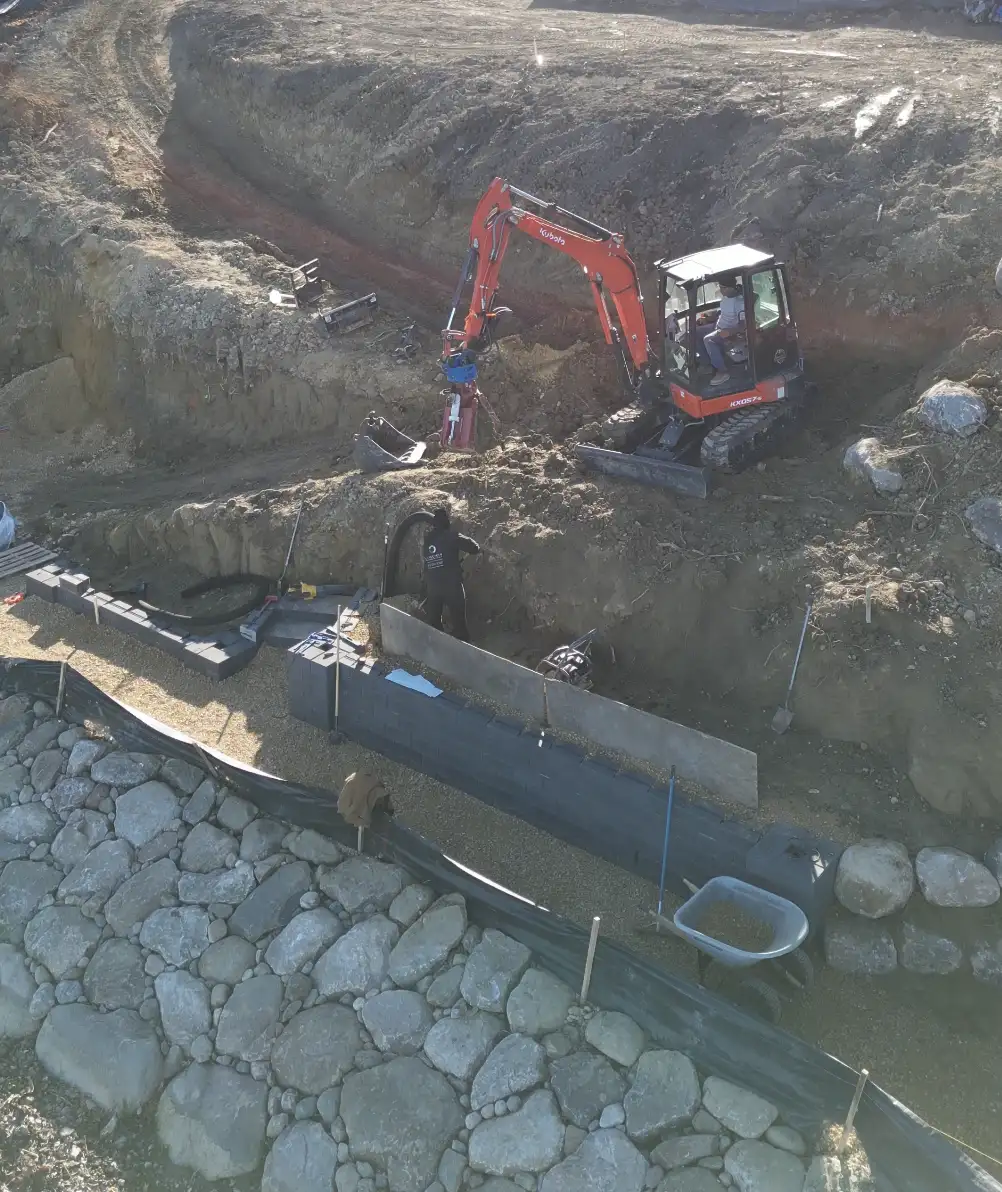
At Lifecycle Outdoor Services, we operate Kubota excavators and skid steers specifically sized for residential grading work. We establish precise slopes using laser-level equipment, compact subgrade material to prevent future settling, and finish with topsoil graded to exact specifications. Every grading project we complete includes proper drainage integration -- because grading without drainage is only half the solution.
Grading for Every Situation
Foundation & Drainage Grading
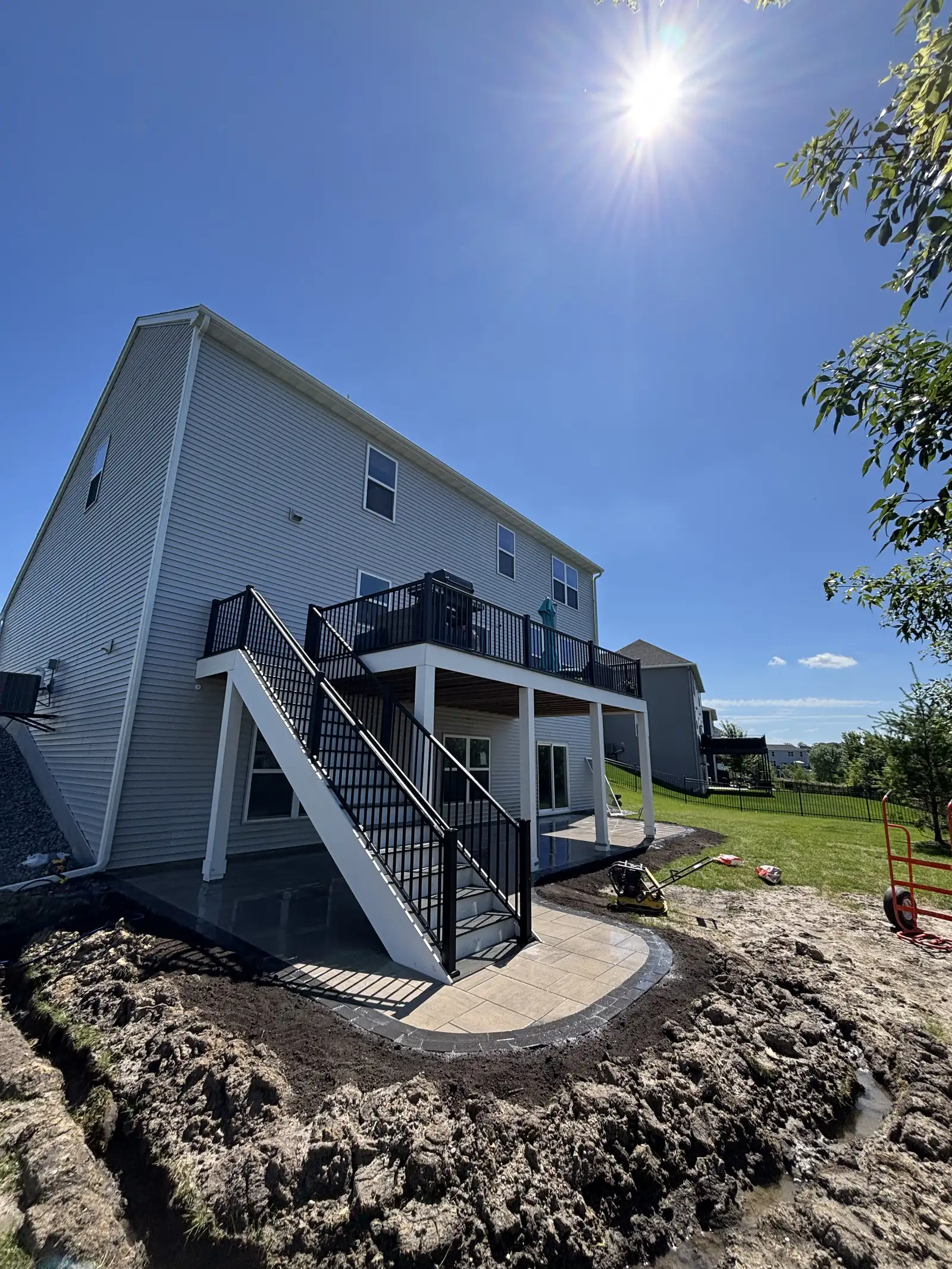
The ground within 10 feet of your foundation must slope away from the house at a rate of at least 1 inch per foot (6 inches of drop in 6 feet) per Minnesota building code. We measure existing grades around the entire perimeter, identify areas where water flows toward the foundation, and re-establish correct positive drainage slopes. Foundation grading often pairs with french drain installation and foundation drainage for complete protection.
This service is particularly critical after new construction, additions, or deck removals that disturb the original grade. Builders are required to establish proper grading but often leave it marginal, and settling within the first 1 to 3 years can reverse the slope entirely.
Lot Leveling & Site Preparation
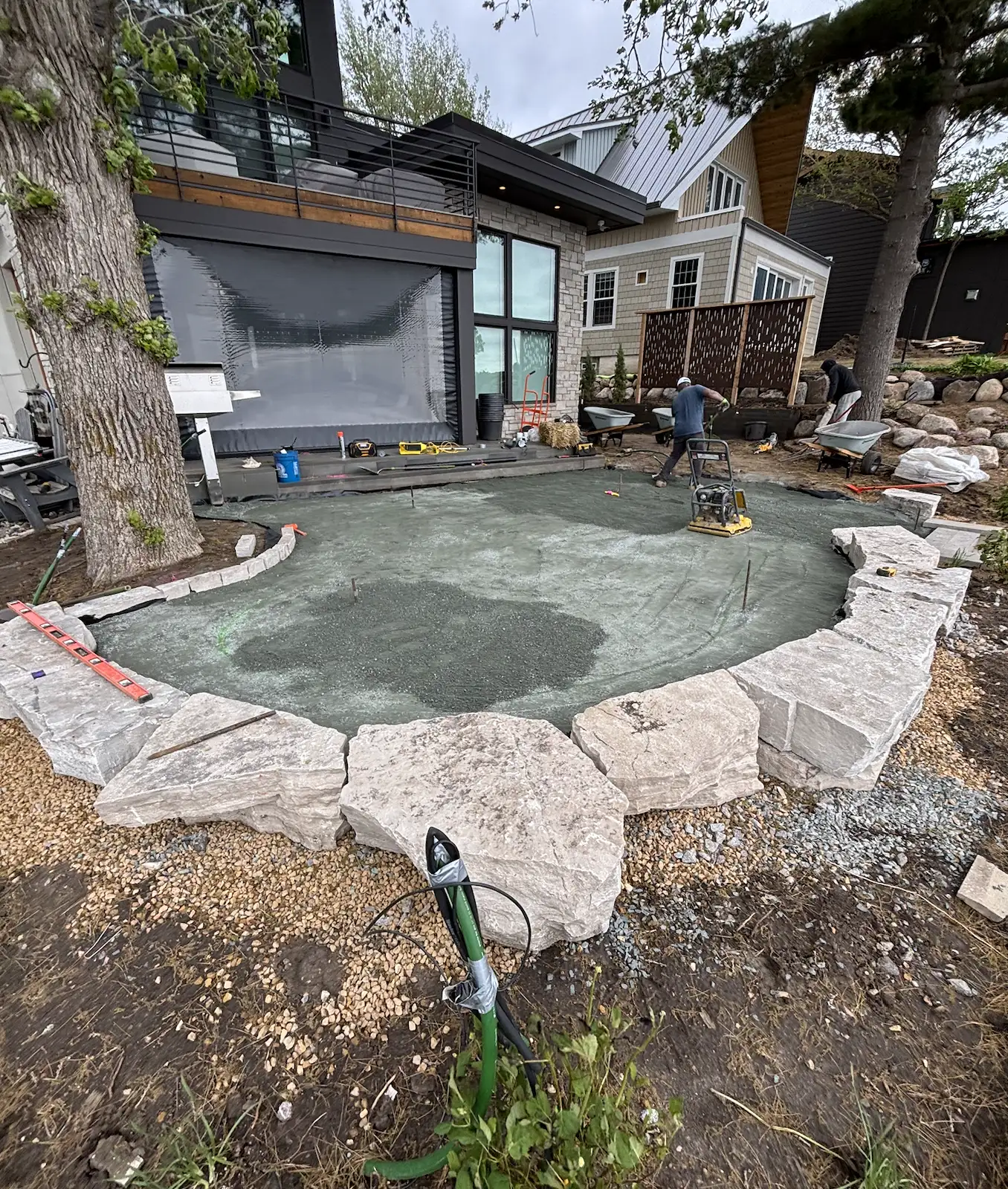
Before any patio, retaining wall, or landscape installation, the site must be graded to the correct elevation and compacted to prevent settling. We excavate to the specified depth, remove organic material and debris, establish subgrade slopes, and compact using plate compactors and roller equipment. Proper site preparation is why our paver patios and retaining walls stay level for decades.
For new landscape installations on raw lots, we perform rough grading to establish the overall terrain contour, install underground utilities and drainage infrastructure, then finish grade for topsoil, seed, or sod installation. This staged approach ensures every layer is properly compacted before the next is applied.
Hillside & Lakefront Grading
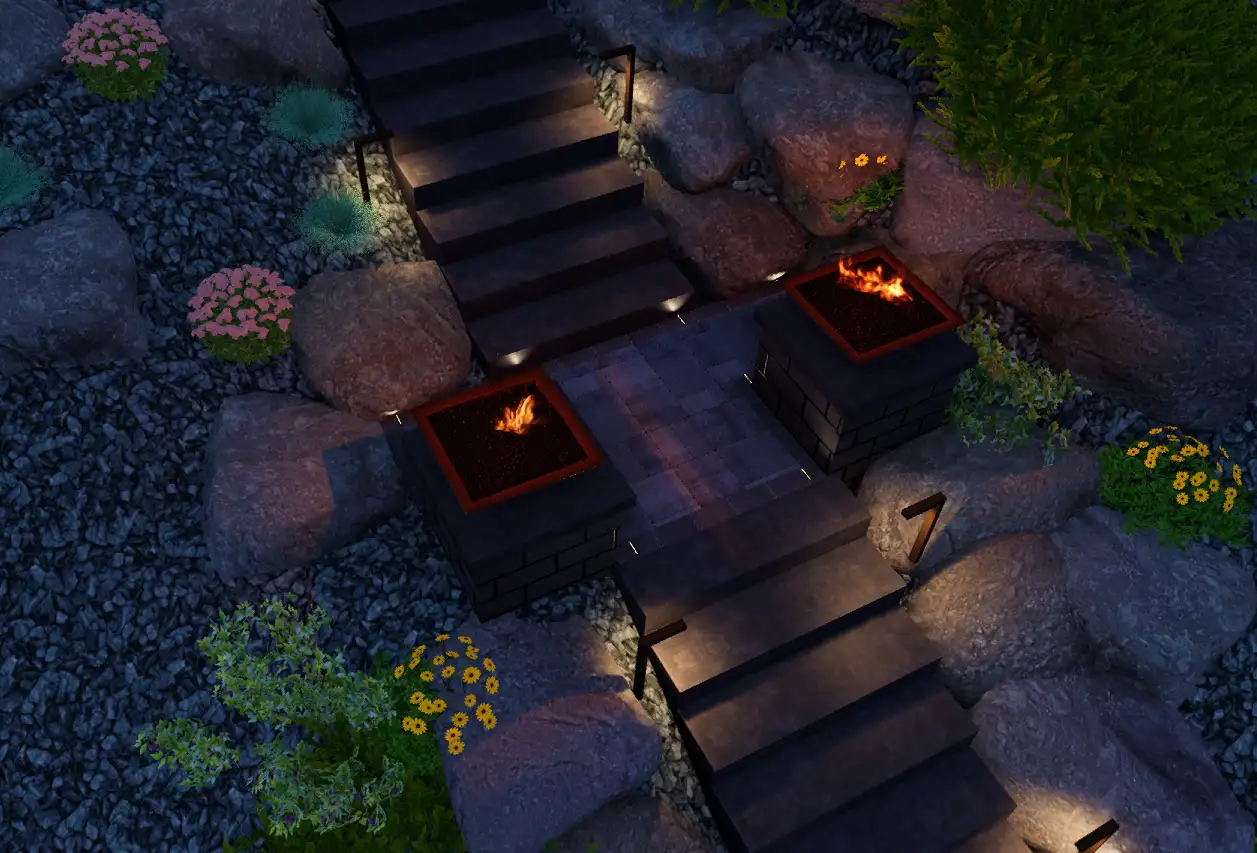
Lake Minnetonka properties often have 15 to 40 feet of elevation change from house to shore. Grading these slopes requires expertise in cut-and-fill calculations, soil stabilization, and erosion prevention. We reshape hillsides into terraced levels separated by retaining walls, install stone staircases for access between levels, and integrate drainage systems that manage water across the entire slope.
Lakefront grading must comply with shoreland management regulations from the city and the Minnehaha Creek Watershed District (MCWD). We handle all permit applications, erosion control plans, and inspection requirements. Our work meets or exceeds MCWD standards for impervious surface limits, setbacks, and stormwater management.
How We Approach Grading Projects
Site Survey & Elevation Mapping
We measure existing elevations across your property using laser-level equipment, identify high and low points, trace water flow patterns, and document utility locations. This data drives every grading decision and ensures the finished grade solves drainage problems rather than creating new ones.
Grading Plan & Permit Review
Based on site survey data, we create a grading plan that specifies target elevations, drainage flow directions, and fill/cut volumes. For projects requiring permits (lakefront properties, large-scale grading, connections to municipal storm sewer), we prepare and submit all required documentation.
Excavation & Compaction
Using appropriately sized excavators and skid steers, we cut high areas and fill low areas to achieve target grades. All fill material is placed in 6-inch lifts and compacted with plate compactors or rollers to 95% standard Proctor density. This prevents the settling that ruins grading work done without proper compaction.
Finish Grading & Restoration
After subgrade is established and compacted, we apply 4 to 6 inches of topsoil, fine-grade to final specifications, and restore the surface with seed, sod, or landscape materials. We verify all grades with laser-level measurements before restoration to ensure the work matches the plan.
Grading FAQ
Yard grading projects in the Minnetonka area typically cost $2,500 to $12,000 depending on the area to be graded, depth of cut or fill, access conditions, and whether topsoil and restoration are included. Foundation perimeter grading runs $2,500 to $5,000. Full backyard regrading with topsoil and sod runs $5,000 to $12,000. Large-scale hillside grading with retaining walls is priced as a complete project. We provide detailed quotes after measuring your property.
Permits are required in most Lake Minnetonka-area cities for grading that moves more than 50 cubic yards of soil, changes drainage patterns that affect neighboring properties, or occurs within the shoreland management overlay district. Simple foundation regrading on flat lots typically does not require a permit. We evaluate each project and handle all permitting when required.
When fill material is properly compacted in lifts (as we do on every project), significant settling does not occur. You may see 1/2 to 1 inch of settlement over the first year as topsoil consolidates, which is normal and accounts for in our finish grade specifications. Improperly compacted fill -- common with DIY grading or inexperienced contractors -- can settle 3 to 6 inches or more, which reverses drainage slopes and creates new low spots.
Grading is best done when the ground is unfrozen and relatively dry, typically May through October in Minnesota. Frozen ground cannot be properly compacted, and working in wet conditions damages soil structure. However, rough grading can be done in early fall with sod or erosion blanket applied before freeze-up, and finish grading completed the following spring. We plan project timelines to work within optimal conditions.
Get the Grade Right the First Time
Schedule your free grading consultation. We will survey your property, identify grade problems, and provide a detailed plan with transparent pricing.