
French Drains Solve Problems Surface Grading Cannot
A french drain is a gravel-filled trench containing a perforated pipe that collects and redirects subsurface water -- the water that moves through soil below the surface. While surface drainage handles visible runoff, french drains intercept the invisible water that saturates soil, raises water tables, creates hydrostatic pressure against foundations, and keeps yards soggy for days after rain. In the Lake Minnetonka area, clay-heavy soils trap subsurface water rather than allowing it to percolate, making french drains essential on many properties.
The American Society of Civil Engineers estimates that 60% of homes in the United States experience some form of below-ground wetness, and in Minnesota -- where spring snowmelt saturates the entire soil profile -- that percentage is significantly higher. A properly installed french drain lowers the water table around your home, eliminates the soggy conditions that kill lawns and plantings, and prevents the hydrostatic pressure that cracks basement walls and deteriorates foundation waterproofing.
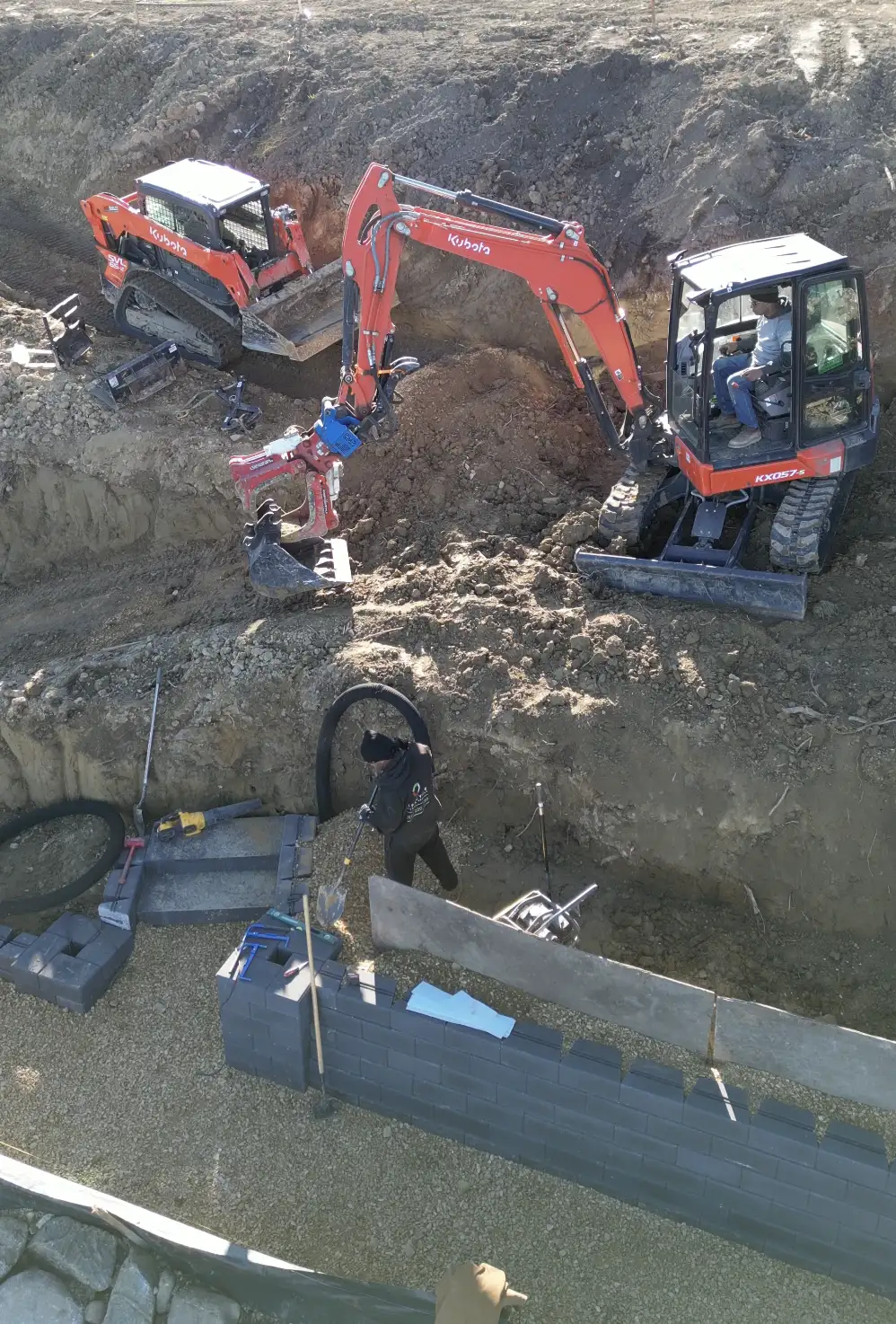
At Lifecycle Outdoor Services, we install french drains engineered for each property's unique conditions. We evaluate soil type, water table depth, slope, and the volume of water that needs to be managed, then design a system with the correct pipe diameter, trench depth, gravel size, and discharge location. Our french drains are built to handle Minnesota's peak water events -- spring snowmelt and heavy thunderstorms -- not just average conditions.
Our French Drain Installation Process
Site Assessment & Design
We evaluate your property's soil conditions (clay content, permeability), measure slopes, identify water sources (roof runoff, surface flow, high water table), and determine the best discharge location. Based on this data, we design the drain route, depth (typically 18 to 36 inches), pipe diameter (4-inch standard, 6-inch for high-volume), and connection to any existing drainage infrastructure.
Trench Excavation
We excavate the trench with a consistent downward slope (minimum 1% grade) from the highest collection point to the discharge location. Trench width is typically 12 to 18 inches, wide enough for proper gravel fill around the pipe. On properties with heavy clay, we may widen the trench to create a larger gravel channel that intercepts a broader area of subsurface water flow.
Pipe, Fabric & Gravel Installation
The trench is lined with non-woven geotextile filter fabric to prevent soil particles from migrating into the gravel and clogging the system over time. We place 2 to 3 inches of washed drainage gravel in the bottom, set the perforated pipe (holes facing down to collect rising water), then fill with gravel to within 3 to 4 inches of the surface. The filter fabric is folded over the top before backfilling with topsoil.
Discharge & Clean-Out Access
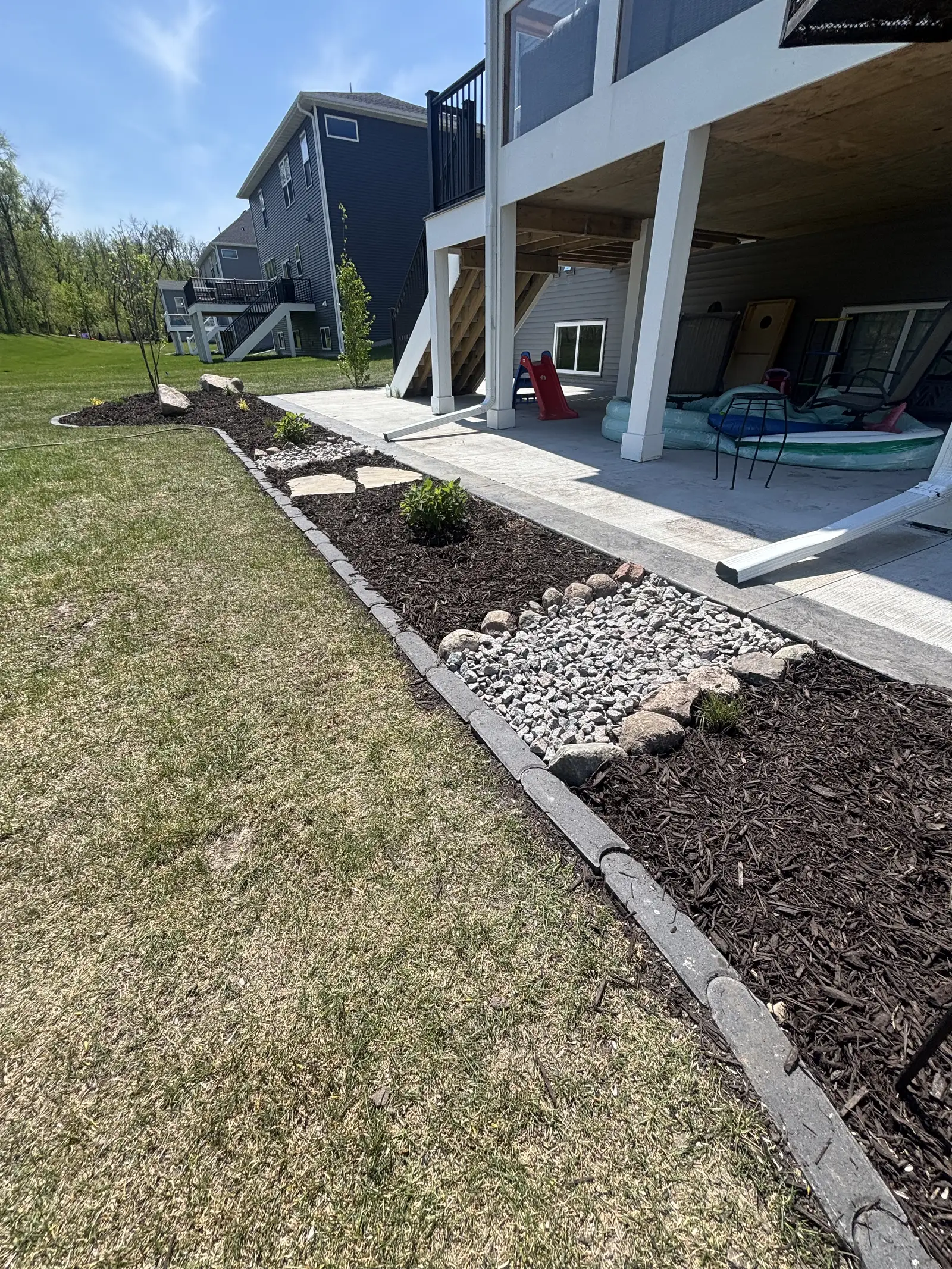
Every french drain must discharge to a safe location -- daylight outlet at the property edge, dry well, storm sewer connection, or pop-up emitter in the yard. We install clean-out access points (vertical PVC risers with caps) at direction changes and every 50 feet of run so the system can be flushed and inspected if needed. Clean-outs sit at grade level and are concealed within planting areas.
The Right Drain for Your Situation
Perimeter / Foundation Drains
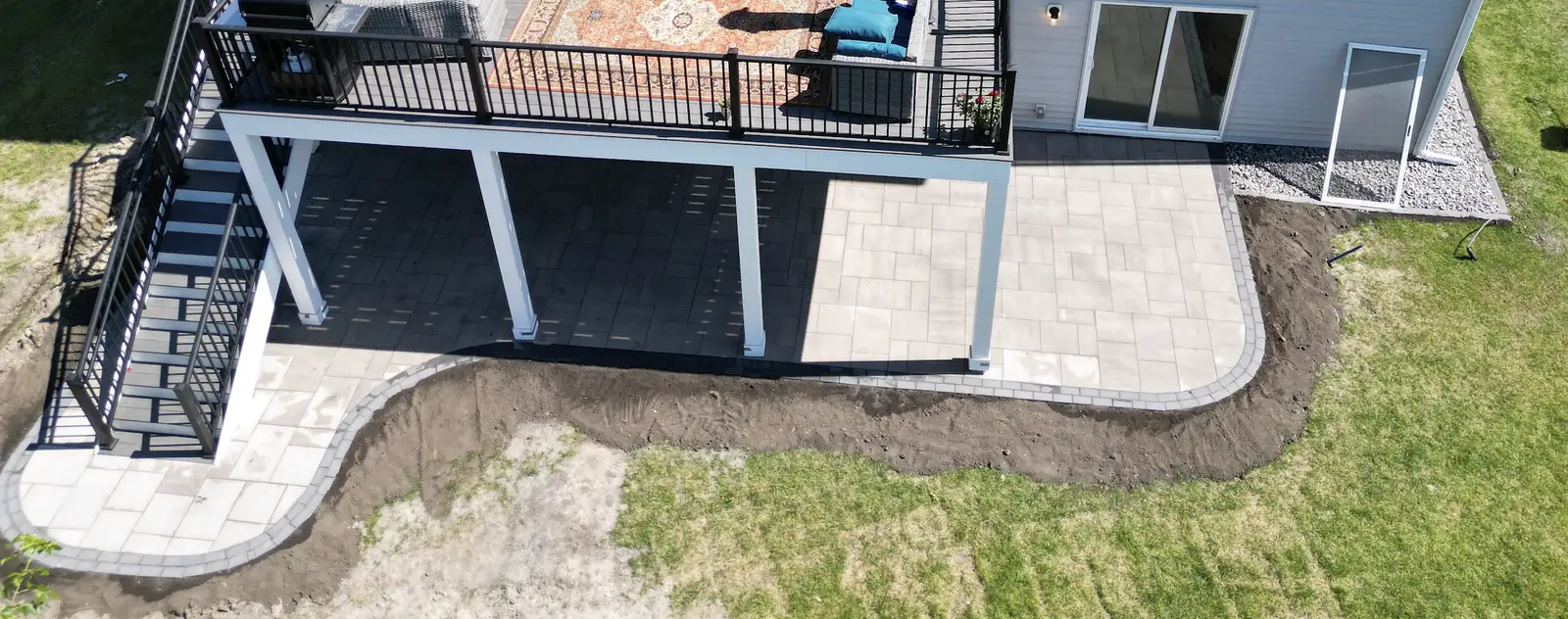
Perimeter drains run along one or more sides of your foundation to intercept water before it reaches the basement wall. Installed at or below footing depth, these drains collect water that would otherwise create hydrostatic pressure against your foundation. Perimeter drains are the most common french drain application in the Minnetonka area and are often combined with foundation drainage improvements.
Curtain Drains
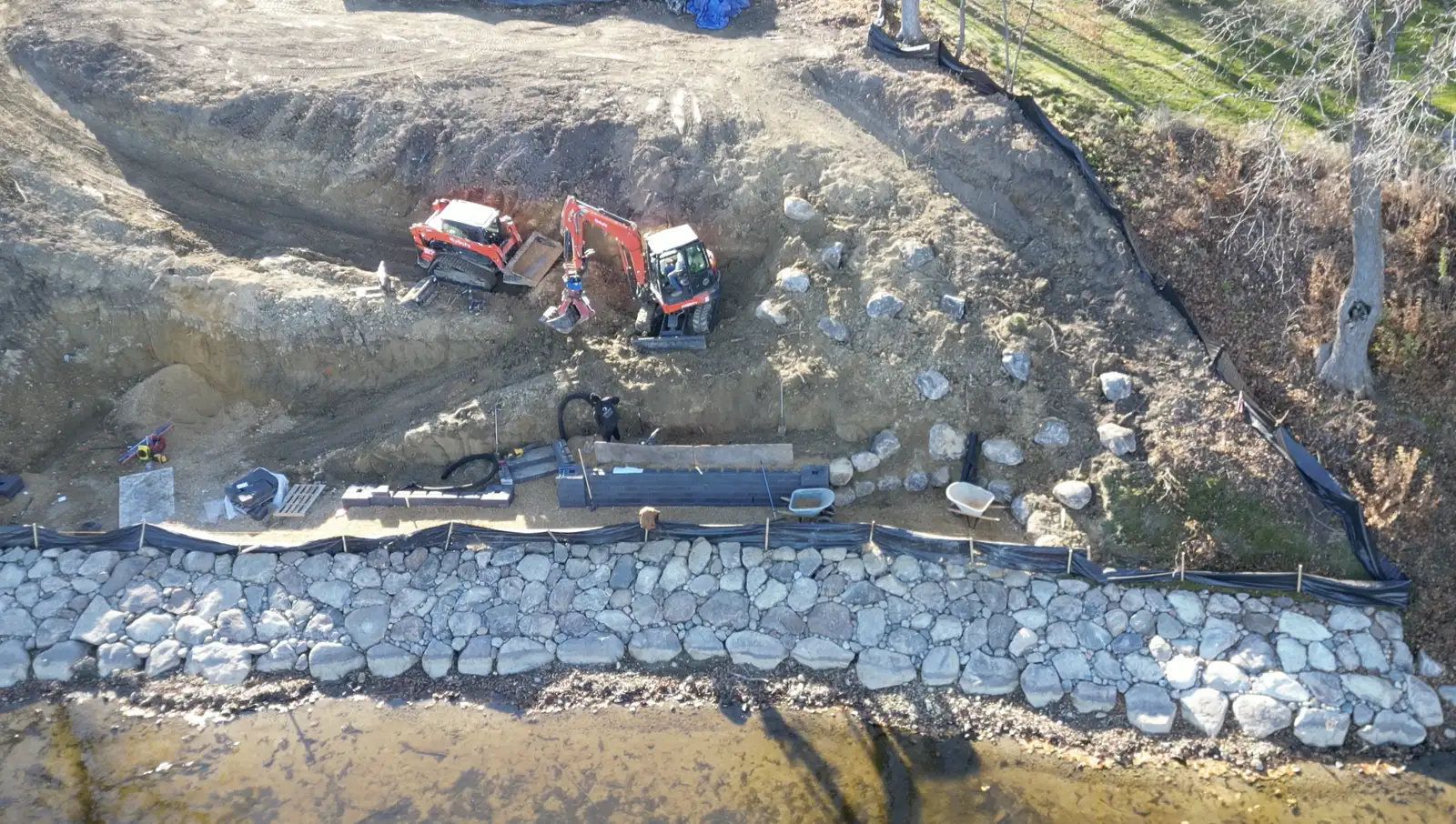
Curtain drains (also called interceptor drains) run perpendicular to the direction of water flow on sloped properties. Installed uphill from the area you want to protect, a curtain drain intercepts subsurface water before it reaches your yard, patio, or home. This is the best solution for properties where water flows down from a hill, neighboring lot, or wooded area above your home. Curtain drains are especially common on Lake Minnetonka hillside properties.
French Drain FAQ
French drain installations in the Minnetonka area typically range from $3,000 to $12,000 depending on length, depth, soil conditions, and discharge location. A 50-foot perimeter drain along one side of a foundation runs $3,000 to $5,000. A comprehensive system with 150+ feet of pipe, multiple runs, catch basin connections, and discharge to daylight runs $8,000 to $12,000. We provide detailed quotes after evaluating your specific property and water conditions.
A properly installed french drain with quality filter fabric and clean gravel lasts 30 to 50 years before the gravel channel may need refurbishment. The pipe itself (corrugated HDPE) has a 100+ year service life. The most common failure point is sediment intrusion caused by missing or improper filter fabric -- which is why we use heavy-duty non-woven geotextile on every installation and wrap it completely around the gravel fill.
In most cases, yes. If water enters your basement from the outside (through walls or the floor/wall joint), an exterior perimeter french drain combined with proper grading will address the root cause by intercepting water before it reaches the foundation. If water enters through floor cracks (rising water table), an interior french drain or drain tile system installed inside the basement perimeter may also be needed. We evaluate the source of water intrusion during our free on-site assessment.
French drain installation requires trenching, which disturbs a strip of lawn 18 to 24 inches wide along the drain route. We restore all affected areas with topsoil and seed or sod after installation. Where possible, we route drains through planting beds or along property edges to minimize lawn disruption. Existing hardscapes can usually be avoided or cut and repaired where the drain passes through.
Stop Subsurface Water Before It Reaches Your Home
Schedule your free french drain assessment. We will evaluate your property, identify the water source, and design a drainage system that eliminates wet conditions permanently.