
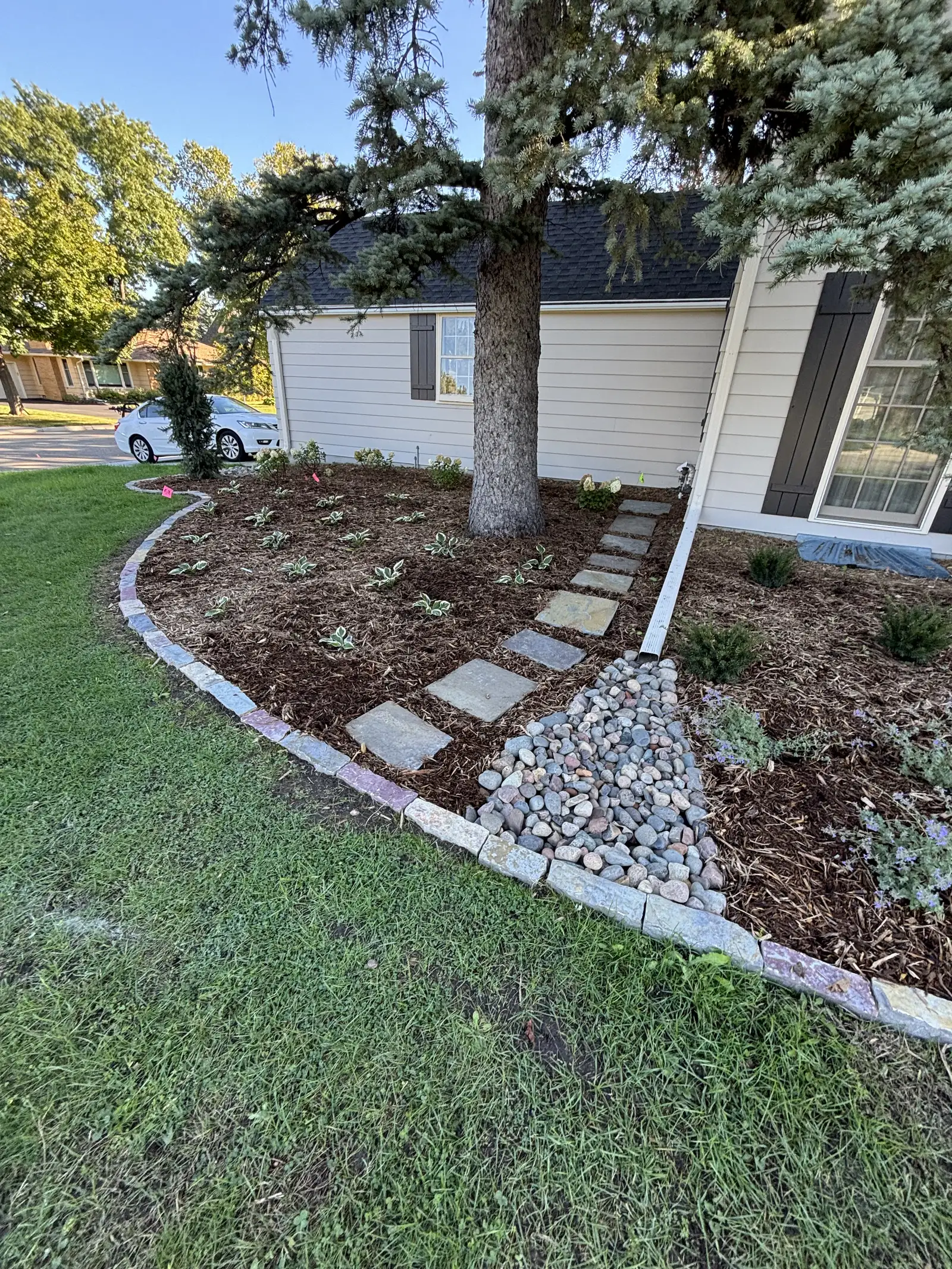
Outdoor Stairs Are Essential on Lake Minnetonka Properties
Outdoor staircases provide safe, permanent access across elevation changes that are common on properties around Lake Minnetonka, Prior Lake, and the rolling terrain of the western Twin Cities suburbs. Without properly built stairs, homeowners face worn dirt paths that turn to mud in rain, makeshift timber steps that rot within 5 to 10 years, and slopes that become ice sheets in Minnesota winters. According to the Consumer Product Safety Commission, outdoor falls are the leading cause of home injury -- proper staircase design with correct riser height, tread depth, and slip-resistant surfaces prevents these accidents.
The Lake Minnetonka area presents unique staircase challenges. Many lakefront properties have 15 to 40 feet of elevation change from the house to the shoreline. Soil conditions range from sandy lake banks to dense clay hillsides, and freeze-thaw cycles exert enormous force on any structure built into a slope. Timber stairs, railroad tie steps, and DIY approaches simply cannot withstand these conditions long-term.
At Lifecycle Outdoor Services, we build outdoor staircases from natural stone, concrete pavers, and boulders -- materials that handle Minnesota's climate without rotting, splitting, or shifting. Every staircase we install starts with a proper excavated foundation, includes integrated drainage to prevent frost heaving, and meets building code requirements for riser height, tread depth, and handrail placement where required.
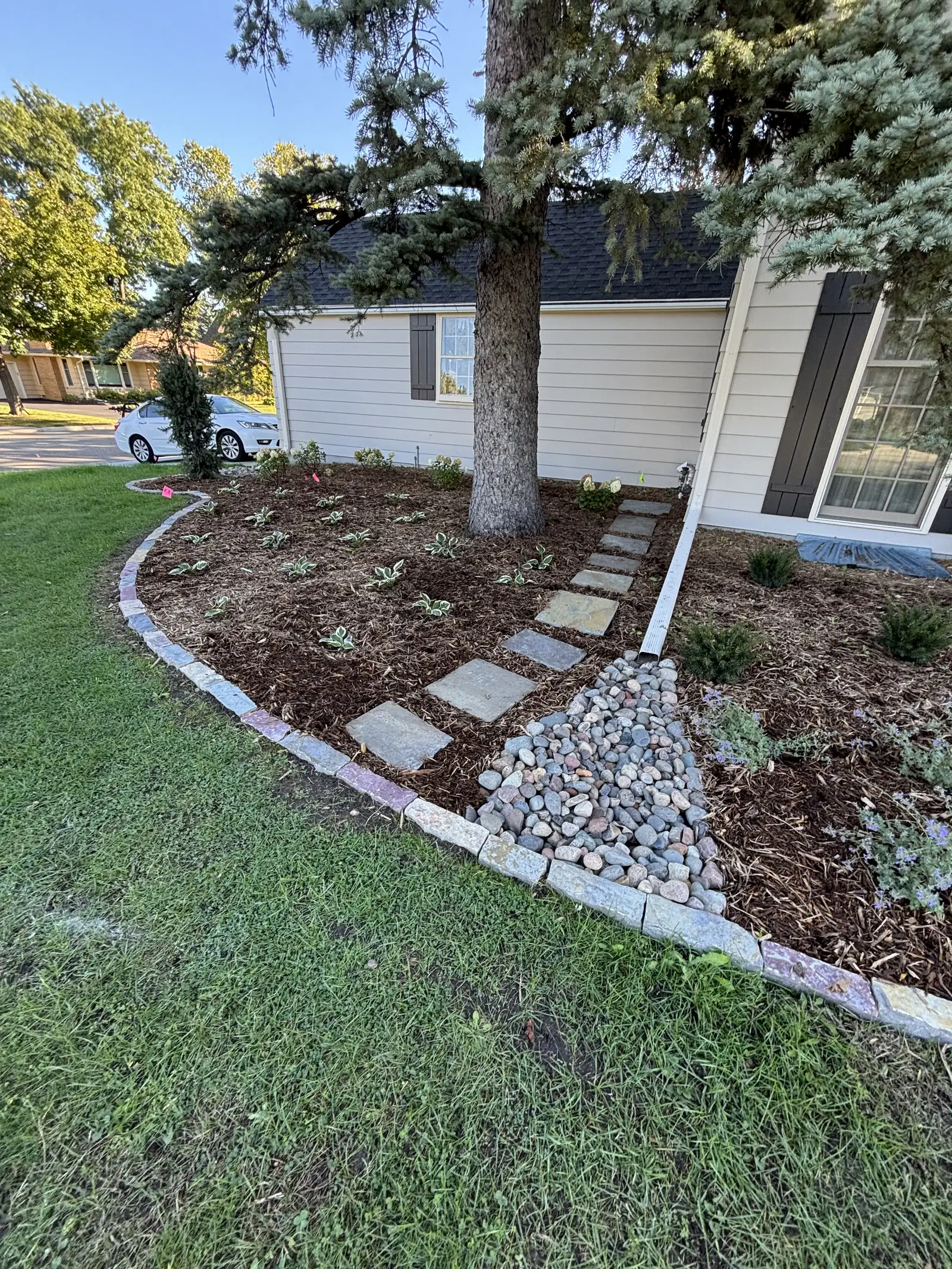
Staircase Styles for Every Property
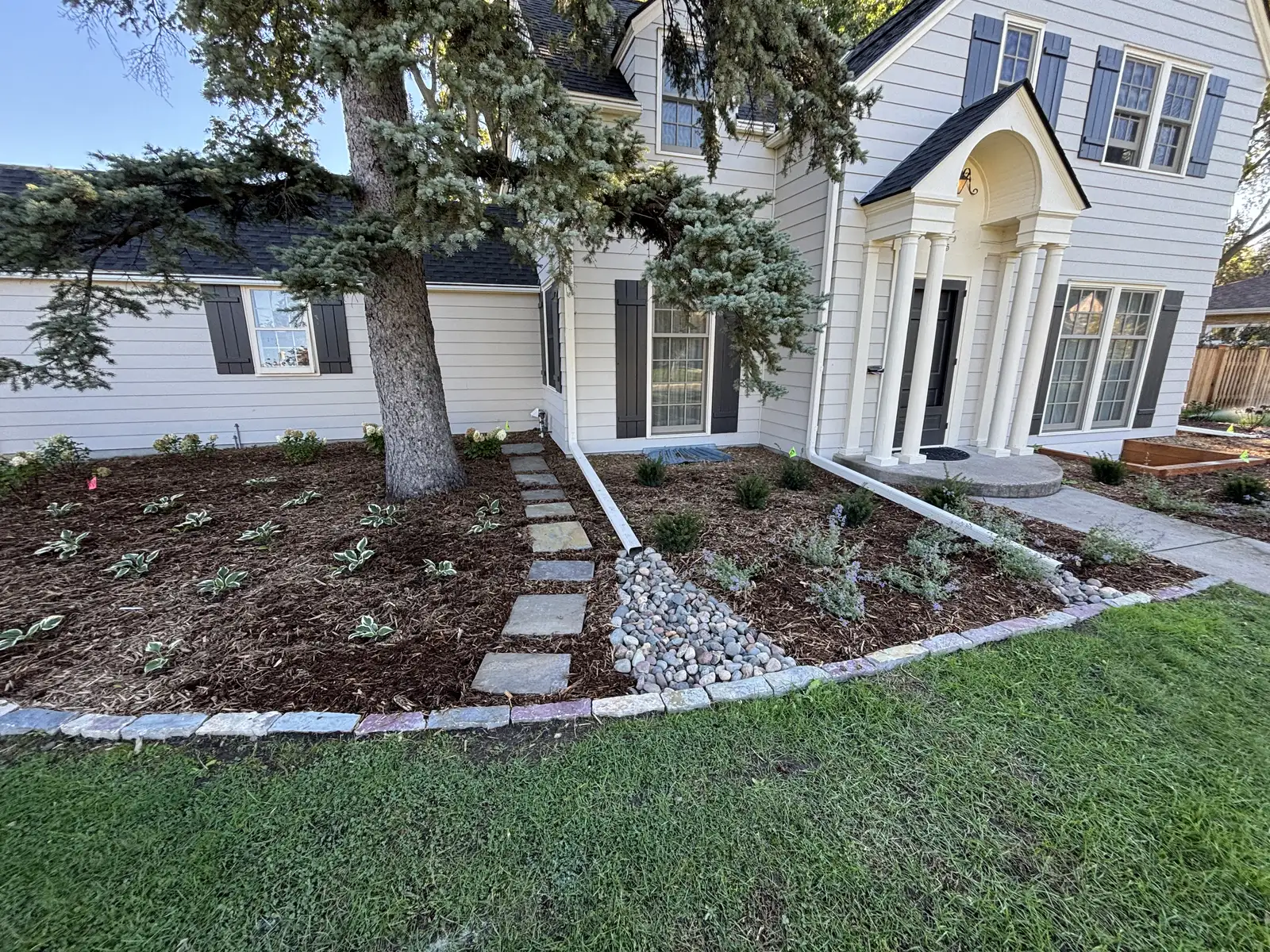
Natural Stone Slab Steps
Natural stone slab steps use large, flat-cut stone pieces (typically 4 to 6 inches thick, 36 to 60 inches wide) as individual treads set into the hillside. Each slab weighs 200 to 800 pounds and is placed on a compacted gravel base with proper pitch for drainage. The result is a staircase that looks like it grew from the landscape and will last 100+ years.
We source stone slabs from Minnesota and Wisconsin quarries, selecting each piece for consistent thickness, natural color variation, and slip-resistant texture. Stone slab steps pair exceptionally well with natural stone walls and flagstone patios for a cohesive design. Popular stone choices include Fond du Lac limestone, Chilton limestone, and Minnesota granite.
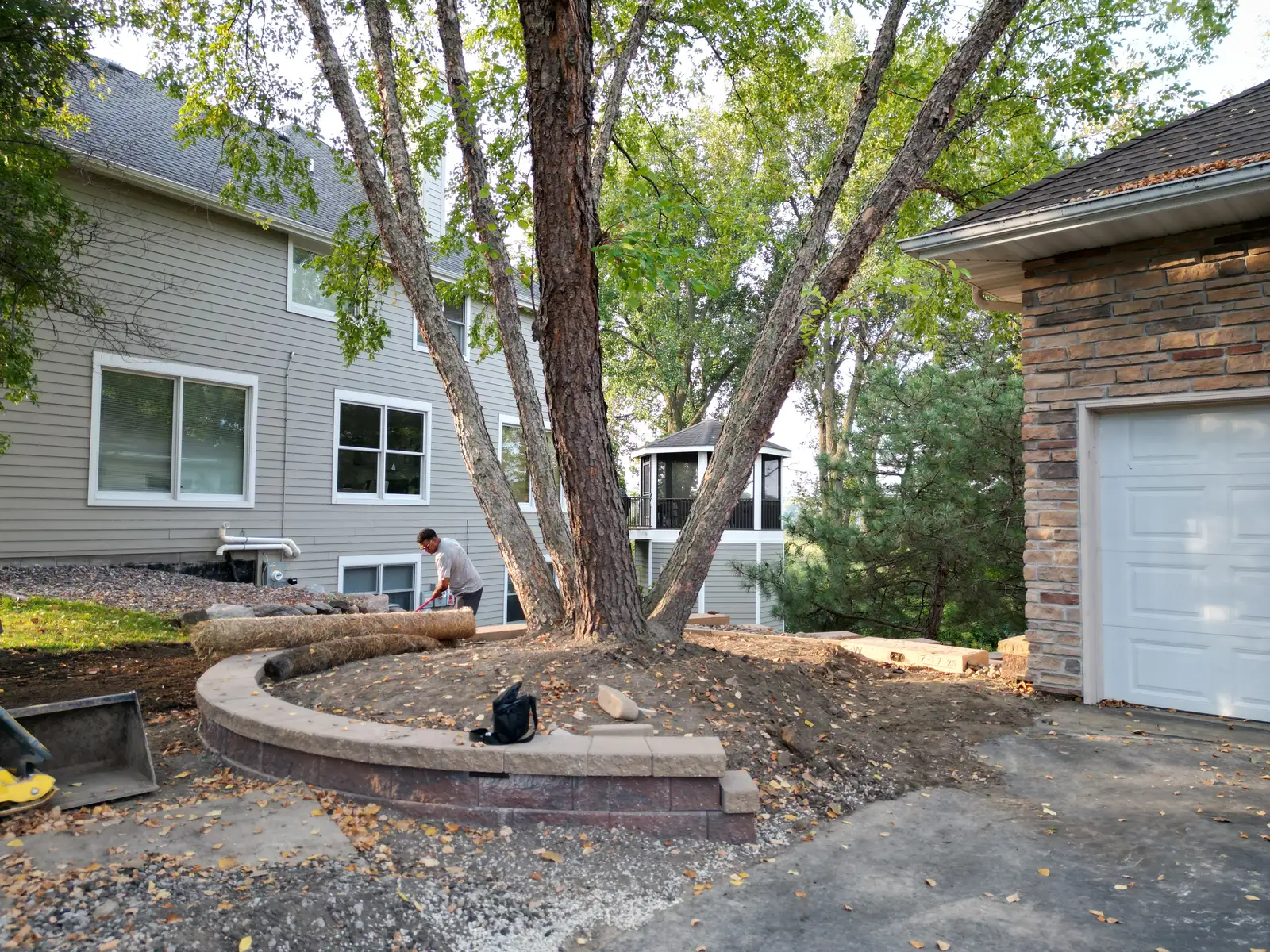
Paver & Block Staircases
Paver staircases use interlocking concrete pavers for treads and segmental retaining wall block for risers. This system creates uniform, precisely dimensioned steps that meet building code with exact riser heights (typically 6 to 7.5 inches) and tread depths (12 to 14 inches minimum). The modular design makes repairs simple if a unit ever cracks or shifts.
We build paver staircases as part of larger patio installations and retaining wall projects so the materials and colors match throughout the entire landscape. Stair treads are often capped with bullnose or tumbled pavers for a finished edge and comfortable stepping surface.
Boulder Steps
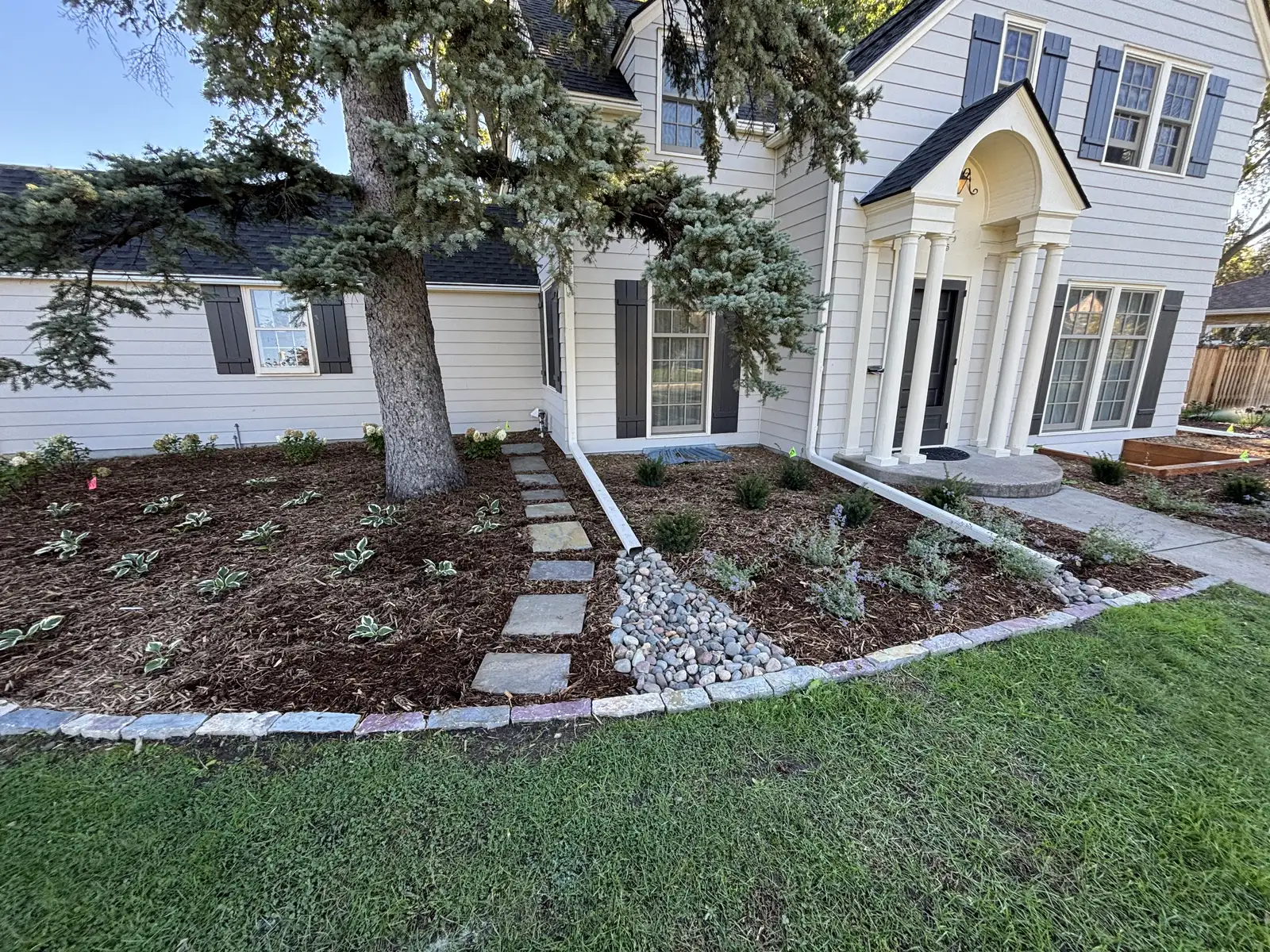
Boulder steps use large, flat-topped boulders (500 to 3,000 pounds each) as individual treads. Set by excavator into the hillside on a compacted gravel base, boulder steps create a dramatic, natural appearance that fits steep lakefront slopes where conventional stairs would require extensive retaining walls. Each boulder is selected for a flat, level top surface with sufficient depth for a comfortable step.
Boulder steps are particularly effective on shoreline restoration projects where the staircase connects a hilltop home to a dock or lake access point. We often integrate boulder steps with boulder retaining walls and riprap for complete slope stabilization from house to water.
Built to Code, Designed for Safety
Proper Rise & Run
Minnesota building code requires outdoor stair risers between 4 and 7.75 inches with a maximum variance of 3/8 inch between any two risers. Tread depth must be at least 11 inches. We calculate the total elevation change and divide it into uniform steps that feel natural and safe to walk, with no surprise short or tall steps.
Frost-Resistant Foundation
Every staircase we build sits on a foundation that extends below Minnesota's 42-inch frost line. We excavate, compact, and fill with angular gravel that drains freely and resists frost heaving. This prevents the shifting and tilting that plague staircases built on shallow, inadequate bases.
Integrated Drainage
Water is the primary enemy of outdoor staircases. We install drain tile behind and beneath every staircase to route water away from the foundation, preventing erosion under the steps and ice buildup on treads. Proper drainage extends the life of the staircase and keeps the walking surface safer in winter.
Handrails & Lighting
Minnesota code requires handrails on staircases with 4 or more risers. We install powder-coated aluminum or wrought iron rails that complement the stone work. LED step lights integrated into risers or sidewalls provide safe visibility at night without harsh overhead lighting.
Outdoor Staircase FAQ
Outdoor stone staircases in the Minnetonka area typically cost $3,500 to $15,000 depending on the number of steps, staircase width, stone type, and site conditions. A simple 8-step staircase with stone slab treads runs $3,500 to $6,000. Long lakefront staircases with 20+ steps, sidewalls, landings, and integrated lighting can run $10,000 to $15,000 or more. We provide detailed quotes after evaluating your specific property and elevation change.
Most cities around Lake Minnetonka require a building permit for staircases with 4 or more risers or staircases taller than 30 inches. Lakefront staircases may also require shoreland management permits from the city and the Minnehaha Creek Watershed District. We handle all permit applications and inspections as part of the project so you do not have to navigate the process yourself.
Yes, replacing rotted timber or railroad tie stairs with natural stone is one of our most common staircase projects. We remove the old stairs, re-excavate and regrade the slope, install a proper compacted gravel foundation, and build the new stone staircase with integrated drainage. The new stairs will outlast the timber they replace by 5 to 10 times.
Frost heaving occurs when water in the soil freezes and expands, pushing structures upward. We prevent this by excavating the staircase foundation below Minnesota's 42-inch frost depth, using free-draining angular gravel that does not hold water, installing drain tile to route groundwater away from the foundation, and selecting stone with sufficient weight to resist upward movement. This multi-layer approach keeps every step level and stable through Minnesota's 50+ annual freeze-thaw cycles.
Connect Every Level of Your Property Safely
Schedule your free on-site staircase consultation. We will measure the elevation change, evaluate soil conditions, and design stairs that fit your slope and style.