
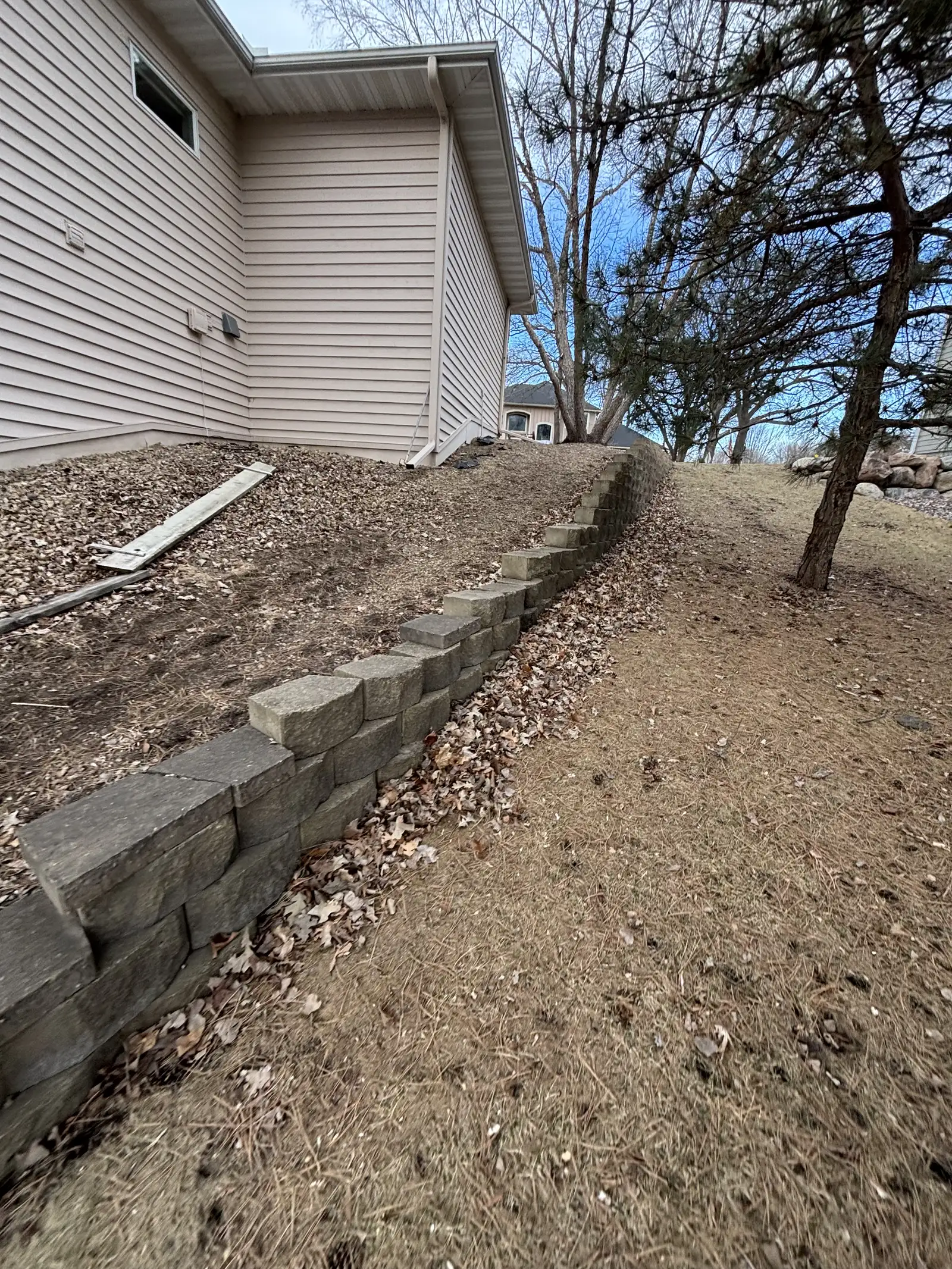
Short answer: before booking a Shorewood landscape contractor, ask how the contractor will evaluate drainage, grading, access, materials, permits, jobsite supervision, and future phases. A useful estimate should explain how the visible improvements and hidden site work connect. That matters for Shorewood and Lake Minnetonka area homes because outdoor projects often involve slopes, mature trees, lake-influenced drainage, older grades, and several features that need to work as one system.
Choose a contractor who understands the full property and can explain the work clearly before the project is booked. Lifecycle Outdoor Services provides design-build landscape construction in Shorewood, with direct access to the team when you are ready to request an estimate.
Read the wall: lean, rotation, bulges, and settlement
Many projects begin with a simple request: a new patio, a better backyard, a wall replacement, safer steps, or a cleaner lakeside path. The contractor should help translate that request into a practical scope. A patio may need corrected pitch, base excavation, drainage planning, lighting sleeves, and turf restoration. A retaining wall may need soil evaluation, geogrid, drain tile, access planning, and finish grading. Shoreline work may need erosion control, slope stabilization, and coordination with the broader yard.
Ask the contractor to describe the problem in plain language before they talk about products. If the conversation jumps straight to square footage or material color, the estimate may miss the site conditions that determine whether the project will last. A strong landscape contractor should be able to explain the sequence: what gets removed, how grades are set, where water will go, how base materials are prepared, and how the final surface ties back into the home.
Look for water pressure behind the wall
Drainage is one of the biggest reasons landscape projects succeed or fail. In Shorewood, a property may have roof runoff, driveway runoff, lake-area soils, clay pockets, steep grade changes, older retaining walls, and mature root systems all influencing the same area. Water that is ignored during estimating can create patio settlement, washed mulch, wet turf, heaving steps, or pressure behind a wall.
Ask whether the contractor will review downspouts, low spots, surface pitch, soil movement, and where water exits the project area. If the yard has standing water, washouts, or soft turf, ask whether yard drainage, French drain installation, or grading should be included in the larger landscape plan. The best answer is not always a separate drainage project. Sometimes it is proper patio pitch, a hidden drain route, a corrected bed edge, or a grading adjustment completed before the finished work begins.
Decide whether repair or full replacement makes sense
Small replacements may be estimated from a site visit. Larger outdoor projects usually benefit from design first. If you are considering a paver patio, retaining wall, outdoor kitchen, fire feature, lighting, privacy screen, shoreline access, or future phase, design can prevent expensive changes after installation starts. It confirms layout, scale, materials, step count, wall alignment, planting zones, utility routes, and the relationship between the home and the yard.
Lifecycle Outdoor Services offers Landscape Design & 3D Renderings so homeowners can review the plan before construction begins. Ask whether the design fee, revisions, measurements, installation estimate, and construction scope are connected. You should understand what is conceptual, what is priced, and what still needs field confirmation.
Compare base, drainage, reinforcement, and backfill
Two landscape contractor estimates can look very different because they may not include the same work. One may include excavation, disposal, fabric, aggregate base, compaction, wall drainage, edge restraint, joint material, plant bed preparation, sod repair, and cleanup. Another may only include the finished paver or block surface. The lower number is not always the better value if core preparation is missing.
Ask for the scope to be separated by major category. For a patio, ask about excavation depth, compaction, base material, bedding material, pitch, edge restraint, and joint material. For a wall, ask about base preparation, drainage stone, fabric, drain tile, geogrid if required, cap installation, and restoration. For a full outdoor living space, ask how the contractor will coordinate pavers, utilities, lighting sleeves, plantings, walls, steps, and future upgrades.
Protect the grade above and surfaces below
Landscape construction involves field decisions. Crews may uncover buried debris, old base material, irrigation lines, tree roots, unexpected soils, or grade conflicts. Ask who will be on site, who approves changes, and how updates are communicated. The person supervising should understand more than appearance. They should understand compaction, drainage, base depth, wall reinforcement, pitch, access protection, and cleanup.
This is especially important for retaining wall contractor work, paver patio installation, grading, drainage, and shoreline-related projects. The durability of the finished space depends on the decisions made before the visible surface is complete.
Review height, access, and lake-area requirements
Not every project requires a permit, but it is better to ask early than after a schedule has been promised. Wall height, grading changes, erosion control, shoreline stabilization, lakefront work, and major drainage changes may require review by a city, watershed district, or other authority. A contractor should not create false certainty at the first call. They should explain what needs confirmation before the timeline and final scope are treated as fixed.
Access can also change the project. Shorewood lots may have tight side yards, mature trees, lake-facing slopes, or limited staging space. Ask how equipment will reach the work area, where materials will be staged, how turf or pavement will be protected, and how the site will be restored. These details affect the cost, schedule, and experience during construction.
Photograph movement before the site visit
You do not need a finished plan before contacting Lifecycle Outdoor Services. You can make the first conversation more productive by sharing the project address, a few photos, the main issue you want solved, rough timing, preferred features, and known site concerns. If you have a survey, old proposal, city note, HOA requirement, or photos of drainage during a storm, include them. They help the contractor understand the starting point.
Set one or two priorities before the estimate. A fast repair, a phased plan, lower maintenance, safer access, better entertaining space, lake views, privacy, and drainage correction all point to different scopes. Naming the priority early helps Lifecycle Outdoor Services decide whether the project should begin with design, a focused repair, or a complete landscape build.
Connect the new wall to steps, patios, and drainage
A broad landscape construction project in Shorewood can bring landscape design, retaining walls, paver patios, shoreline stabilization, and yard drainage into one coordinated scope.
The next step is a direct conversation about your property. A useful estimate starts with real site conditions: grades, access, drainage, existing hardscape, planting areas, and the way your family wants to use the space. Share the goals, constraints, and questions that matter most, and Lifecycle Outdoor Services can recommend design, a field estimate, or a phased plan.
Frequently Asked Questions
What questions should I ask before hiring a Shorewood landscape contractor?
Ask how the contractor evaluates drainage, grading, access, materials, permits, crew supervision, and phasing. You should also ask how patios, walls, steps, plantings, shoreline needs, and future outdoor living features will be coordinated.
Why do landscape contractor estimates vary so much?
Estimates vary because the included scope varies. One contractor may include excavation, disposal, drainage, base preparation, restoration, and future sleeves while another only prices the visible finish. Ask each contractor to clarify inclusions, exclusions, and likely change-order items.
Do I need 3D landscape design before booking installation?
Not always. Simple repairs may not need full design. Multi-feature projects usually benefit from design because grades, layout, materials, drainage, lighting, and future phases all affect the final price and build sequence.
How do I contact Lifecycle Outdoor Services for a Shorewood estimate?
Use the contact form to share your project goals, address, timing, and known site concerns, or call (612) 220-6380.