
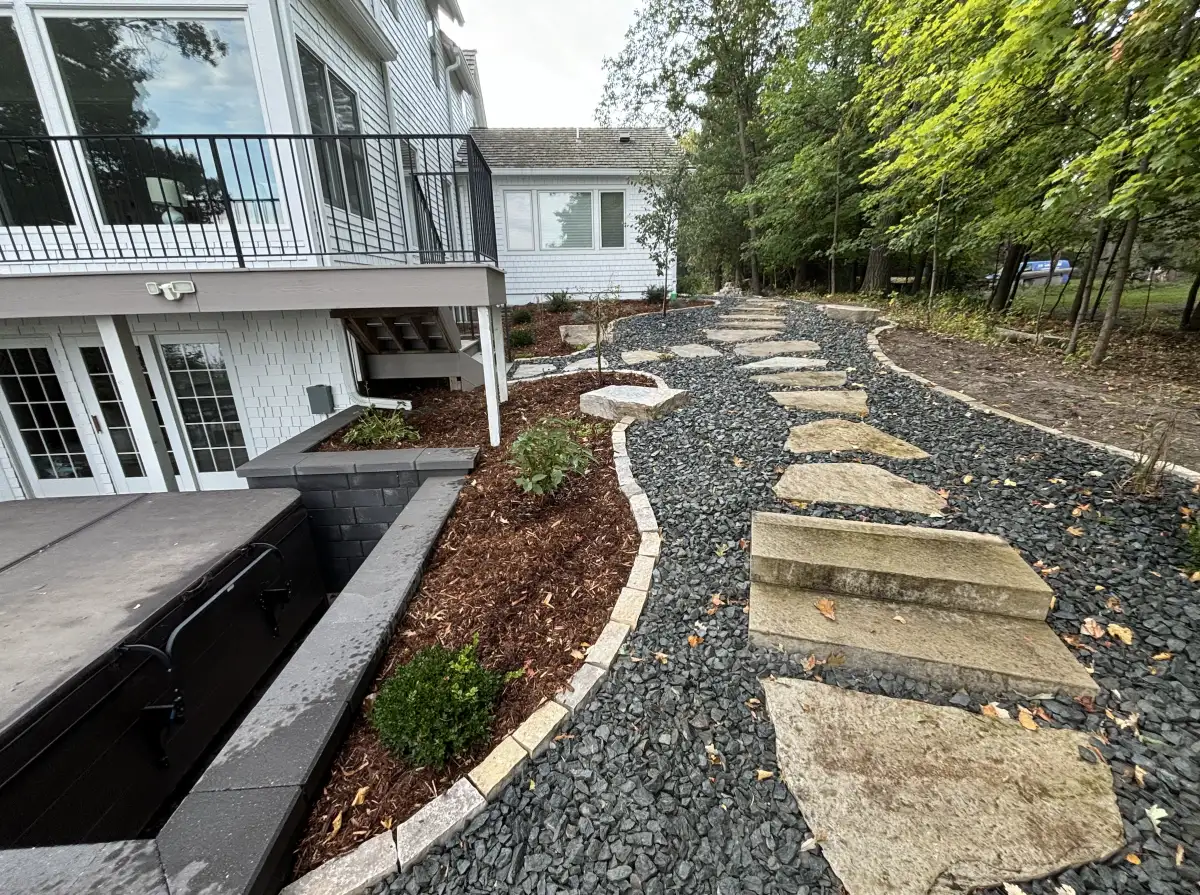
Before booking a landscape contractor in Shorewood, ask how the estimate handles drainage, grading, access, design decisions, material durability, and the work below the finished surface. Those answers tell you more than a one-line price because patios, retaining walls, steps, planting beds, and outdoor living spaces all depend on site conditions that are easy to miss during a quick walkthrough.

Shorewood and nearby Lake Minnetonka properties often have mature trees, older hardscape, tight side-yard access, lake-area runoff, slope changes, shoreline-adjacent areas, and outdoor spaces that have been updated in phases over many years. A good landscape contractor should look at how those conditions connect before recommending pavers, stone, wall block, drainage pipe, lighting, or plantings.

If you are comparing contractors now, review the Landscape Contractor service page, the Shorewood service area page, and the estimate request form. If your project is in nearby Minnetonka, the Minnetonka landscape contractor page covers similar city-specific planning concerns.

Ask What the Outdoor Project Needs to Fix

Most calls begin with one visible request: replace a leaning retaining wall, build a paver patio, correct a soggy side yard, update a front entry, refresh plantings, or create a more useful backyard. The first contractor question should be about the reason behind that request. Are you trying to gain seating space, control water, make a slope safer, reduce maintenance, improve lake access, add privacy, or prepare for a future outdoor kitchen or fire feature?

That answer changes the scope. A patio meant for entertaining may need wider circulation, lighting prep, and a base built for furniture and traffic. A wall replacement may require drainage stone, drain tile, geogrid, and finish grading. A wet side yard may need grading or French drain installation before sod or planting work makes sense. Ask the contractor to explain the problem in plain language, then ask how each line item solves it.

Ask How Water Moves Across the Property

Drainage should be discussed before the final layout is approved. Around Shorewood, water can move from rooflines, driveways, neighboring slopes, compacted lawns, old patios, and natural grade changes into the area being improved. If that movement is ignored, a new patio, wall, bed, or stairway can inherit the same settlement, washout, or saturated soil that caused the original problem.

Helpful questions include: Where does water currently enter the work area? Where will it go after construction? Are downspouts part of the issue? Does a wall need drain tile or better backfill? Does a patio need corrected pitch? Could the project require yard drainage or grading before visible work begins? You do not need to diagnose the site yourself. You need a contractor who checks those conditions before pricing the finished feature.

Ask Whether Design Should Come Before the Final Price

Some Shorewood projects are clear enough for a field estimate. A limited wall repair, small drainage correction, or straightforward hardscape replacement may not need a full design package. Larger projects usually benefit from design because the layout affects the build. Patio size, step locations, wall height, fire feature placement, outdoor kitchen utilities, privacy screens, lighting sleeves, and future planting zones all influence the construction scope.

For multi-feature work, Landscape Design & 3D Renderings can clarify scale, traffic flow, material transitions, grade changes, and future phases before installation is scheduled. Ask what the design includes, how revisions are handled, whether material selections are shown, and whether design costs are credited toward construction when the project moves forward.

Ask What Is Included Below the Finished Surface

Two estimates can look similar on the surface and still cover very different work. For paver patio installation, ask about excavation depth, base material, compaction, bedding layer, pitch, edge restraint, joint material, disposal, and restoration. For retaining walls, ask about base preparation, drainage stone, fabric, drain tile, geogrid when needed, caps, backfill, and finish grading. For outdoor living spaces, ask about utility sleeves, lighting preparation, staging, access protection, cleanup, and disturbed lawn repair.

These details are not extras. They are part of whether the project performs through heavy rain, spring thaw, freeze-thaw cycles, daily use, and seasonal maintenance. A lower number is not automatically better if it leaves out base preparation, drainage, disposal, or restoration. Ask for a written scope that separates included work, excluded work, and possible change-order conditions.

Ask How Access and Staging Will Be Handled

Many Shorewood properties have tight side yards, fences, trees, irrigation, established plantings, slopes, existing patios, or limited driveway staging. Access affects equipment selection, project timing, labor, protection needs, and cleanup. A contractor should be able to explain how crews and materials will reach the work area without assuming every lot can be handled the same way.

This is especially important for wall construction, paver patios, boulder work, shoreline-adjacent improvements, grading, and natural stone features. Ask where materials will be staged, what surfaces need protection, whether fences or gates affect access, and how the disturbed route will be restored after the project.

Ask About Permits, Reviews, and Timing

Not every landscape project requires a permit, but certain conditions should be discussed early. Wall height, drainage changes, grade changes, shoreline stabilization, erosion control, and lake-area work can require city, watershed, or other review before construction starts. A reliable answer is not always an instant yes or no. Sometimes the right answer is that the condition needs confirmation before the schedule is firm.

If you have a survey, HOA notes, city comments, drainage complaints, prior repair history, or shoreline concerns, share them before the estimate is finalized. These details can change whether the next step is a field estimate, design, additional documentation, or a phased plan that starts with the most urgent site condition.

Ask What Helps the First Conversation

You do not need a finished plan to request help. A useful first message includes the Shorewood property address, a short description of the goal, wide photos, close-up photos, photos after rain if drainage is involved, rough timing, and any known access, slope, wall, patio, or shoreline-adjacent concerns. If the project has multiple priorities, rank them so the contractor knows whether performance, appearance, safety, maintenance, or future phases matter most.

It also helps to name what should stay protected. Mature trees, existing stone, a deck, a dock route, a favorite view, a garden bed, or a future phase may affect the layout. A landscape contractor should understand those constraints before recommending materials or a construction sequence.

Use the Right Service Pages While You Compare

Start with Landscape Contractor for the broad design-build scope and Shorewood, MN for local coverage. Depending on the project, also compare landscape design, retaining wall contractor, paver patio installer, shoreline stabilization contractor, yard drainage contractor, and outdoor living spaces.

When you are ready for property-specific guidance, use the Lifecycle Outdoor Services contact form. Share the basics and the team can help determine whether the next step is design, a focused repair estimate, drainage review, or a complete landscape contractor scope.

Frequently Asked Questions

What should I ask before booking a landscape contractor in Shorewood?

Ask how drainage, grading, access, soil conditions, material selection, review requirements, jobsite communication, and restoration will be handled. The answer should explain how the full property affects the project, not only the visible finished feature.

Why do Shorewood landscape contractor estimates vary?

Estimates vary because excavation, disposal, base preparation, drainage, geogrid, grading, design, access protection, restoration, and cleanup may or may not be included. Compare the written scope before comparing the final number.

Should a patio or retaining wall project include drainage planning?

Yes. Patios need proper pitch and base preparation. Retaining walls need pressure relief and drainage behind the wall. Ignoring water movement can create settlement, wall pressure, washout, or recurring wet areas.

How do I request a Shorewood landscape contractor estimate?

Use the contact form or call (612) 220-6380. Include your address, goals, photos, timing, and any drainage, slope, access, wall, patio, or shoreline-adjacent concerns.