
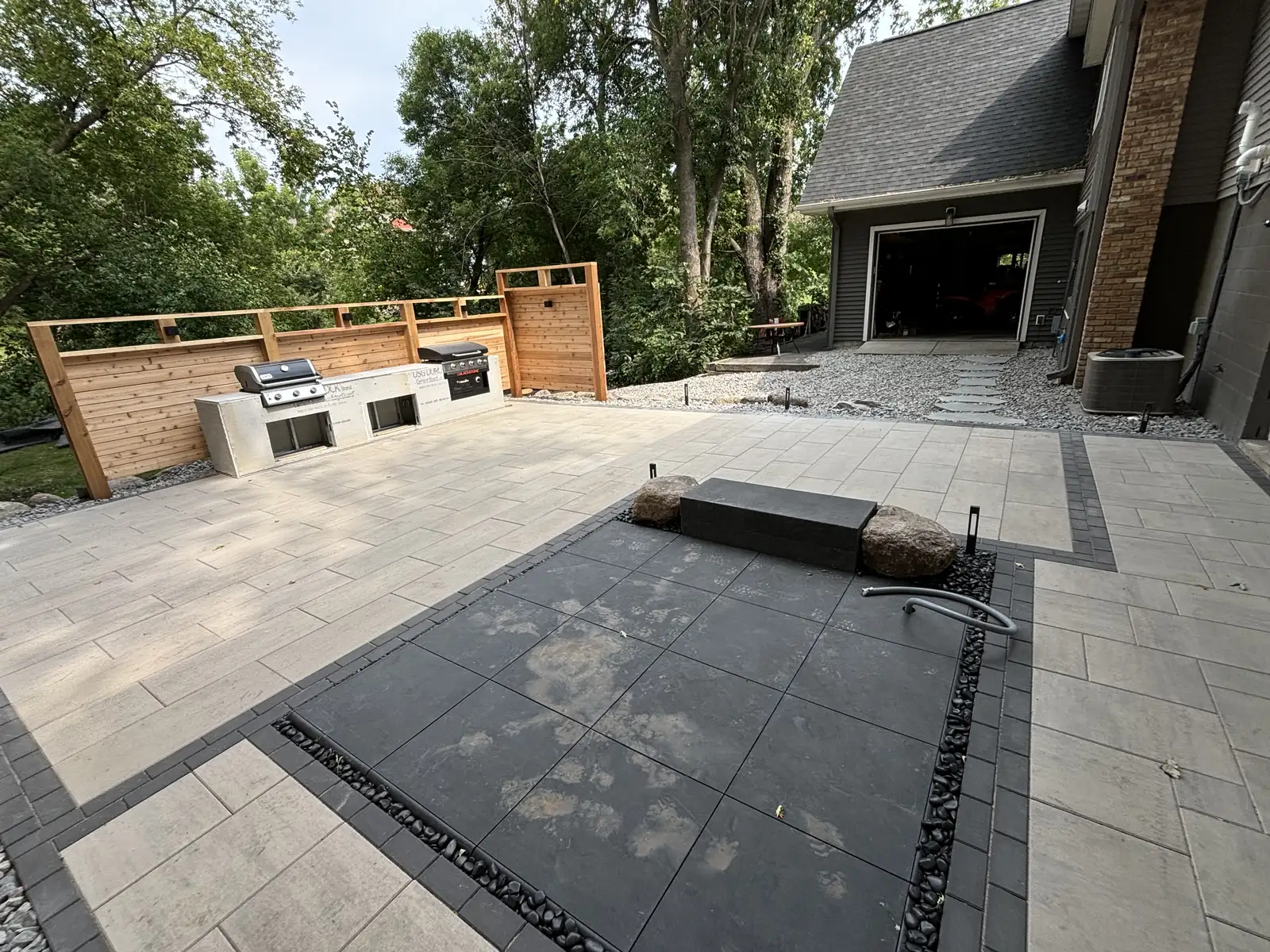
An outdoor kitchen in the Lake Minnetonka area typically costs between $15,000 and $80,000, takes 2 to 4 weeks to build, and requires gas, electrical, and sometimes plumbing permits depending on your municipality. Late May is the ideal time to start planning because you can have a functional outdoor kitchen ready before the peak of summer entertaining season in July and August. But the planning decisions you make now determine whether the kitchen performs well for 20 years or creates problems after its first Minnesota winter.
A successful outdoor kitchen begins with the decisions that matter most: layout, materials, utilities, and Minnesota-specific conditions. Lifecycle Outdoor Services applies practical experience from properties across Shorewood, Minnetonka, Wayzata, Excelsior, and surrounding Lake Minnetonka communities.
Start with Layout: Where the Kitchen Goes Changes Everything
The most common mistake homeowners make is choosing appliances first and figuring out placement later. Layout should come first because it determines your utility runs, your sight lines, and how the kitchen integrates with your existing patio and outdoor living space.
The Three Layout Types
Linear (single wall). The grill, countertop, and any appliances sit along one wall or island. This is the most cost-effective layout ($15,000 to $30,000) and works well in smaller spaces. It is also the simplest to build because all utilities run to one location. The limitation is workflow: the cook faces away from guests, and counter space is limited to what fits along one run.
L-shaped. Two connected runs that create a natural work triangle between the grill, prep area, and sink. This layout offers more counter space, allows the cook to face guests on one side, and creates a natural boundary between the cooking zone and the entertaining zone. L-shaped kitchens typically run $30,000 to $55,000 depending on length and materials.
U-shaped or island with bar seating. The most functional layout for serious entertaining. A U-shape creates a defined kitchen zone with maximum counter space, room for multiple appliances, and bar seating on the outer edge. This is the premium option ($50,000 to $80,000+) and requires the most planning for utility access, drainage, and integration with the surrounding hardscape.
Placement Considerations for Lake Minnetonka Properties
Prevailing summer winds in the western suburbs of Minneapolis blow from the south and southwest. Position your grill so smoke blows away from the house and your main seating area. On lakefront properties, winds off the water can shift direction throughout the day, so a location on the east or north side of the patio typically keeps smoke manageable.
Distance from the house matters for two reasons: utility costs and convenience. Every additional foot of gas line, electrical conduit, and water supply adds cost. A kitchen 15 feet from the house costs significantly less to plumb than one 50 feet away at the lake edge. However, placing it too close to the house blocks views and limits the sense of being outdoors. Most of our Lake Minnetonka installations land between 15 and 30 feet from the house, balancing utility cost with the outdoor experience.
Materials That Survive Minnesota Conditions
The Lake Minnetonka area experiences 60 or more freeze-thaw cycles per year. Add summer humidity, occasional hail, and UV exposure from May through September, and material selection becomes the single biggest factor in long-term durability.
Base Structure
Outdoor kitchen frames are built from steel studs and cement board, concrete block, or natural stone. Steel stud and cement board construction is the industry standard — it is lightweight, fireproof, will not rot, and accepts any veneer finish. Concrete block is stronger and more rigid but heavier, which matters if your kitchen sits on a patio rather than a poured slab. We strongly recommend against wood framing for outdoor kitchens in Minnesota. Even pressure-treated lumber absorbs moisture, swells in freeze-thaw cycles, and creates long-term structural problems behind the veneer where you cannot see them.
Veneer and Finish
Natural stone veneer. Fieldstone, limestone, and Fond du Lac stone all perform well in Minnesota and match the natural aesthetic that many Lake Minnetonka homeowners want. Natural stone is the most expensive option but also the most durable and timeless.
Manufactured stone veneer. Lighter and less expensive than natural stone, manufactured veneer comes in consistent colors and profiles. Quality manufacturers produce veneers rated for severe freeze-thaw climates. The key is proper installation with a weather-resistant barrier behind the veneer and weep screeds at the base to allow moisture drainage.
Stucco. The most affordable finish option. Stucco works in Minnesota but requires maintenance — hairline cracks from seasonal movement need patching every few years to prevent water infiltration. Painted stucco shows wear faster than stone.
Countertops
Granite is the most popular outdoor kitchen countertop material in our market, and for good reason. It handles heat from pots and pans directly from the grill, resists staining from food and beverages, and tolerates Minnesota winters without cracking or spalling. Porcelain slabs are a newer option that offers similar durability with more color consistency and slightly lower weight. Both are excellent choices for our climate.
Avoid tile countertops outdoors in Minnesota. Grout lines absorb water, freeze, crack, and require constant repair. Concrete countertops work but need sealing every 1 to 2 years and can develop hairline cracks from thermal movement.
Essential Appliances vs. Nice to Have
Outdoor kitchen appliance catalogs make everything seem essential. Here is what actually gets used regularly versus what collects cobwebs after the first summer.
Essential (High Daily Use)
Built-in gas grill. The centerpiece of every outdoor kitchen. Buy a grill rated for outdoor installation with 304-grade stainless steel construction (not 430-grade, which corrodes faster in humid conditions). Expect to spend $2,500 to $6,000 for a quality built-in unit from brands like Lynx, DCS, or Blaze. Do not compromise on grill quality — it is the appliance you will use most often.
Side burner. Useful for sauces, side dishes, and boiling water while the grill is occupied. A single side burner adds $500 to $1,200 to the project.
Outdoor-rated refrigerator. Keeps drinks and ingredients cold without trips back inside. Front-venting models are required for built-in installations so heat exhausts properly. Budget $1,500 to $3,000.
Nice to Have (Occasional Use)
Sink with running water. Convenient for hand washing and food prep but requires a water supply line and drain — which adds $2,000 to $4,000 in plumbing depending on distance from the house. In Minnesota, the water supply must be designed to drain completely for winter to prevent frozen and burst pipes.
Pizza oven. A statement feature that gets heavy use the first summer and moderate use after that. Wood-fired ovens require a larger footprint and chimney clearance. Gas-fired pizza ovens are more practical for regular use. Budget $3,000 to $8,000 installed.
Warming drawer. Keeps food at serving temperature while you finish grilling. Useful for large gatherings but rarely missed in smaller setups. $1,000 to $2,000.
Utility Requirements and Permits
Utility planning is where outdoor kitchen projects get complicated. Every appliance needs a fuel source and most need electricity. Getting this wrong means tearing up finished hardscape to fix it later.
Gas
A natural gas line from the house is the most common and cost-effective fuel option. Your gas line needs to be sized for the total BTU demand of all appliances — grill, side burner, pizza oven, fire feature, and any gas heaters. Undersizing the gas line is a common mistake that results in appliances that do not reach full temperature. A licensed plumber should calculate the load and size the line accordingly. Expect $1,500 to $4,000 for the gas line depending on distance and complexity.
Propane is an alternative for properties without natural gas service, but it requires tank storage and refilling. Some lakefront properties in Orono and Excelsior use propane because their gas mains do not extend to the lakeshore.
Electrical
At minimum, you need a dedicated 20-amp GFCI circuit for the refrigerator and outlets for small appliances. Landscape lighting around the kitchen area often connects to a separate low-voltage circuit. If you are adding a ventilation hood, electric pizza oven, or warming drawer, plan for additional circuits. All outdoor electrical work requires a permit in Shorewood, Minnetonka, and surrounding communities.
Water and Drainage
If you include a sink, the water supply line must be designed with a shutoff valve and drain-down capability for winter. The drain can connect to your house sewer or to a dry well, depending on local code. yard renovations around the kitchen base is also essential — water pooling at the base of an outdoor kitchen causes the same damage it causes to retaining walls: base erosion, shifting, and eventual structural failure.
Minnesota-Specific Design Considerations
National outdoor kitchen guides assume a climate where the kitchen is usable 10 to 12 months per year. In the Lake Minnetonka area, your outdoor kitchen sees heavy use from May through October and limited use (grilling only) from November through April. This changes several design decisions.
Cover or No Cover
A roof structure, pergola, or retractable awning over the kitchen extends its usable season and protects countertops and appliances from rain, snow load, and UV degradation. A covered kitchen with integrated lighting remains functional into the evening hours and during light rain. However, a permanent roof structure adds $10,000 to $30,000 depending on size and materials, and may require a building permit as an accessory structure.
If a full cover is not in the budget, at minimum invest in quality fitted covers for the grill, side burner, and any exposed appliances. Custom covers run $200 to $500 per appliance and pay for themselves by extending appliance life by several years.
Winter Storage and Protection
Winterizing an outdoor kitchen in Minnesota takes about an hour each fall and prevents the most expensive repairs. The checklist: shut off and drain all water lines, disconnect and drain the sink trap, empty and unplug the refrigerator (leave the door propped slightly open to prevent mold), clean the grill thoroughly and cover it, and cover countertops with fitted tarps if they are not sheltered.
The structure itself — stone veneer, countertops, and the steel or block frame — handles winter without any special protection. Granite, porcelain, and properly installed stone veneer are rated for severe freeze-thaw environments. The items that need protection are mechanical: water lines, appliance compressors, and ignition systems.
Integration with Your Outdoor Living Space
The most successful outdoor kitchens do not stand alone. They are part of a larger outdoor living design that includes a dining area, a lounging area, and often a fire feature. Planning the kitchen as one component of the overall space — rather than adding it to an existing patio as an afterthought — produces better results in terms of flow, sight lines, and utility routing.
This is where 3D landscape design renderings are particularly valuable. Seeing the kitchen in context with the patio, seating areas, plantings, and any retaining walls or grade changes lets you make layout decisions before construction begins. Moving a grill island 4 feet to the left costs nothing in a 3D model and thousands of dollars once the base is poured.
Realistic Timeline for a 2026 Build
If you start the planning and design process now in late May, here is a realistic timeline for a Lake Minnetonka outdoor kitchen:
Weeks 1-2: Design and planning. Site evaluation, 3D rendering, material selection, and appliance ordering. Appliances typically ship in 1 to 3 weeks for in-stock models, longer for specialty items.
Weeks 2-3: Permits. Plumbing, electrical, and building permits (if required). Most Lake Minnetonka communities process permits in 1 to 2 weeks for residential projects.
Weeks 3-6: Construction. Base preparation, utility rough-in, frame construction, veneer installation, countertop fabrication and install, appliance installation, and final connections. A mid-complexity outdoor kitchen takes 2 to 3 weeks of on-site work.
Starting in late May puts completion in late June or early July — right in time for peak summer use. Waiting until July to start planning pushes completion into August or September, which leaves you with only 6 to 8 weeks of prime outdoor kitchen season before winterization.
Frequently Asked Questions
How much does an outdoor kitchen cost in Minnesota?
Outdoor kitchen costs in the Lake Minnetonka area range from $15,000 to $80,000 or more depending on size, materials, and features. A basic built-in grill island with countertop and storage runs $15,000 to $25,000. A mid-range kitchen with grill, side burner, sink, refrigerator, and stone veneer typically costs $30,000 to $50,000. Full outdoor kitchens with bar seating, pizza oven, multiple appliances, and premium natural stone or porcelain countertops start around $50,000.
Can you use an outdoor kitchen during a Minnesota winter?
Yes, with proper planning. Built-in grills and gas burners function year-round. The key is winterizing water lines before the first freeze. Shut off the water supply, drain all pipes and the sink, and disconnect any hoses in late October. Appliances like refrigerators should be emptied and unplugged for winter. Countertop materials like granite and porcelain handle freeze-thaw cycles without damage. Many Lake Minnetonka homeowners grill year-round and use their outdoor kitchen counters for staging even in cold weather.
Do I need a permit for an outdoor kitchen in Shorewood or Minnetonka?
In most cases, yes. Any outdoor kitchen with a gas line requires a plumbing or mechanical permit. Electrical work for outlets, lighting, or appliances requires an electrical permit. If the kitchen is part of a larger patio or hardscape project, a building permit may also be required depending on the scope. Shorewood, Minnetonka, and most Lake Minnetonka communities require permits for permanent outdoor structures. We handle the permitting process as part of every project.